
If you are searching for a stomach ulcer specialist in Karachi, you may be dealing with recurring upper abdominal pain, burning, nausea, bloating, or indigestion.
A stomach ulcer, also called a gastric ulcer, is a sore that develops in the lining of the stomach. Common causes include Helicobacter pylori (H. pylori) infection and regular use of nonsteroidal anti-inflammatory drugs (NSAIDs).
A specialist can assess your symptoms, review your medicines and medical history, determine whether testing is needed, and identify the underlying cause.
Depending on the situation, evaluation may include H. pylori testing or an upper gastrointestinal endoscopy. Treatment is selected according to the cause and the patient’s individual circumstances.
This guide explains stomach ulcers, including common symptoms, causes, diagnosis, treatment, warning signs, and considerations when seeking appropriate digestive care in Karachi.
Dr Azizurrehman can be considered when researching a doctor for stomach-related concerns. Still, patients should verify the doctor’s current qualifications, specialty, clinic details, and suitability for their particular condition before booking an appointment.
What Is a Stomach Ulcer?
A stomach ulcer is an open sore that develops in the inner lining of the stomach. It is one type of peptic ulcer disease; another type develops in the duodenum, which is the first part of the small intestine.
The condition can cause burning or aching discomfort in the upper abdomen, although some people have few or no noticeable symptoms.
An ulcer can become more serious if it causes bleeding, perforation, penetration, or blockage of the digestive tract.
Because several digestive conditions can produce similar symptoms, persistent stomach discomfort should not automatically be assumed to be an ulcer. A medical evaluation can help determine the actual cause.
What Symptoms Can a Stomach Ulcer Cause?
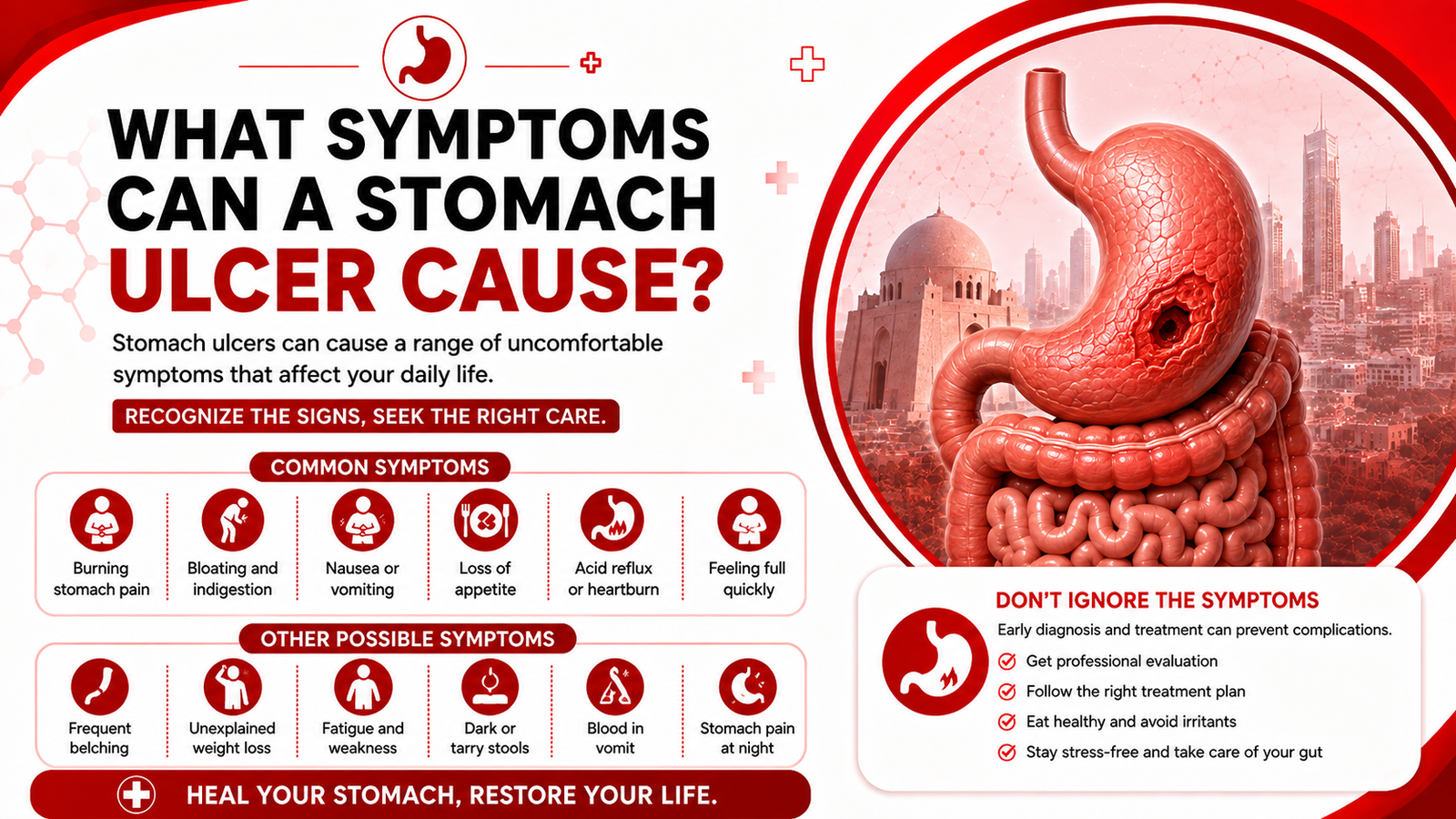
Stomach ulcer symptoms vary from person to person. The most common symptom is pain or discomfort in the upper abdomen.
The pain may feel dull or burning and can sometimes occur when the stomach is empty or at night. In some people, eating may make the discomfort worse.
Other possible symptoms include:
- Feeling full quickly or feeling unusually full after eating
- Nausea or vomiting
- Bloating
- Belching
- Indigestion
- Heartburn
- Reduced appetite
Some people with peptic ulcers do not have obvious symptoms until a complication develops.
This is one reason persistent or recurring digestive symptoms should not simply be managed with over-the-counter medicines indefinitely.
When Should You See a Stomach Ulcer Specialist?
Consider arranging a medical evaluation if you have repeated upper abdominal pain, recurring indigestion, unexplained nausea, symptoms that keep returning after temporary relief, or a history of ulcers or H. pylori infection.
You should seek urgent medical attention if you experience signs that could indicate gastrointestinal bleeding or another serious complication.
These warning signs include:
- Vomiting blood or vomit that looks like coffee grounds
- Black or tarry stools
- Blood mixed with stool
- Sudden, severe abdominal pain that does not improve
- Dizziness, fainting, or marked weakness
- A rapid heartbeat or other signs of possible shock
These symptoms can indicate significant gastrointestinal bleeding or another ulcer complication and should not be managed as routine indigestion.
What Causes Stomach Ulcers?
The two most common causes of peptic ulcers are H. pylori infection and the use of NSAID pain medicines such as aspirin, ibuprofen, and naproxen.
H. pylori Infection
- pylori is a type of bacteria that can live in the stomach and is a major cause of peptic ulcers. Many people with H. pylori do not experience symptoms, but the infection can contribute to inflammation and ulcer formation in some individuals.
If an ulcer is associated with H. pylori, treating the infection is an important part of management.
A healthcare professional may use testing such as a urea breath test, stool test, or other appropriate investigation to determine whether the infection is present.
NSAID Pain Medicines
NSAIDs are commonly used for pain and inflammation. Regular, long-term, high-dose, or combined use of certain NSAIDs can increase the risk of stomach ulcers because these medicines can make the stomach lining more vulnerable to damage.
If you regularly take pain medicines, tell your doctor about them. Do not stop prescribed medicines on your own; a healthcare professional can determine whether a medicine should be changed, reduced, or replaced.
Do Stress and Spicy Food Cause Ulcers?
Stress and spicy foods are often blamed for stomach ulcers, but they are not considered the primary causes of peptic ulcers.
Spicy foods may aggravate symptoms in some people, while stress can affect digestive symptoms, but H. pylori infection and NSAID use are the major established causes.
How Is a Stomach Ulcer Diagnosed?
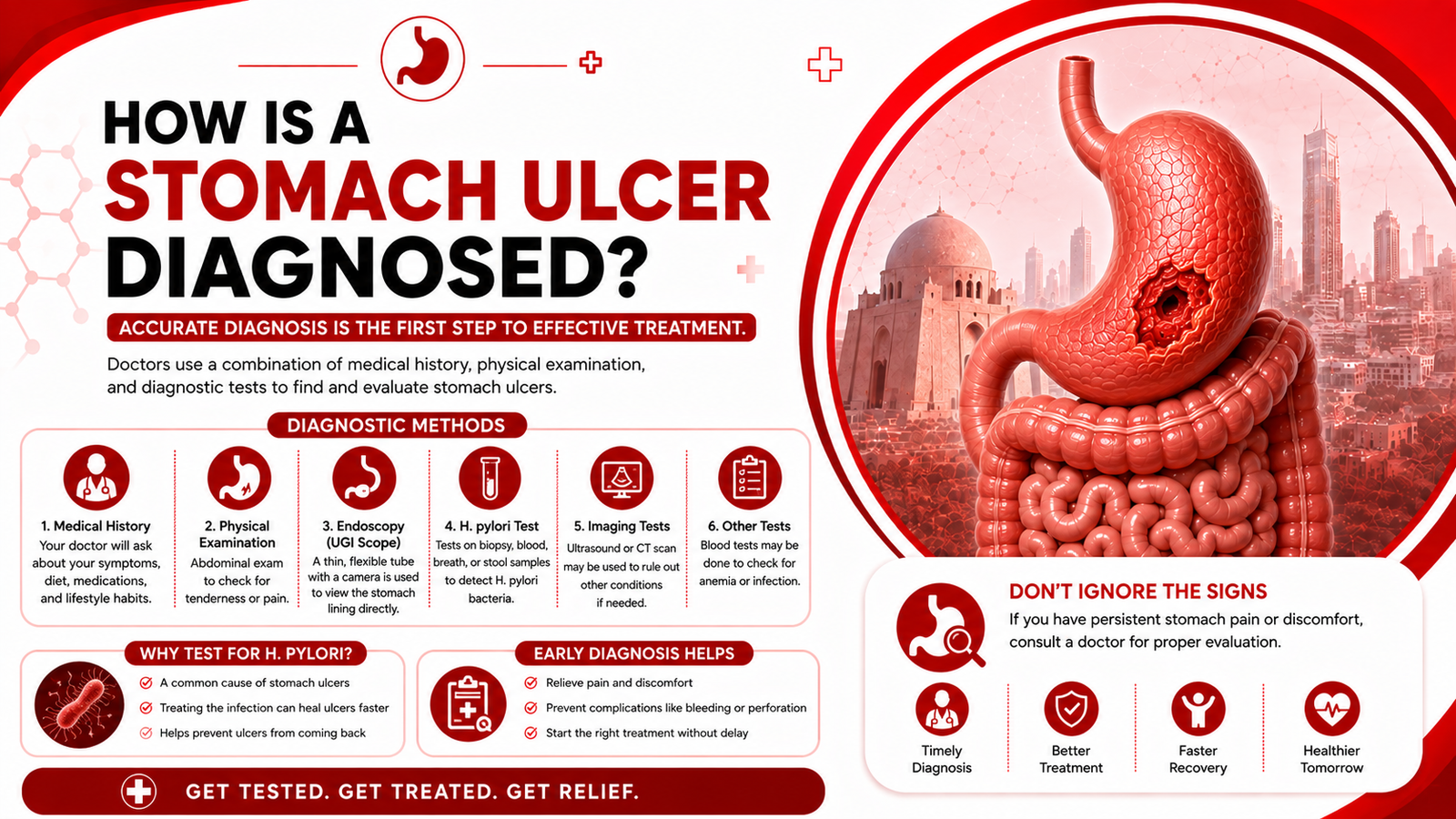
A doctor usually starts by asking about your symptoms, medical history, previous digestive problems, family history, and medicines you take.
the examination and testing depend on your symptoms and the suspected cause.
H. pylori Testing
Doctors may use a urea breath test or stool test to check for H. pylori. Blood tests may also be used in certain circumstances. The appropriate test depends on the clinical situation.
Upper GI Endoscopy
An upper gastrointestinal endoscopy allows a doctor to directly examine the lining of the esophagus, stomach, and duodenum using a flexible tube with a camera.
During the procedure, a doctor may take a small tissue sample, called a biopsy, when appropriate.
Endoscopy may be particularly useful when the doctor needs to confirm an ulcer, investigate persistent symptoms, look for complications, or obtain tissue for further examination.
Why Diagnosis Matters
Symptoms such as upper abdominal pain, heartburn, nausea, and bloating can occur with several digestive conditions.
An appropriate evaluation helps distinguish an ulcer from other possible causes rather than assuming that every episode of stomach pain is an ulcer.
How Are Stomach Ulcers Treated?
Treatment depends on the underlying cause. Doctors generally use medicines to help the ulcer heal while also addressing the factor responsible for the ulcer.
Common treatment approaches include acid-reducing medicines, treatment for H. pylori when present, and adjustment of ulcer-causing medicines when appropriate.
Treatment for H. pylori
When H. pylori is responsible, treatment typically involves a combination of medicines designed to eliminate the infection and reduce stomach acid.
The exact combination should be selected by a healthcare professional because antibiotic resistance and previous antibiotic exposure can influence treatment choices.
Completing the prescribed treatment is important. Follow-up testing may be recommended to confirm that the infection has been successfully eliminated.
Treatment for NSAID-Related Ulcers
If an ulcer is linked to NSAID use, the doctor may consider changing the medicine, reducing exposure, or using another approach depending on why the medicine was originally prescribed. In some cases, acid-reducing treatment may also be used.
This is why telling your doctor about all prescription and nonprescription medicines is important during an ulcer evaluation.
Acid-Reducing Medicines
Medicines such as proton pump inhibitors and H2 blockers can be used to reduce stomach acid and help the ulcer heal.
The appropriate medicine and treatment duration depend on the cause, severity, medical history, and other factors.
Patients should avoid self-prescribing antibiotics or changing prescription treatment without medical advice.
Stomach Ulcer vs Gastritis: What Is the Difference?
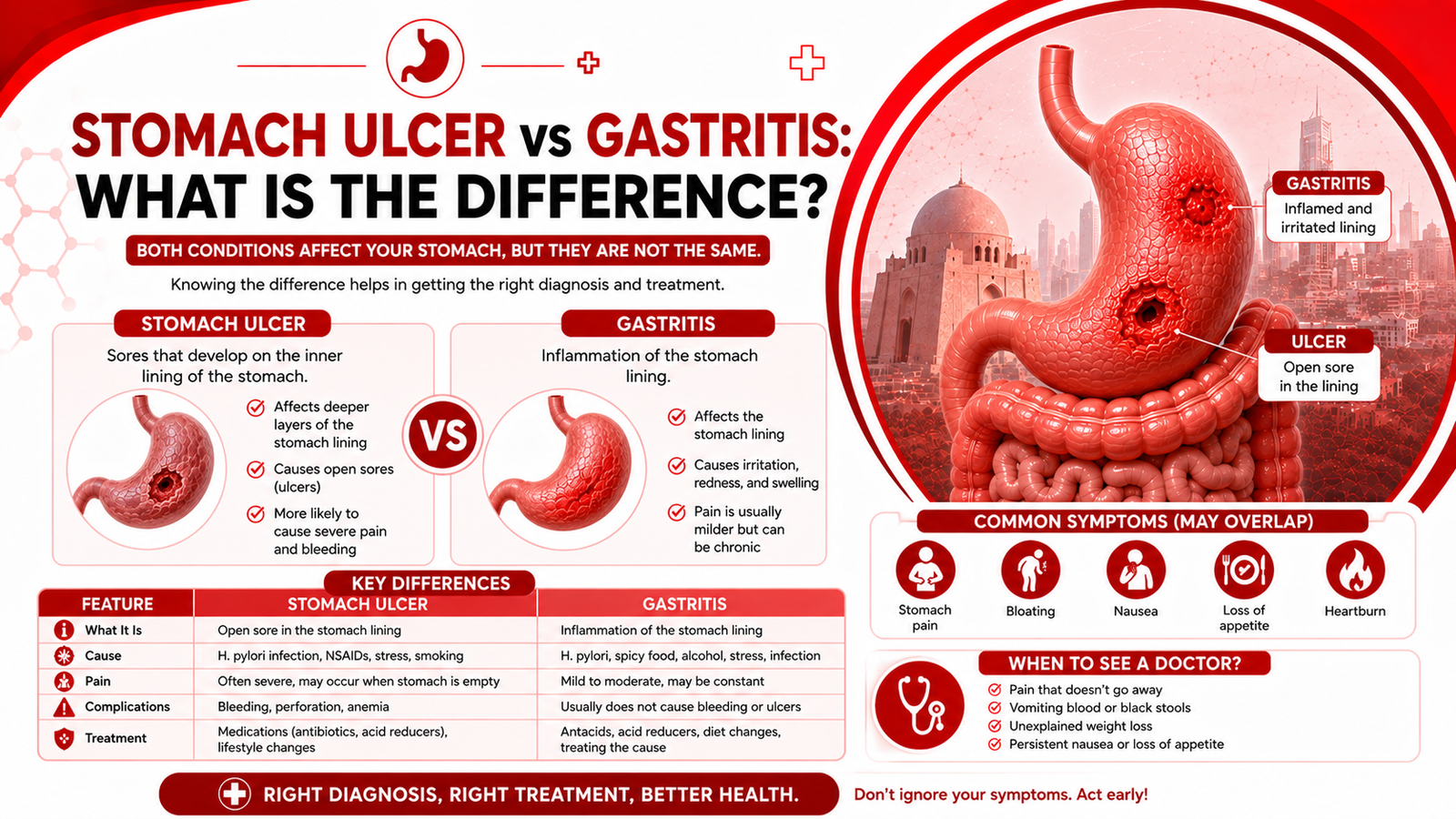
Gastritis means inflammation or irritation of the stomach lining, while an ulcer is a sore or open lesion in the lining of the stomach or duodenum.
Factor | Gastritis | Stomach Ulcer |
Main problem | Inflammation or irritation of the stomach lining | Open sore in the stomach lining |
Common causes | H. pylori, NSAIDs, and other factors | H. pylori and NSAIDs are major causes |
Symptoms | Pain, nausea, indigestion, bloating | Upper abdominal pain, nausea, bloating and indigestion |
Bleeding risk | Possible | Possible and can be significant |
Diagnosis | Depends on symptoms and suspected cause | May involve H. pylori testing and/or endoscopy |
Treatment | Depends on the underlying cause | Usually focuses on healing the ulcer and treating its cause |
The symptoms can overlap, so a person should not assume that burning stomach pain automatically means they have an ulcer.
A healthcare professional can determine whether further testing is appropriate.
What Should You Consider When Choosing a Stomach Ulcer Doctor in Karachi?
When searching for digestive care in Karachi, look beyond a page title or advertisement.
The right doctor should be appropriate for the symptoms and complexity of the problem.
A useful checklist includes:
- Check the doctor’s medical qualifications and current registration where applicable.
- Confirm the doctor’s relevant specialty or area of practice.
- Ask whether evaluation for H. pylori is available or can be arranged.
- Ask whether endoscopy or referral for endoscopy is available when medically indicated.
- Take a list of your current medicines, especially pain relievers.
- Share previous reports, laboratory results, scans, and endoscopy reports if you have them.
- Ask what symptoms would require urgent medical attention.
- Verify the clinic location, appointment availability, and current consultation information before visiting.
If you are considering Dr Azizurrehman for stomach-related symptoms in Karachi, independently verify his current professional credentials, specialty, clinic location, and appointment information before making a healthcare decision.
Can Diet Cure a Stomach Ulcer?
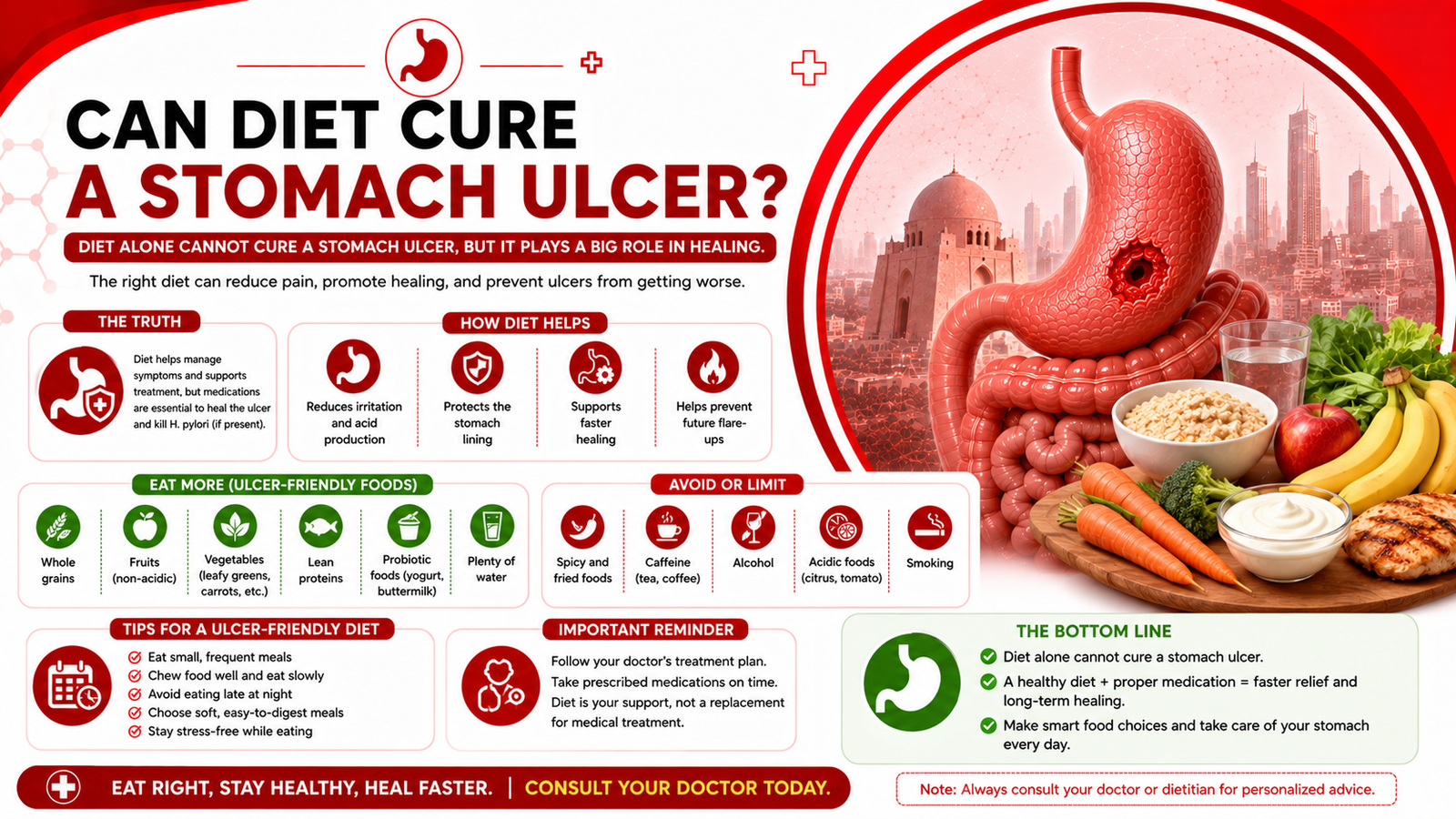
There is no universal ulcer diet that cures peptic ulcers. Research does not support a special diet as the primary treatment for preventing or treating peptic ulcers.
Medical treatment focuses on healing the ulcer and addressing its underlying cause.
That does not mean food choices are irrelevant. Some foods or drinks may make an individual’s symptoms feel worse.
If you notice a consistent relationship between a particular food and your symptoms, discuss it with your healthcare professional rather than adopting a highly restrictive diet without a clear reason.
Smoking is another factor worth addressing because quitting can reduce ulcer risk and may support healing.
What Happens If a Stomach Ulcer Is Not Treated?
Many ulcers can heal with appropriate treatment, but untreated or complicated ulcers can cause serious problems.
Possible complications include bleeding, perforation, penetration into nearby structures, and blockage of the stomach or digestive tract.
Bleeding can sometimes develop gradually and contribute to anemia, while severe bleeding may cause vomiting of blood, black stools, dizziness, fainting, or shock.
A perforation can create a hole in the stomach or duodenal wall and requires urgent medical care.
For this reason, repeated symptoms should not simply be ignored because they temporarily improve with antacids or other over-the-counter products.
How Can Stomach Ulcers Be Prevented?
Prevention depends largely on reducing known risk factors and treating underlying causes. If you have previously had an ulcer, your doctor may recommend strategies to reduce the chance of recurrence.
For example, people who need long-term NSAID treatment may need an individualized plan to reduce gastrointestinal risk.
If H. pylori is identified, appropriate treatment can reduce the risk of ongoing infection and ulcer recurrence.
Avoiding unnecessary self-medication with pain relievers, discussing long-term NSAID use with a healthcare professional, following prescribed treatment correctly, and seeking evaluation for recurring symptoms are practical steps.
Frequently Asked Questions
What type of doctor treats stomach ulcers?
A gastroenterologist commonly evaluates and treats diseases affecting the stomach and digestive system, including peptic ulcer disease. Depending on the symptoms and available services, a general physician may also perform an initial evaluation and arrange appropriate testing or referral.
What are the first signs of a stomach ulcer?
Upper abdominal pain or burning discomfort is a common symptom. Some people may also experience nausea, bloating, belching, indigestion, or feeling unusually full after eating. However, symptoms alone cannot confirm that an ulcer is present.
Is H. pylori always responsible for stomach ulcers?
No. H. pylori is one of the two most common causes of peptic ulcers, while NSAID use is another major cause. Less common causes also exist.
Can a stomach ulcer heal completely?
Many peptic ulcers can heal with appropriate medical treatment, particularly when the underlying cause is addressed. Treatment may involve acid-reducing medicines and specific management of H. pylori or NSAID use when those factors are responsible.
When is a stomach ulcer an emergency?
Vomiting blood, coffee-ground-like vomit, black or tarry stools, sudden severe abdominal pain, dizziness, fainting, or signs of shock require urgent medical attention. These can indicate bleeding or another serious complication.
Should I avoid spicy foods if I have an ulcer?
Spicy food is not considered a primary cause of peptic ulcers. However, some foods can worsen symptoms for an individual. Instead of following a highly restrictive diet, discuss persistent symptoms with a healthcare professional.
Should I stop taking ibuprofen if I think I have an ulcer?
Do not make medication changes without medical advice, particularly if the medicine was prescribed for another condition. NSAIDs can increase the risk of ulcers, so tell your doctor about all pain medicines you use. Your doctor can determine whether an alternative or adjustment is appropriate.
Conclusion
Finding the right stomach ulcer specialist in Karachi starts with recognizing that recurring stomach pain is not always caused by an ulcer.
H. pylori infection and NSAID use are major causes of peptic ulcers, while diagnosis may involve a medical history, physical examination, H. pylori testing, or upper GI endoscopy depending on the patient’s situation.
Treatment is generally directed at healing the ulcer and addressing its underlying cause.
If you are researching Dr Azizurrehman or another doctor in Karachi, verify current qualifications, specialty, clinic details, and whether the doctor’s services match your medical needs before arranging an appointment.
Most importantly, do not ignore warning signs such as vomiting blood, black stools, fainting, or sudden severe abdominal pain.
These symptoms can represent a medical emergency and require immediate professional attention.