
Hepatitis B is one of the world’s most common viral infections, affecting hundreds of millions of people.
Many people carry the virus without realizing it until routine blood tests reveal a liver problem.
Because the infection often develops silently, knowing the hepatitis B causes can help you reduce your risk and seek medical care before serious liver damage occurs.
The hepatitis B virus (HBV) attacks the liver and may cause either a short-term illness or a lifelong infection.
While many adults recover completely, some people develop chronic hepatitis B, increasing their risk of liver cirrhosis, liver failure, and liver cancer.
The good news is that hepatitis B is preventable. Vaccination, safe health practices, and awareness of how the virus spreads can dramatically reduce new infections.
This guide explains what causes hepatitis B, how it spreads, who is at risk, common symptoms, diagnosis, treatment options, and the best ways to protect yourself and your family.
What Causes Hepatitis B?
The direct cause of hepatitis B is infection with the Hepatitis B virus (HBV).
HBV enters the bloodstream and travels to the liver, where it infects liver cells known as hepatocytes. Once inside these cells, the virus begins to multiply.
The body’s immune system then attacks the infected liver cells, leading to liver inflammation.
In some people, the immune system successfully clears the virus within several months.
Others cannot eliminate it, allowing the infection to persist for years. This condition is called chronic hepatitis B.
Quick Answer (Featured Snippet)
Hepatitis B is caused by the Hepatitis B virus (HBV). The virus spreads through contact with infected blood or certain body fluids, including sexual contact, shared needles, and mother-to-baby transmission during childbirth.
It is not spread through food, water, hugging, or casual contact.
How Do You Get Hepatitis B?
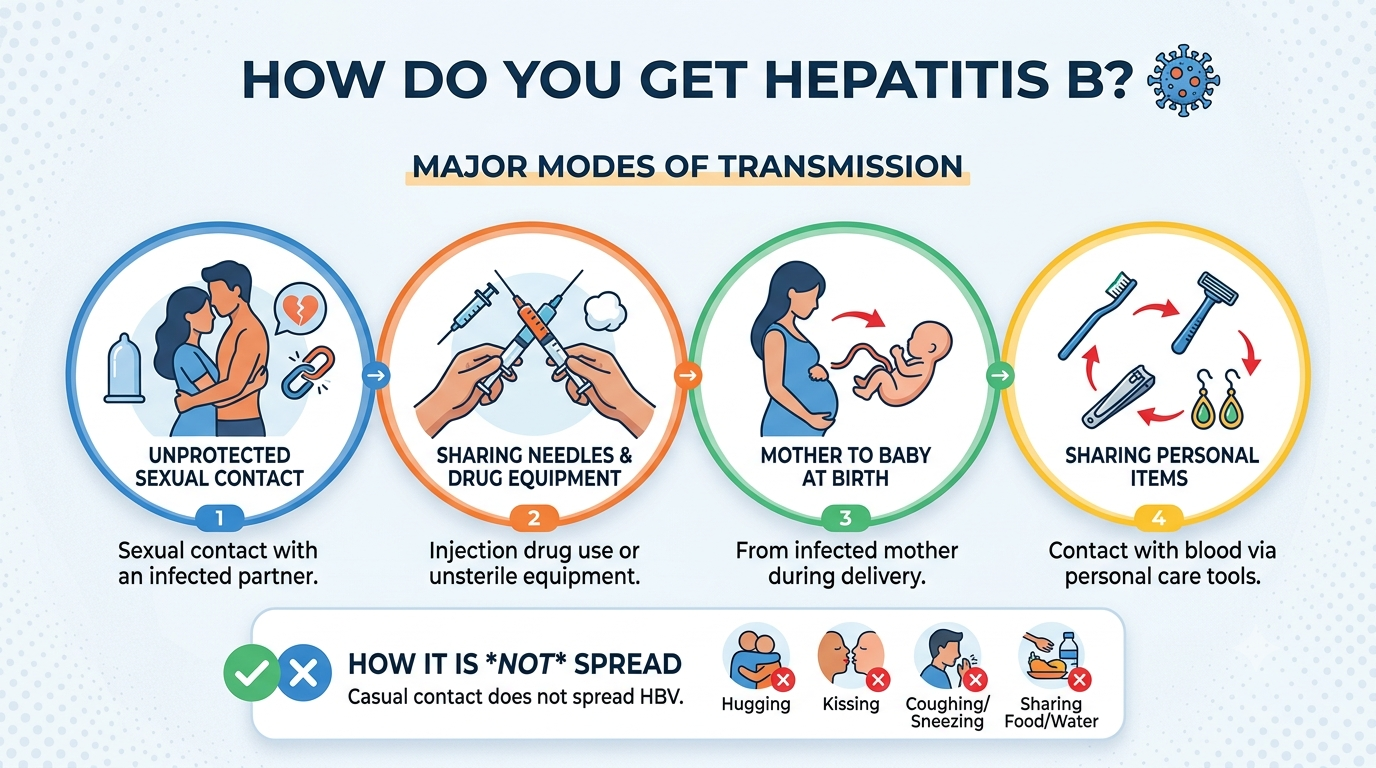
HBV spreads when infected blood or body fluids enter another person’s bloodstream.
The most common sources include:
- Blood-to-blood transmission
- Unprotected sexual contact
- Shared needles or syringes
- Contaminated medical equipment
- Mother-to-baby transmission during birth
- Accidental needle-stick injuries in healthcare settings
- Unsafe tattoo or piercing equipment
- Sharing razors or toothbrushes contaminated with blood
Unlike viruses that spread through coughing or sneezing, hepatitis B requires exposure to infected blood or specific body fluids.
Real-Life Example
Imagine someone receives a tattoo at an unlicensed shop where needles are reused without proper sterilization.
If a previous customer carried HBV, the contaminated needle could transmit the virus to the next person.
This is why licensed tattoo studios follow strict sterilization protocols.
How Is Hepatitis B Transmitted?
Many people worry about everyday contact, but hepatitis B transmission occurs only in specific situations.
Transmission Route | Risk Level |
Shared needles | Very High |
Unprotected sex | High |
Mother to baby during childbirth | High |
Needle-stick injury | High |
Blood transfusion (screened countries) | Very Low |
Tattoo with contaminated equipment | Moderate to High |
Sharing razors or toothbrushes | Possible |
Hugging or shaking hands | No Risk |
Sharing food or drinks | No Risk |
Sneezing or coughing | No Risk |
Healthcare providers worldwide now screen donated blood, making blood transfusions much safer than they were decades ago.
Is Hepatitis B Contagious?
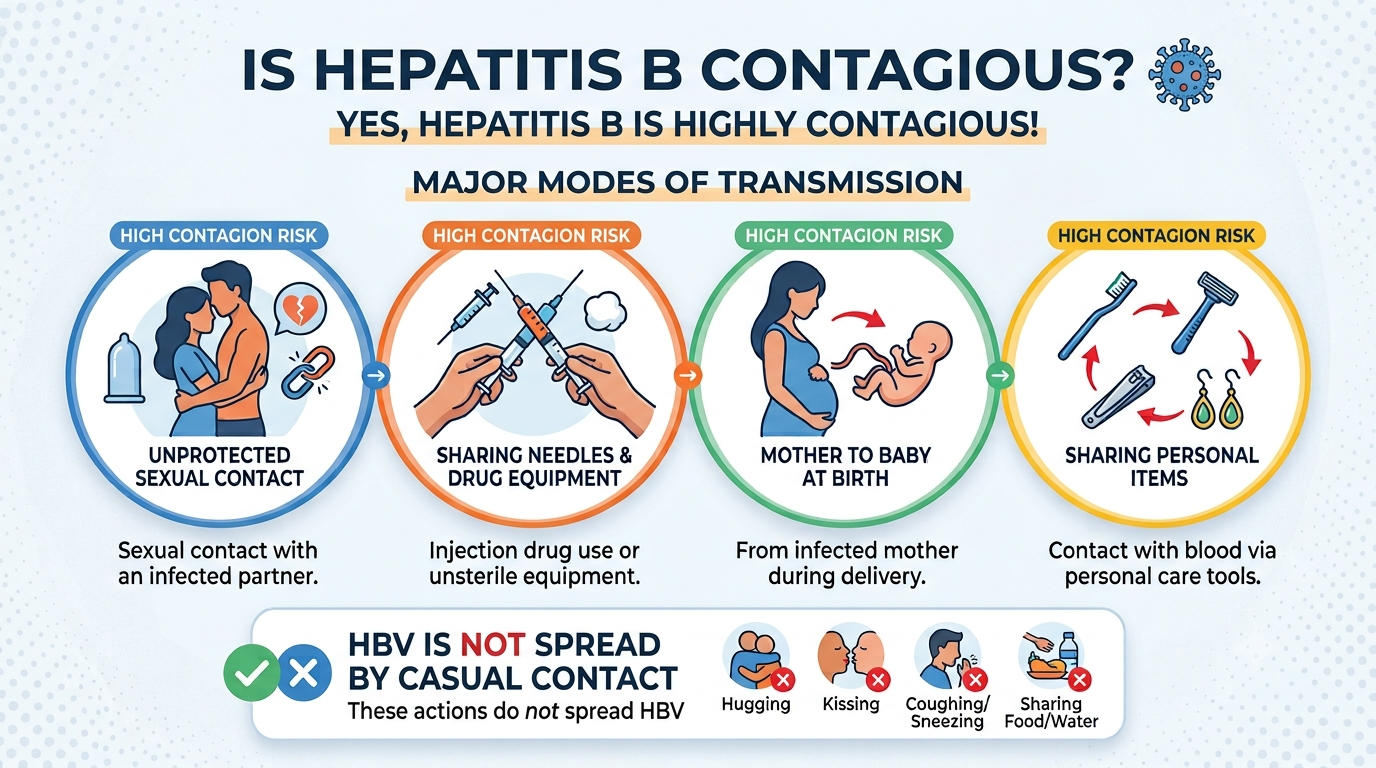
Yes.
Hepatitis B is contagious because it is an infectious viral disease. However, it does not spread as easily as the common cold or seasonal flu.
A person with HBV can transmit the virus through:
- Blood
- Semen
- Vaginal fluids
- Other infectious body fluids
The virus survives outside the body for several days under certain conditions, making proper cleaning of blood spills important.
Fortunately, vaccination provides excellent protection against infection.
Can Hepatitis B Spread Through Saliva?
This is one of the most searched questions online.
Short Answer
Saliva is not considered a common route of hepatitis B transmission.
Although tiny amounts of HBV may be detected in saliva, transmission through saliva alone is extremely uncommon. Most documented infections involve blood exposure or sexual contact.
For example:
- Sharing a drink → No risk
- Talking face to face → No risk
- Sneezing → No risk
- Casual kissing → Extremely low risk
If both people have open sores or bleeding gums, the theoretical risk may increase because blood—not saliva—is the primary concern.
Can Hepatitis B Spread Through Kissing?
For most people, the answer is no.
Casual kissing is not considered a significant method of hepatitis B spread.
Deep kissing only becomes a possible concern if:
- Both partners have bleeding gums.
- There are open sores inside the mouth.
- Blood is exchanged.
Healthcare experts continue to identify blood exposure and sexual transmission as the primary routes of infection.
What Are the Main Risk Factors for Hepatitis B?
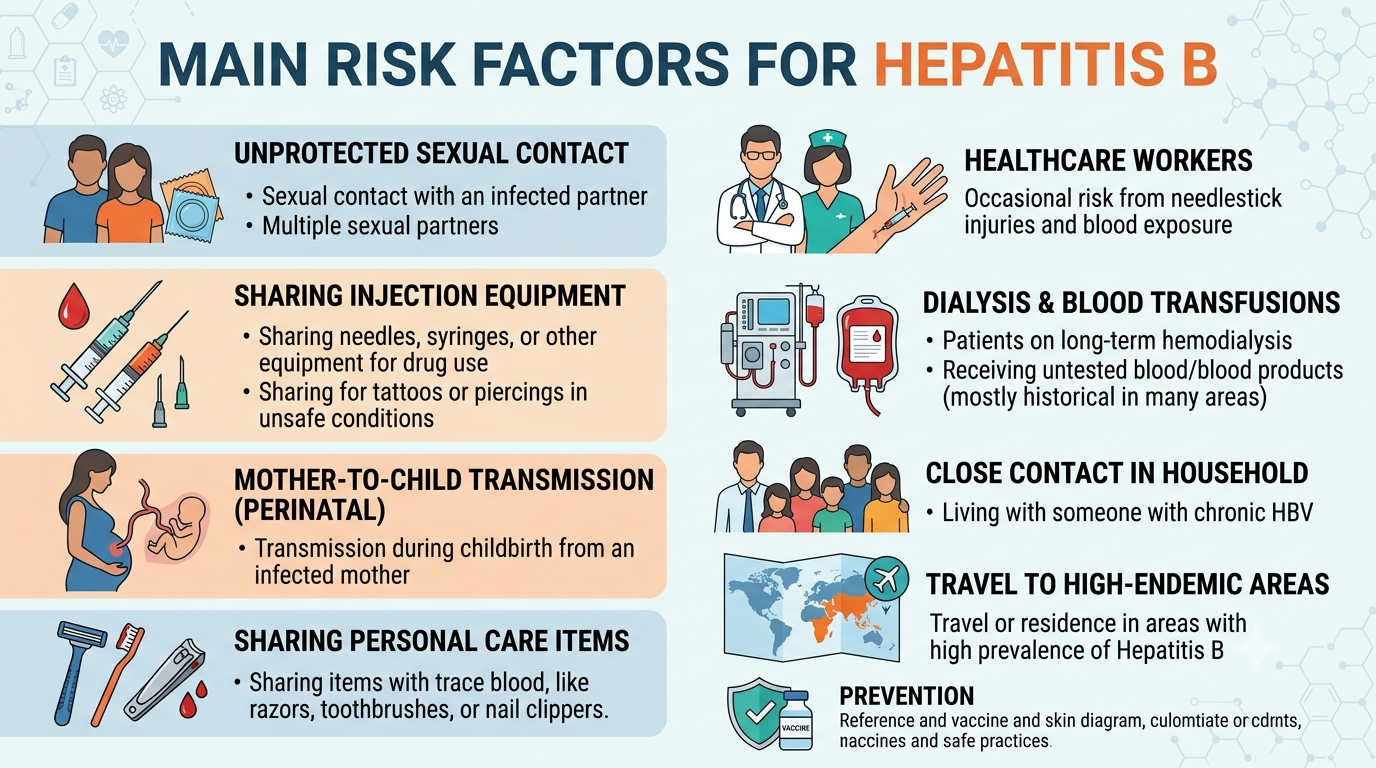
Some people have a much higher chance of acquiring HBV because of lifestyle, occupation, or medical circumstances.
Major risk factors include:
Sexual Exposure
People who have unprotected sex with an infected partner are at increased risk.
Injection Drug Use
Sharing contaminated needles remains one of the leading causes of HBV transmission worldwide.
Healthcare Workers
Doctors, nurses, laboratory staff, and emergency responders face occupational exposure through accidental needle-stick injuries.
Babies Born to Infected Mothers
Without timely vaccination and preventive treatment, newborns have a very high risk of developing chronic hepatitis B.
Frequent Blood Exposure
Individuals requiring dialysis or repeated blood-related medical procedures may have increased exposure risk, especially where infection-control standards are inadequate.
Household Exposure
Sharing personal items such as:
- Razors
- Nail clippers
- Toothbrushes
can occasionally spread HBV if these items are contaminated with infected blood.
Who Is Most at Risk of Hepatitis B?
Certain groups should consider hepatitis B screening and vaccination if they have not already been immunized.
High-risk groups include:
- Healthcare professionals
- People with multiple sexual partners
- Injection drug users
- Household contacts of infected individuals
- Infants born to HBV-positive mothers
- People with chronic liver disease
- Individuals undergoing hemodialysis
- Travelers to regions where HBV is common
- People living with HIV or other conditions that affect the immune system
Early screening helps detect infection before liver damage becomes severe.
What Are the Symptoms of Hepatitis B?
The symptoms of hepatitis B vary from person to person.
Some people, especially children, may have no symptoms at all. Others develop signs within 1 to 4 months after exposure to the virus.
Symptoms can range from mild to severe, depending on how the immune system responds to the infection.
Common Symptoms of Acute Hepatitis B
In the early stage, symptoms may resemble the flu, making the infection difficult to recognize.
Common symptoms include:
- Persistent fatigue
- Fever
- Loss of appetite
- Nausea and vomiting
- Pain in the upper right side of the abdomen
- Dark-colored urine
- Pale or clay-colored stools
- Joint pain
- Yellowing of the skin and eyes (jaundice)
- General weakness
Some adults recover completely within six months without any long-term liver damage.
What Is the Difference Between Acute and Chronic Hepatitis B?
Many people confuse acute and chronic hepatitis B, but they are different stages of the same viral infection.
Feature | Acute Hepatitis B | Chronic Hepatitis B |
Duration | Less than 6 months | More than 6 months |
Common in | Adults | Infants and young children |
Recovery | Often complete | May require lifelong monitoring |
Liver Damage | Usually temporary | Progressive liver damage is possible |
Treatment | Mostly supportive care | Antiviral therapy may be needed |
Risk of Cirrhosis | Low | High if untreated |
Acute Hepatitis B
Acute hepatitis B is the body’s initial response to HBV infection. Most healthy adults clear the virus naturally through their immune response.
Chronic Hepatitis B
If the virus remains in the body for more than six months, the infection becomes chronic.
Over time, ongoing viral replication can lead to liver fibrosis, cirrhosis, and hepatocellular carcinoma (primary liver cancer).
How Is Hepatitis B Diagnosed?
Early diagnosis is essential because hepatitis B often develops without noticeable symptoms.
Doctors diagnose HBV infection using a combination of blood tests and, in some cases, imaging studies.
Common Diagnostic Tests
HBsAg (Hepatitis B Surface Antigen)
This is the primary screening test. A positive HBsAg result usually indicates an active hepatitis B infection.
Anti-HBs Antibody
This antibody shows immunity, either from vaccination or recovery after a past infection.
Anti-HBc Antibody
This test helps determine whether a person has had a previous or current HBV infection.
HBV DNA (Viral Load Test)
The viral load test measures the amount of hepatitis B virus circulating in the bloodstream.
Doctors use HBV DNA levels to:
- Assess viral replication
- Monitor treatment response
- Decide when antiviral medications are needed
Liver Function Tests (ALT and AST)
ALT and AST are liver enzymes released into the blood when liver cells become damaged.
Higher levels often indicate liver inflammation.
Additional Tests
Depending on your condition, your healthcare provider may recommend:
- Liver ultrasound
- FibroScan® (liver stiffness assessment)
- Liver biopsy (in selected cases)
These tests help evaluate liver fibrosis and detect complications early.
Can Hepatitis B Be Cured?
This is one of the most frequently asked questions.
Short Answer
Acute hepatitis B often resolves on its own, but chronic hepatitis B usually cannot be completely cured with current treatments.
However, modern antiviral therapy can suppress HBV replication to very low levels, helping many people live long, healthy lives.
Treatment goals include:
- Reducing viral load
- Preventing liver inflammation
- Protecting liver function
- Lowering the risk of cirrhosis
- Reducing the chance of liver cancer
Researchers continue to work on therapies aimed at achieving a functional cure, but these are still under investigation.
What Treatments Are Available for Hepatitis B?
Treatment depends on whether the infection is acute or chronic.
Treatment for Acute Hepatitis B
Most people with acute hepatitis B do not require antiviral medication.
Instead, doctors recommend:
- Plenty of rest
- Staying well hydrated
- Eating a balanced diet
- Avoiding alcohol
- Avoiding unnecessary medications that may affect the liver
- Regular follow-up appointments
Most healthy adults recover completely.
Treatment for Chronic Hepatitis B
People with chronic hepatitis B may need long-term monitoring or antiviral treatment.
Common antiviral medications include drugs that suppress HBV replication and help prevent liver damage.
Treatment decisions are based on:
- HBV DNA level
- ALT and AST results
- Degree of liver fibrosis
- Age
- Family history of liver cancer
- Overall liver health
Regular follow-up is essential because treatment plans may change over time.
What Happens If Hepatitis B Is Left Untreated?
Ignoring chronic hepatitis B can have serious consequences.
Because the disease often progresses silently, liver damage may occur before symptoms appear.
Potential complications include:
Liver Fibrosis
Repeated inflammation causes scar tissue to develop inside the liver.
Liver Cirrhosis
As fibrosis worsens, healthy liver tissue is replaced by permanent scarring, reducing the liver’s ability to function.
Possible symptoms include:
- Swelling in the legs
- Fluid buildup in the abdomen
- Easy bruising
- Confusion due to toxin buildup
- Internal bleeding
Liver Failure
Severe cirrhosis can eventually lead to liver failure, a life-threatening condition that may require liver transplantation.
Liver Cancer
People with chronic HBV infection have a significantly higher risk of developing hepatocellular carcinoma, even before cirrhosis develops in some cases.
Routine surveillance with imaging and blood tests helps detect liver cancer at an earlier, more treatable stage.
Can Hepatitis B Affect Everyday Life?
Yes, but many people with chronic hepatitis B lead active and productive lives.
With regular medical care, healthy habits, and appropriate treatment when needed, most individuals can continue working, exercising, traveling, and enjoying family life.
Healthy Lifestyle Tips
- Eat a nutritious, balanced diet.
- Maintain a healthy body weight.
- Exercise regularly.
- Avoid alcohol to reduce liver stress.
- Do not smoke.
- Get enough sleep.
- Keep all follow-up appointments.
- Take medications exactly as prescribed.
These habits support liver health and may reduce the risk of long-term complications.
What Mistakes Should People With Hepatitis B Avoid?
Avoiding common mistakes can help protect your liver and prevent transmission to others.
Do Not:
- Skip routine blood tests.
- Stop antiviral medication without medical advice.
- Drink excessive alcohol.
- Share razors, toothbrushes, or needles.
- Ignore persistent fatigue or jaundice.
- Assume you feel healthy just because you have no symptoms.
- Miss recommended liver cancer screening if advised by your doctor.
Early monitoring often makes a significant difference in long-term outcomes.
How Can Hepatitis B Be Prevented?
The most effective way to reduce the risk of HBV infection is through vaccination against hepatitis B and by avoiding exposure to infected blood and body fluids.
Prevention is especially important because chronic hepatitis B can remain silent for years before causing serious liver damage.
Practical Prevention Tips
Follow these proven steps to lower your risk:
- Get the hepatitis B vaccine if you have not been vaccinated.
- Practice safe sex by using condoms and limiting exposure to infected partners.
- Never share needles, syringes, or other drug-injection equipment.
- Avoid sharing razors, toothbrushes, or nail clippers that may have traces of blood.
- Choose licensed tattoo and piercing studios that use sterile, single-use equipment.
- Wear protective equipment if you work in healthcare or emergency services.
- Clean blood spills safely using appropriate disinfectants.
- Get tested if you believe you have been exposed to HBV.
- Encourage family members of an infected person to get screened and vaccinated.
Featured Snippet
The best ways to prevent hepatitis B are vaccination, practicing safe sex, avoiding shared needles, using sterile medical and tattoo equipment, and limiting contact with infected blood or body fluids.
Who Should Receive the Hepatitis B Vaccine?
The hepatitis B vaccine is safe, highly effective, and provides long-lasting protection for most people.
Vaccination is strongly recommended for:
- All newborn babies
- Children who missed routine vaccination
- Healthcare workers
- Laboratory personnel
- People with multiple sexual partners
- Household contacts of someone with HBV
- Individuals with chronic liver disease
- People receiving dialysis
- Travelers visiting regions where hepatitis B is common
- Anyone who has not previously been vaccinated
Why Newborn Vaccination Matters
Babies infected during childbirth have a much higher chance of developing chronic hepatitis B than adults.
Administering the first vaccine dose shortly after birth, followed by the complete vaccine schedule, dramatically lowers this risk.
What Should You Do After Possible Exposure to Hepatitis B?
If you think you have been exposed to HBV, act quickly.
Possible exposure may include:
- A needle-stick injury
- Unprotected sex with an infected partner
- Contact with infected blood
- Sharing contaminated needles
Seek medical care immediately. A healthcare provider may recommend:
- Hepatitis B blood tests
- Post-exposure vaccination (if you are not vaccinated)
- Hepatitis B immune globulin (HBIG) in certain situations
- Follow-up testing to check for infection
Early medical attention can significantly reduce the risk of infection.
Common Myths and Facts About Hepatitis B
Myth | Fact |
Hepatitis B spreads through food or water. | It spreads through infected blood and certain body fluids, not food or water. |
You can get hepatitis B from hugging. | Casual contact like hugging or shaking hands does not spread HBV. |
Only drug users get hepatitis B. | Anyone exposed to infected blood or body fluids can become infected. |
Vaccinated people can easily catch hepatitis B. | The vaccine provides excellent protection when the full series is completed. |
No symptoms means no infection. | Many people have chronic HBV without noticeable symptoms. |
Correct information helps reduce stigma and encourages more people to seek testing and vaccination.
What Do Medical Experts Recommend?
Leading public health organizations emphasize early detection and prevention as the best strategies against hepatitis B.
Healthcare professionals generally recommend:
- Routine screening for people in high-risk groups
- Universal newborn vaccination
- Timely treatment for eligible patients with chronic HBV
- Regular liver monitoring using liver function tests and HBV DNA when appropriate
- Ultrasound surveillance for individuals at increased risk of liver cancer
- Healthy lifestyle habits that protect the liver
These measures have helped reduce hepatitis B-related complications in many countries.
Key Takeaways
Here are the most important points to remember:
- Hepatitis B is caused by the Hepatitis B virus (HBV).
- The virus spreads through infected blood and certain body fluids.
- It is not spread through casual contact, food, water, coughing, or hugging.
- Vaccination remains the most effective way to prevent infection.
- Early diagnosis improves long-term health outcomes.
- Chronic hepatitis B requires regular medical follow-up.
- Untreated HBV can lead to cirrhosis, liver failure, and liver cancer.
- Healthy lifestyle choices support better liver health and reduce complications.
Frequently Asked Questions
What causes hepatitis B infection?
Hepatitis B is caused by the Hepatitis B virus (HBV).
The virus spreads through contact with infected blood, semen, vaginal fluids, and from an infected mother to her baby during childbirth.
Can hepatitis B spread through saliva?
Saliva alone is not considered a common source of hepatitis B transmission.
The virus mainly spreads through infected blood and certain body fluids. Casual activities like sharing food or talking do not transmit HBV.
Who is most at risk of hepatitis B?
People at higher risk include healthcare workers, individuals who share needles, people with multiple sexual partners, babies born to infected mothers, household contacts of infected individuals, and anyone who has not received the hepatitis B vaccine.
Can hepatitis B be cured completely?
Most adults with acute hepatitis B recover completely.
Chronic hepatitis B usually cannot be completely cured, but modern antiviral medications can effectively control the virus and reduce the risk of serious liver complications.
How can I avoid getting hepatitis B?
The best protection includes getting vaccinated, practicing safe sex, avoiding shared needles, using sterile tattoo or piercing equipment, and never sharing personal items such as razors or toothbrushes that may come into contact with blood.
Conclusion
Knowing the hepatitis b causes empowers you to make informed decisions that protect both your health and the health of those around you.
Although HBV is a serious viral infection, it is also one of the most preventable.
Vaccination, safe health practices, regular screening, and early medical care can greatly reduce the risk of long-term liver disease.
If you believe you have been exposed to hepatitis B or have risk factors for infection, don’t wait for symptoms to appear.
Speak with a qualified healthcare professional, get tested, and follow the recommended vaccination or treatment plan. Taking action today can help protect your liver for years to come.