
Digestive problems can range from occasional acidity after a heavy meal to persistent abdominal pain, changes in bowel habits, liver problems, or unexplained digestive symptoms.
A GI specialist in Karachi is a doctor who evaluates and manages conditions affecting the gastrointestinal system, including the esophagus, stomach, intestines, liver, gallbladder, bile ducts, and pancreas.
People often delay seeing a gastrointestinal specialist because symptoms such as gas, bloating, heartburn, constipation, or diarrhea may initially seem minor.
Occasional symptoms can be harmless, but persistent, recurring, severe, or unusual digestive problems deserve proper medical evaluation.
This guide explains what a GI specialist does, which symptoms may require specialist care, common digestive conditions, diagnostic procedures such as endoscopy and colonoscopy, and what patients should consider when choosing a gastroenterologist in Karachi.
What Is a GI Specialist?
A GI specialist, or gastroenterologist, is a doctor who specializes in diagnosing and managing diseases of the digestive system.
This includes conditions involving the esophagus, stomach, small and large intestines, liver, gallbladder, bile ducts, and pancreas.
Gastroenterology covers much more than stomach pain.
A specialist may evaluate symptoms involving digestion, bowel movements, swallowing, liver function, persistent nausea, gastrointestinal bleeding, and unexplained changes in appetite or weight.
Depending on the symptoms and medical history, evaluation may involve physical examination, laboratory testing, imaging, endoscopy, colonoscopy, or other investigations.
What Does a GI Specialist in Karachi Treat?
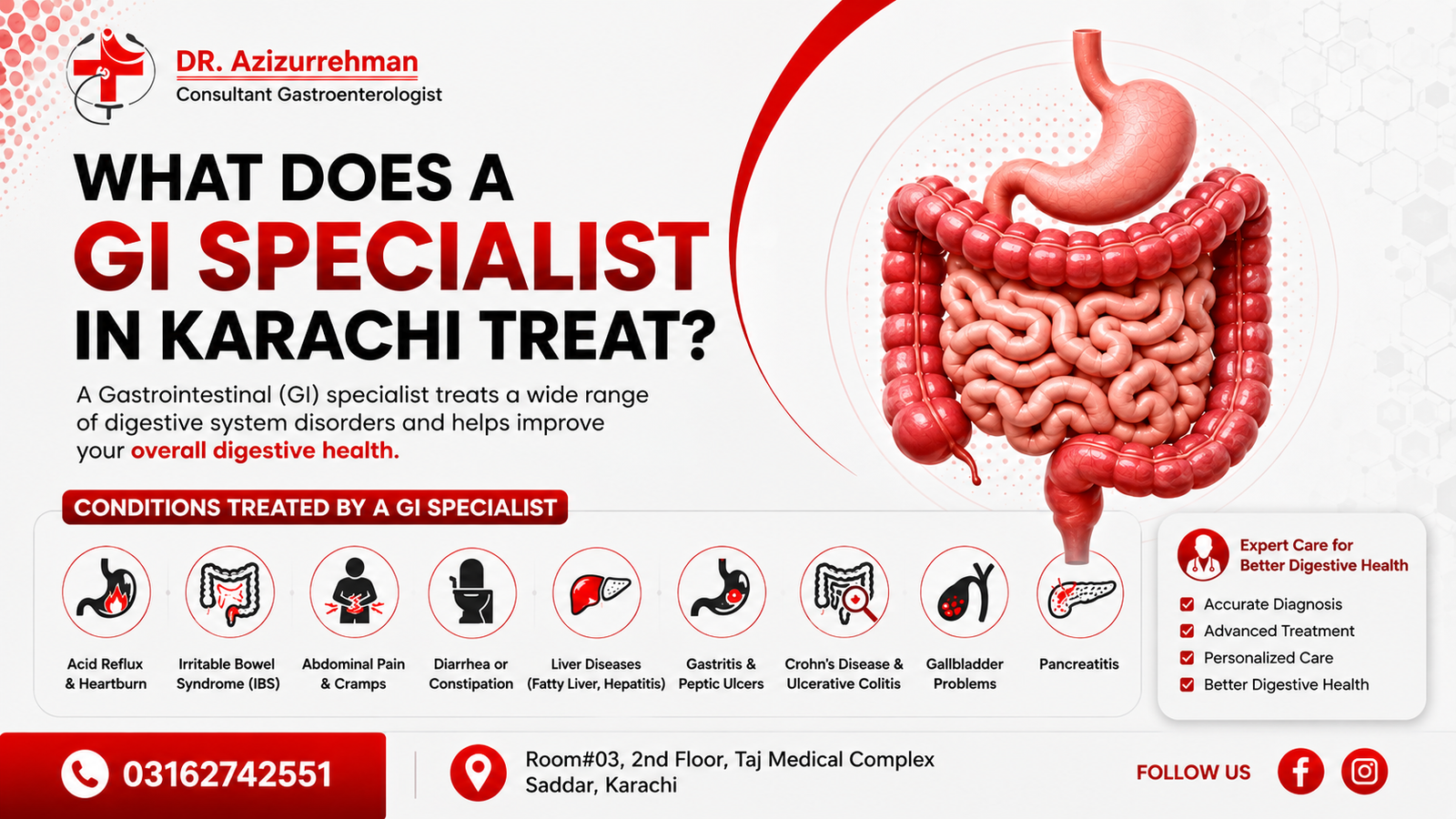
A GI specialist in Karachi may evaluate a wide range of digestive and hepatobiliary conditions.
Some are temporary and relatively straightforward, while others require long-term monitoring or specialist treatment.
Common problems include acid reflux, gastritis, peptic ulcers, irritable bowel syndrome, persistent constipation or diarrhea, inflammatory bowel disease, liver disease, hepatitis, gallbladder disorders, and pancreatic conditions.
A gastroenterologist may also become involved when symptoms remain unexplained despite initial treatment from a general physician.
Acid Reflux and GERD
Acid reflux occurs when stomach contents move upward into the esophagus.
Common symptoms include heartburn, a sour taste in the mouth, regurgitation, and discomfort after eating.
Frequent reflux may be associated with gastroesophageal reflux disease, commonly called GERD.
Persistent symptoms should not simply be managed indefinitely with self-medication. A doctor can assess possible causes and determine whether additional testing or treatment is appropriate.
Gastritis and Peptic Ulcers
Gastritis refers to inflammation of the stomach lining.
Peptic ulcers are sores that can develop in the stomach or the first part of the small intestine.
Symptoms can include upper abdominal discomfort, burning pain, nausea, bloating, or early fullness.
Some ulcers may also cause gastrointestinal bleeding.
Because several digestive conditions can cause similar symptoms, diagnosis matters before long-term treatment is selected.
Irritable Bowel Syndrome
Irritable bowel syndrome, or IBS, can cause recurring abdominal discomfort accompanied by changes in bowel habits.
Some people mainly experience constipation, others diarrhea, while some alternate between the two.
IBS symptoms can overlap with other gastrointestinal disorders.
Medical assessment can help determine whether symptoms are consistent with IBS or whether investigations are needed to rule out another condition.
Inflammatory Bowel Disease
Inflammatory bowel disease, or IBD, primarily includes Crohn’s disease and ulcerative colitis.
Unlike IBS, these conditions involve inflammation within the digestive tract.
Persistent diarrhea, abdominal pain, blood in stool, fatigue, and unintended weight loss can occur.
Diagnosis and treatment generally require specialist care and ongoing monitoring.
Liver and Hepatitis Problems
The liver is part of the digestive system, so gastroenterology often overlaps with hepatology.
A GI or liver specialist may assess abnormal liver tests, fatty liver disease, hepatitis, jaundice, or other liver-related problems.
Not every liver problem produces obvious symptoms early on.
Abnormal blood tests or imaging findings may therefore be the reason a patient is referred for specialist evaluation.
Gallbladder and Pancreatic Conditions
Gallstones and other gallbladder disorders may cause pain, particularly in the upper-right abdomen.
Pancreatic conditions can also produce abdominal pain, nausea, digestive changes, or other symptoms.
The correct evaluation depends on the location and pattern of symptoms, physical examination, laboratory findings, and imaging when appropriate.
When Should You Visit a GI Specialist in Karachi?
Consider seeing a GI specialist when digestive symptoms are persistent, recurrent, worsening, or interfering with daily life.
Specialist evaluation may also be appropriate for gastrointestinal bleeding, unexplained weight loss, swallowing difficulty, jaundice, persistent vomiting, or abnormal liver tests.
Common reasons to arrange an evaluation include:
- Persistent or recurring abdominal pain
- Frequent heartburn or acid reflux
- Ongoing constipation or diarrhea
- Blood in the stool or black, tar-like stool
- Unexplained weight loss or loss of appetite
- Persistent nausea or vomiting
- Difficulty or pain when swallowing
- Persistent bloating with other digestive symptoms
- Yellowing of the skin or eyes
- Abnormal liver tests or digestive imaging results
These symptoms do not automatically mean that a serious disease is present.
They do, however, provide a reason to seek medical assessment rather than relying only on home remedies or repeated self-medication.
GI Specialist vs General Physician: Who Should You See?
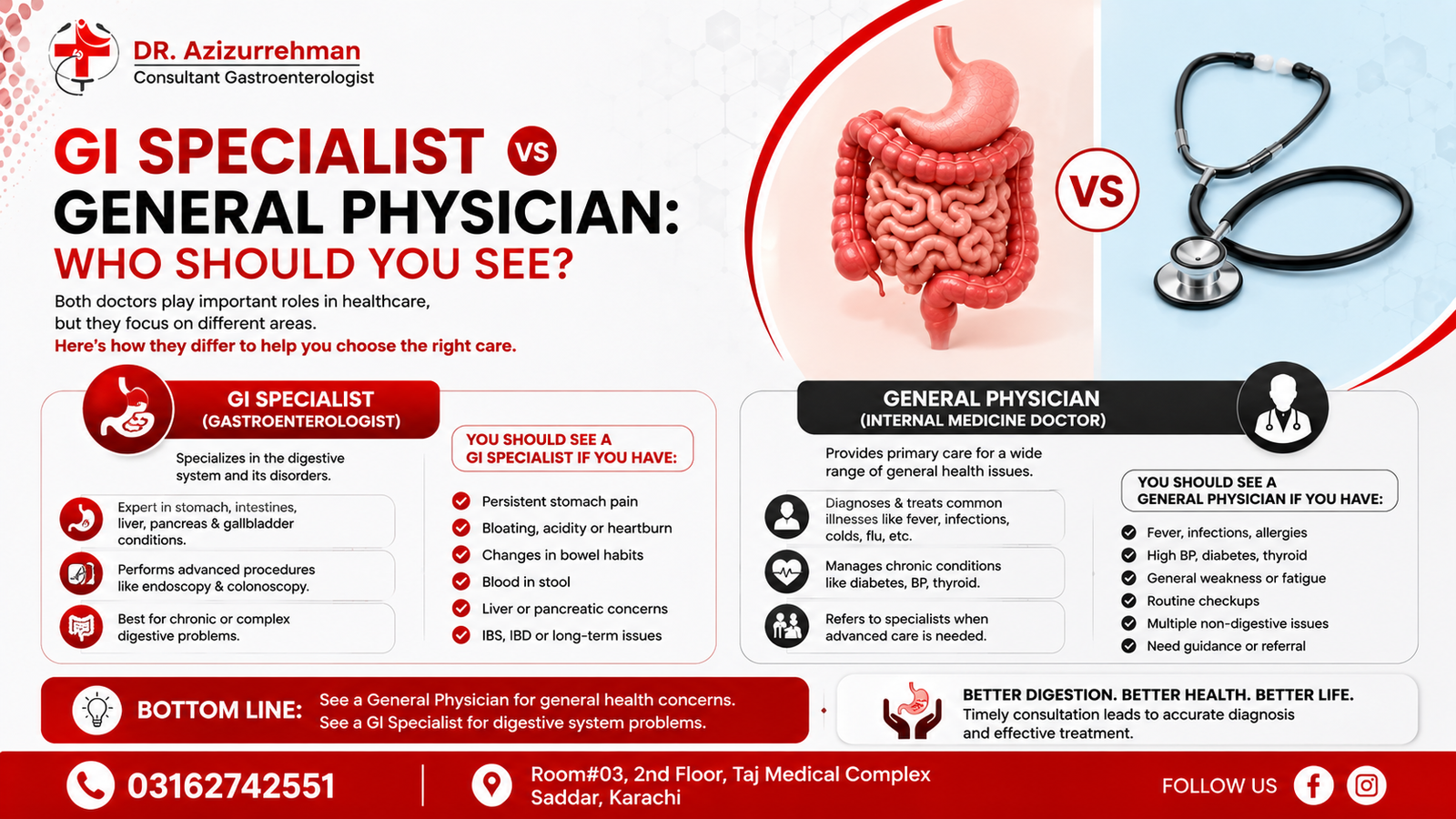
A general physician is often an appropriate starting point for new or mild digestive symptoms.
A gastroenterologist becomes particularly useful when symptoms persist, recur, require specialized testing, or suggest a more complex digestive or liver condition.
Factor | General Physician | GI Specialist |
Main role | Broad medical care | Digestive-system care |
Occasional mild indigestion | Often appropriate | Usually not the first step |
Persistent digestive symptoms | May provide initial evaluation | Specialist assessment may be useful |
Chronic liver or bowel disease | May help with general management | Often requires specialist involvement |
Endoscopy or colonoscopy | Usually refers when needed | Evaluates the need for and may perform GI procedures |
Complex GI symptoms | Initial assessment possible | More focused digestive evaluation |
If you are unsure where to begin, a general physician can assess the symptoms and determine whether referral to a gastroenterologist is appropriate.
How Does a GI Specialist Diagnose Digestive Problems?
Diagnosis usually starts with your symptoms and medical history rather than immediately with a procedure.
A GI specialist may ask about symptom duration, bowel habits, diet, medications, previous illnesses, family history, weight changes, and factors that make symptoms better or worse.
A physical examination can provide additional information.
Depending on the suspected problem, the doctor may then recommend blood tests, stool testing, imaging, or a gastrointestinal procedure.
The investigations needed for one patient may be completely different from those needed for another.
Persistent abdominal pain, for example, has many possible causes, so testing should be based on the clinical picture rather than symptoms alone.
What Is an Endoscopy?
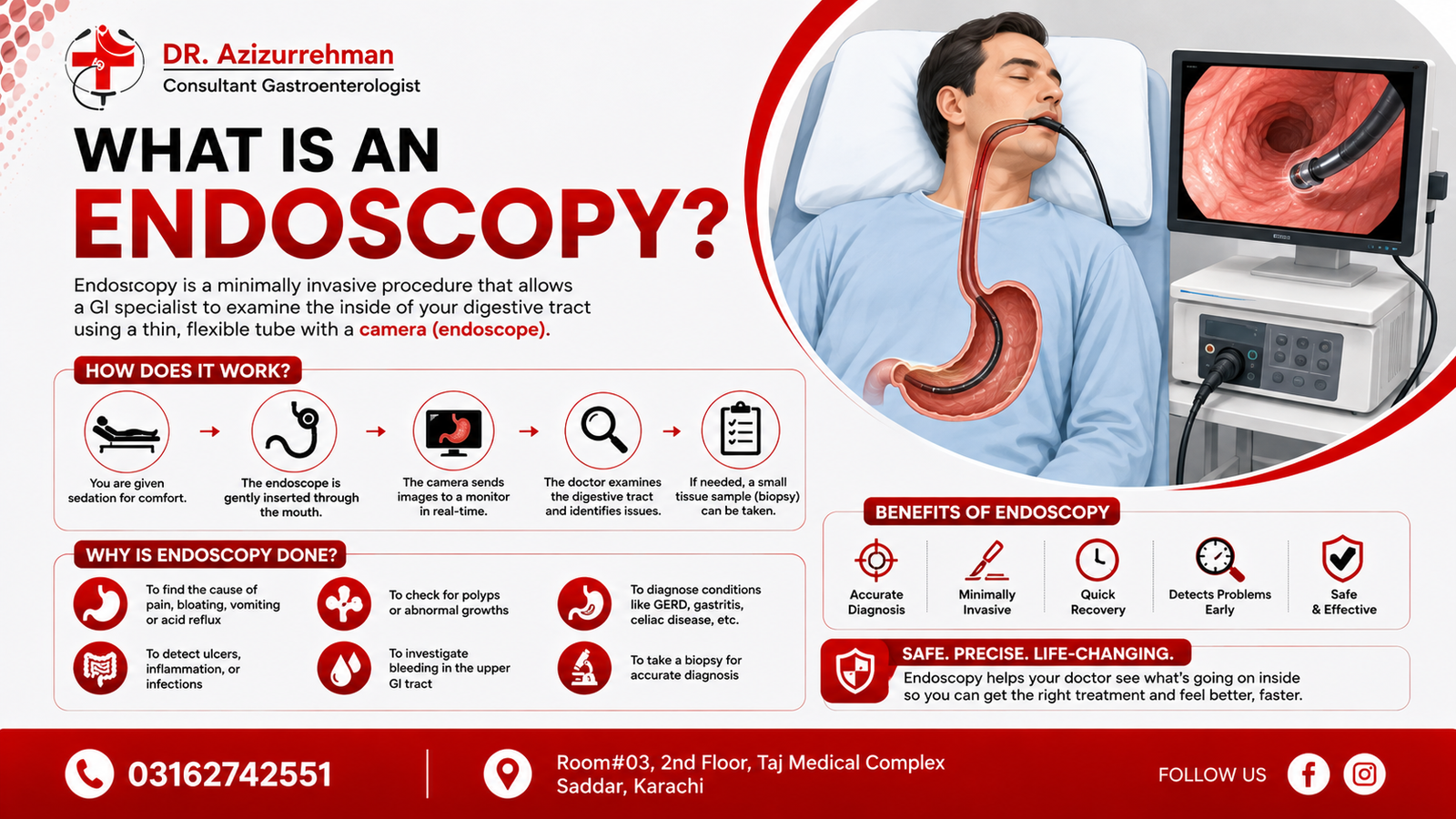
An upper GI endoscopy is a procedure that allows a doctor to examine the upper digestive tract using a thin, flexible instrument with a camera.
It can be used to assess the esophagus, stomach, and beginning of the small intestine.
A doctor may consider an endoscopy for certain cases of persistent upper abdominal symptoms, swallowing problems, gastrointestinal bleeding, recurrent vomiting, or other symptoms requiring direct examination of the upper GI tract.
Endoscopy is not necessary for every person with acidity or stomach discomfort.
The decision depends on symptoms, age, medical history, warning signs, previous treatment, and the doctor’s assessment.
What Is a Colonoscopy?
A colonoscopy allows a specialist to examine the inside of the large intestine, or colon, using a flexible camera. It may be recommended to investigate certain bowel symptoms, gastrointestinal bleeding, unexplained changes in bowel habits, or for colorectal cancer screening in appropriate patients.
The need for colonoscopy depends on individual circumstances.
Age, symptoms, family history, previous test results, and other risk factors can influence the decision.
Patients should discuss why the procedure is being recommended, how to prepare, and what the possible findings may mean.
Are Endoscopy and Colonoscopy the Same?
No. Both involve examination of the digestive tract, but they assess different areas.
Upper endoscopy examines the esophagus, stomach, and upper part of the small intestine, while colonoscopy examines the large intestine and rectum.
A gastroenterologist determines which investigation, if any, is appropriate according to the patient’s symptoms and clinical findings.
How to Choose a GI Specialist in Karachi

Choosing a doctor should involve more than searching for the closest clinic.
Patients should consider whether the doctor’s professional background and scope of practice are appropriate for the digestive problem being evaluated.
Look at the doctor’s verified medical qualifications and professional registration.
Consider their clinical focus, particularly if you need care for a specific issue such as liver disease, chronic bowel symptoms, reflux, or a gastrointestinal procedure.
It is also useful to consider hospital or clinic accessibility within Karachi, appointment availability, follow-up arrangements, and whether the doctor clearly explains the diagnosis and treatment options.
For procedures such as endoscopy or colonoscopy, patients can ask where the procedure is performed, why it is needed, what preparation is required, and how follow-up will be handled.
Consulting Dr. Aziz Ur Rehman for Digestive Problems in Karachi
Patients researching gastrointestinal care in Karachi may also come across Dr. Aziz Ur Rehman, who practices in Karachi and is listed as a gastroenterologist alongside internal medicine-related specialties.
Public professional profiles list qualifications including MBBS, FCPS (Medicine), and MCPS (Medicine), while his gastroenterology practice includes digestive and liver-related care.
His practice website lists services related to endoscopy and colonoscopy, liver and hepatitis care, acid reflux, IBS and stomach disorders, pancreatic and gallbladder conditions, constipation, and other digestive concerns.
Patients considering a consultation should confirm current clinic timings, availability, and whether their particular condition or required procedure falls within the doctor’s current practice before booking.
His listed practice location is at Taj Medical Complex on M.A. Jinnah Road in Karachi.
What Should You Tell Your Gastroenterologist?
A productive consultation depends partly on giving the doctor a clear picture of what has been happening.
Try to explain when the symptoms started, where discomfort occurs, how frequently it happens, and whether food or bowel movements affect it.
Tell the doctor about vomiting, stool changes, bleeding, fever, appetite changes, or unexpected weight changes.
Bring previous laboratory reports, scans, endoscopy reports, prescriptions, and a current medication list if available.
Family history can also matter, particularly for certain digestive diseases and colorectal cancer.
Avoid stopping prescribed medicines or starting new treatments solely because of information found online.
Your doctor can determine whether medication changes are appropriate for your individual situation.
Can Digestive Problems Be Prevented?
Not every gastrointestinal condition is preventable, but everyday habits can influence digestive health and may reduce some avoidable problems.
Eating a balanced diet with appropriate fiber, staying adequately hydrated, remaining physically active, and maintaining healthy food hygiene can support normal digestive function.
Individual dietary needs vary, particularly for people with diagnosed gastrointestinal conditions.
Smoking and alcohol can worsen or contribute to certain digestive and liver problems, while unnecessary or prolonged use of some medicines may affect the stomach or digestive tract.
Medication changes should always be discussed with an appropriate healthcare professional.
For recurring symptoms, keeping a short record of meals, bowel habits, pain, and other symptoms can sometimes help a doctor identify patterns.
However, restrictive diets should not replace proper evaluation when symptoms are persistent.
When Are Digestive Symptoms an Emergency?
Some gastrointestinal symptoms require urgent medical assessment rather than a routine clinic appointment.
Seek urgent medical care for severe or rapidly worsening abdominal pain, vomiting blood, significant rectal bleeding, black tar-like stool, persistent vomiting with inability to keep fluids down, fainting or marked weakness associated with bleeding, or severe abdominal symptoms accompanied by a rigid or markedly swollen abdomen.
Yellowing of the skin or eyes accompanied by severe illness, confusion, fever, or significant abdominal pain also deserves prompt medical attention.
The urgency of any symptom depends on the complete clinical situation.
When symptoms are severe or rapidly worsening, it is safer to seek immediate medical evaluation.
Frequently Asked Questions
What does a GI specialist do?
A GI specialist diagnoses and manages diseases affecting the digestive tract and related organs, including the esophagus, stomach, intestines, liver, gallbladder, bile ducts, and pancreas.
Is a GI specialist the same as a gastroenterologist?
Yes. “GI specialist” is commonly used as a shorter term for a gastroenterologist, a doctor specializing in gastrointestinal and digestive-system conditions.
Should I see a gastroenterologist for constant acidity?
Occasional acidity may not require specialist care. If reflux is frequent, persistent, worsening, difficult to control, or associated with swallowing difficulty, bleeding, vomiting, or weight loss, medical evaluation is advisable.
Which doctor should I see for stomach and liver problems?
A gastroenterologist commonly manages stomach disorders, while many gastroenterologists also manage liver conditions.
Some doctors have a specific focus on hepatology, which deals with liver disease.
Does every stomach problem require an endoscopy?
No. Endoscopy is recommended only when the clinical situation justifies it.
Symptoms, medical history, age, warning signs, and response to previous treatment can all influence the decision.
When should I worry about abdominal pain?
Seek medical attention if abdominal pain is severe, persistent, worsening, or associated with bleeding, repeated vomiting, fever, jaundice, unexplained weight loss, fainting, or major changes in bowel habits.
Can a GI specialist treat IBS and constipation?
Yes. Gastroenterologists commonly evaluate persistent constipation and IBS-type symptoms.
Because similar symptoms can occur in different conditions, proper assessment helps determine the appropriate management approach.
How should I prepare for my first GI appointment?
Bring previous test reports, scans, prescriptions, and a medication list.
Be ready to describe your symptoms, their duration, bowel changes, diet-related patterns, and relevant personal or family medical history.
Conclusion
Finding the right GI specialist in Karachi starts with understanding why specialist care may be needed.
Persistent abdominal pain, reflux, bowel changes, liver abnormalities, gastrointestinal bleeding, swallowing difficulties, or unexplained digestive symptoms should not simply be ignored or repeatedly self-treated.
A gastroenterologist can assess the complete clinical picture and determine whether lifestyle changes, medication, laboratory testing, imaging, endoscopy, colonoscopy, or another approach is appropriate.
Patients considering Dr. Aziz Ur Rehman for gastrointestinal concerns can review his professional information and digestive-care services and confirm current appointment details before visiting.
Most importantly, choose care according to your actual symptoms and medical needs rather than relying on labels such as “best” or “top” without appropriate evidence.