
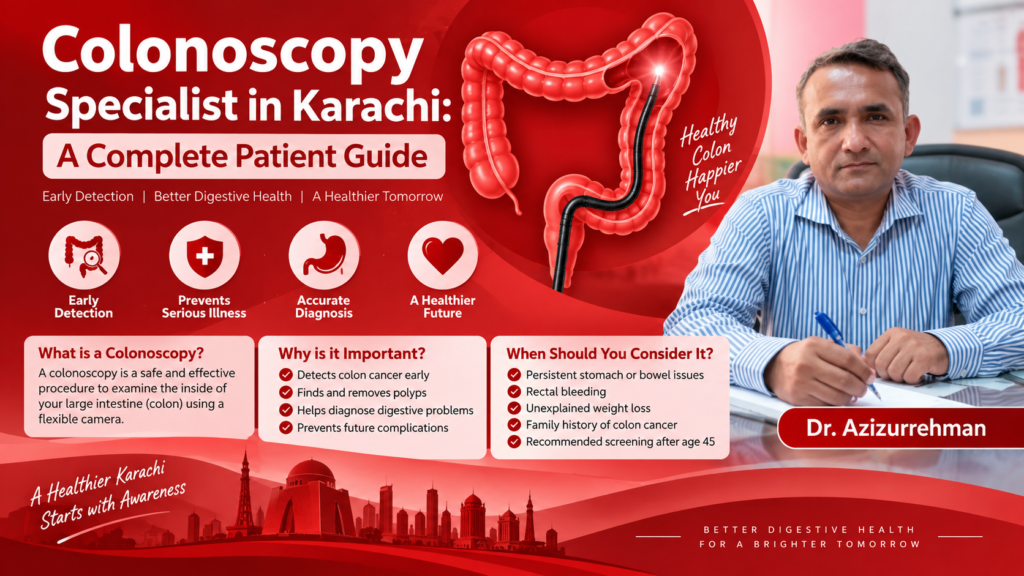
What Is a Colonoscopy?
A colonoscopy is a medical examination of the large intestine, including the colon and rectum.
A thin, flexible tube called a colonoscope has a light and camera at its tip. The doctor guides it through the rectum while viewing the bowel lining on a monitor. Biopsies can be taken and many suitable polyps can be removed during the examination.
A colonoscopy can be used for both diagnosis and colorectal cancer screening. It may be recommended when a patient has persistent bowel symptoms, rectal bleeding, unexplained anemia, changes in bowel habits, or other findings that need further investigation.
It is also used for surveillance in some people who previously had polyps or other colorectal findings.
Why Might a Doctor Recommend a Colonoscopy?
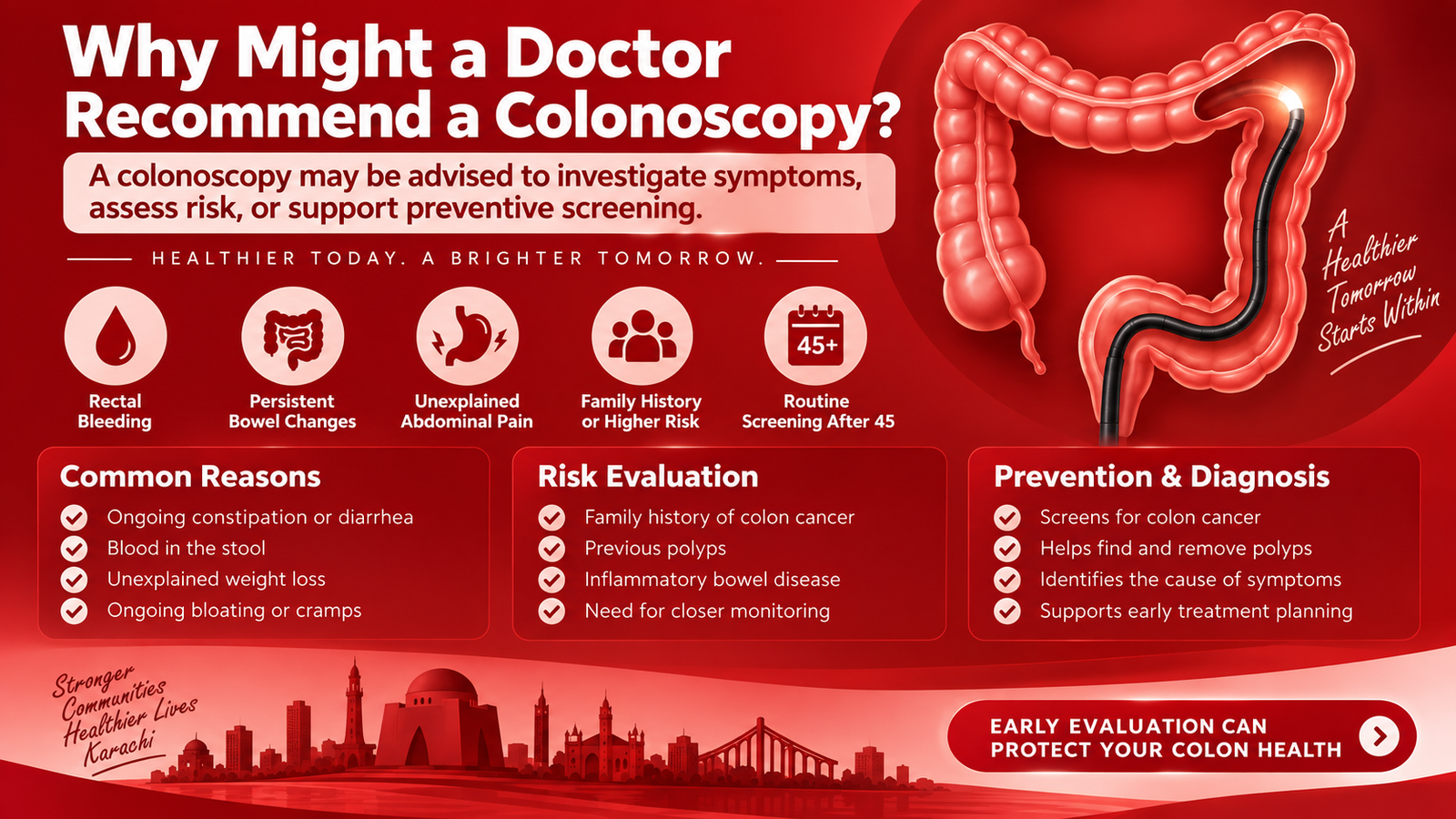
The reason for colonoscopy differs from patient to patient. A doctor generally considers symptoms, medical history, age, family history, previous test results, and individual risk factors before recommending the procedure.
Common reasons include:
- Persistent changes in bowel habits
- Rectal bleeding or blood in the stool
- Unexplained iron deficiency anemia
- Persistent abdominal discomfort
- Unexplained weight loss associated with digestive symptoms
- Previous colorectal polyps
- Abnormal findings from other bowel investigations
- Assessment of suspected inflammatory bowel disease
- Colorectal cancer screening based on age and individual risk
Rectal bleeding should not automatically be assumed to be caused by hemorrhoids. A healthcare professional can determine whether further investigation is appropriate.
For average-risk adults, the U.S. Preventive Services Task Force recommends colorectal cancer screening beginning at age 45, although screening decisions can differ according to individual circumstances and local medical practice.
Does everyone with bowel symptoms need a colonoscopy?
No. Having abdominal discomfort, constipation, diarrhea, or another digestive symptom does not automatically mean that colonoscopy is required.
A doctor may first consider the duration and severity of symptoms, medical history, physical examination, laboratory tests, stool tests, imaging, or other investigations. Colonoscopy is selected when it is appropriate for the clinical question.
This is why a consultation with a qualified gastroenterology professional can be useful before arranging an invasive procedure.
What Can a Colonoscopy Detect?
Colonoscopy provides a direct view of the lining of the colon and rectum.
It can help doctors identify abnormalities that may require further investigation or treatment.
Possible findings include:
Finding | What colonoscopy may help with |
Colon polyps | Detection and removal of many suitable polyps |
Abnormal bleeding | Investigation of a possible source of lower gastrointestinal bleeding |
Inflamed bowel lining | Assessment and biopsy of inflamed areas |
Suspicious lesions | Direct visualization and tissue sampling |
Colorectal cancer | Identification of suspicious areas and biopsy |
Previous polyps | Follow up and surveillance |
Changes in bowel habits | Investigation of possible structural causes |
A polyp does not automatically mean cancer. Polyps can have different characteristics, and tissue removed during colonoscopy may need laboratory examination before a diagnosis is established.
What Does a Colonoscopy Specialist Do?

A gastroenterologist or another appropriately trained endoscopist usually performs a colonoscopy.
The specialist evaluates whether the examination is appropriate, explains preparation requirements, performs or supervises the procedure, and determines whether biopsies or polyp removal are appropriate.
A gastroenterologist may also distinguish between conditions that can be investigated or treated through endoscopy and those that require another type of specialist.
For example, gastroenterologists commonly manage digestive diseases and perform endoscopic procedures, while colorectal surgeons specialize in surgical conditions involving the colon, rectum, and anus.
The appropriate referral depends on the patient’s condition.
How to Choose a Colonoscopy Specialist in Karachi
Searching for a colonoscopy specialist in Karachi can produce many names, but online descriptions alone cannot determine which doctor is appropriate for an individual patient.
Before scheduling the procedure, consider the specialist’s relevant medical qualifications and gastroenterology or endoscopy training.
It is also reasonable to ask about experience with diagnostic colonoscopy, biopsy, polyp removal, sedation arrangements, monitoring, and follow-up.
The medical facility matters as well. Ask where the procedure will take place and whether appropriate equipment, trained staff, patient monitoring, recovery facilities, and emergency arrangements are available.
Cost can also matter, but it should be considered alongside the medical and procedural arrangements rather than by itself.
Questions to ask before booking
- Why has colonoscopy been recommended for me?
- What is the doctor looking for?
- What preparation do I need?
- What medicines should I continue or temporarily adjust?
- Will sedation be used?
- What happens if a polyp is found?
- Can a biopsy be taken during the procedure?
- When should I expect the results?
- What symptoms after the procedure require urgent medical attention?
- Where will the procedure and recovery take place?
These questions can help you understand the process before giving consent.
Colonoscopy Preparation: What Should Patients Expect?
Good bowel preparation is one of the most important parts of a colonoscopy. The colon needs to be sufficiently empty so the doctor can see its lining clearly.
If preparation is inadequate, parts of the bowel may not be visible and the examination may need to be repeated or delayed.
Preparation instructions vary according to the bowel cleansing product and the scheduled procedure. Patients may be asked to change their diet before the examination and take a prescribed bowel preparation solution.
Some preparation plans begin one or two days before the procedure. Your healthcare team should provide specific instructions rather than relying on a general online schedule.
What about medicines?
Tell the doctor about all medicines and supplements you take. Particular attention may be needed if you use blood thinning medicines, diabetes medicines, iron supplements, or other medicines that could affect preparation or the procedure.
Do not independently stop prescribed medicines. Ask the doctor or endoscopy team what changes, if any, are required.
Patients with kidney disease, heart failure, liver disease, diabetes, or other significant medical conditions may need specific preparation advice because bowel cleansing can contribute to fluid and electrolyte problems in some circumstances.
What Happens During a Colonoscopy?
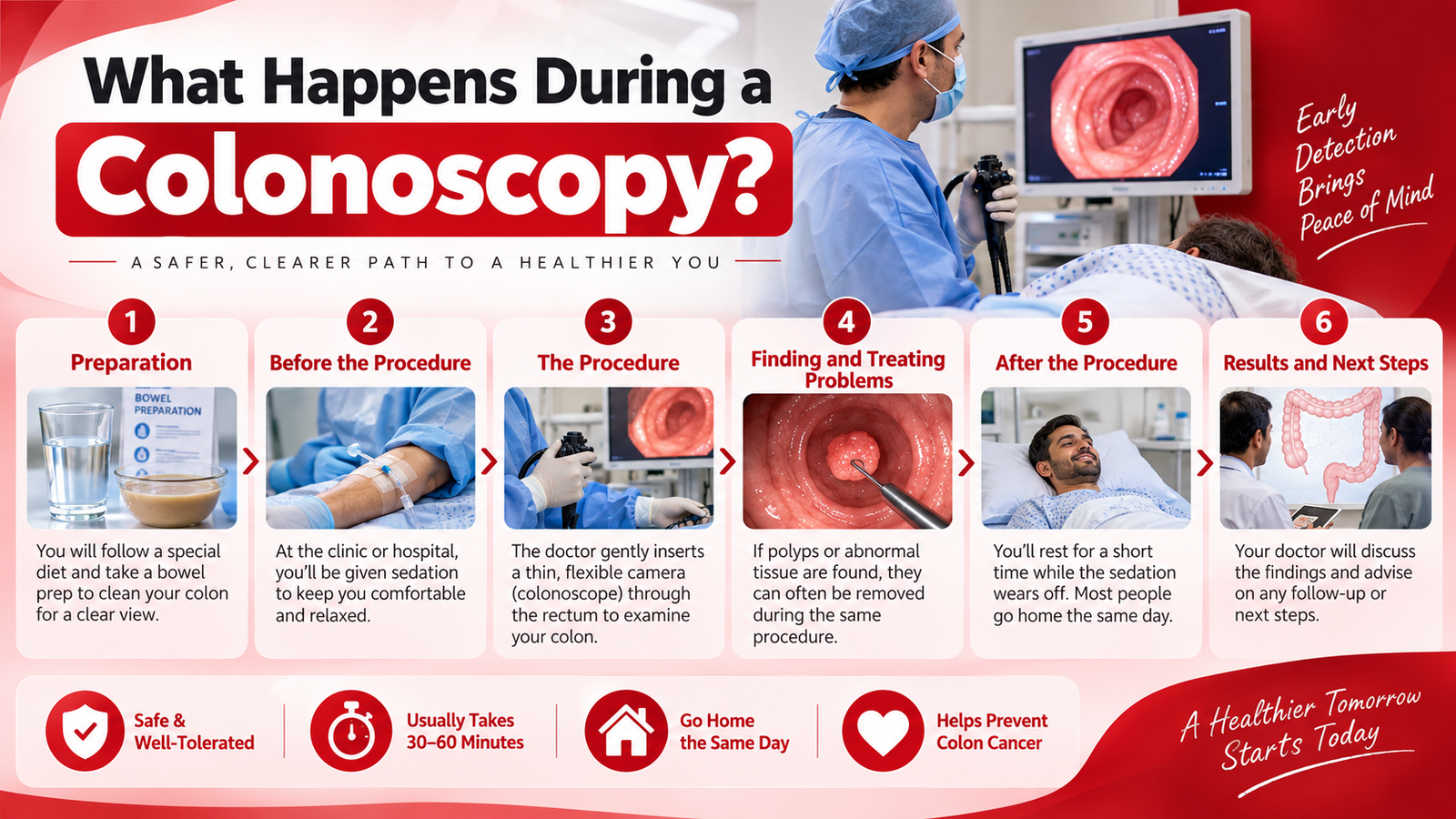
On the day of the procedure, the healthcare team will explain what is going to happen and confirm the preparation and relevant medical information.
Depending on the facility and the patient’s circumstances, medication may be offered to improve comfort or provide sedation.
The colonoscope is then gently passed through the rectum and advanced through the large intestine.
Air or carbon dioxide may be introduced to expand the bowel and improve visibility.
Patients can experience pressure, bloating, or cramping during the examination.
If the doctor sees a suitable polyp, it may be removed.
If an abnormal area needs further investigation, a small tissue sample can be collected for laboratory analysis.
The examination itself can take around 30 to 45 minutes, although the total time at the medical facility may be longer because of preparation, sedation, recovery, and monitoring.
Is Colonoscopy Painful?
People experience colonoscopy differently. Some patients mainly notice pressure or bloating, while others may experience cramping as the scope moves through bends in the bowel.
Sedation or other comfort measures may be available depending on the facility and the patient’s medical circumstances.
It is useful to discuss comfort and sedation options before the procedure rather than making assumptions about what will be offered.
If you feel significant discomfort during the examination, tell the medical team. They can assess the situation and use appropriate measures to improve comfort.
What Are the Benefits of Colonoscopy?
One important advantage of colonoscopy is that it provides a direct examination of the colon.
Unlike tests that provide indirect information, colonoscopy can allow the doctor to see abnormal tissue directly and, when appropriate, take a biopsy or remove a polyp during the same procedure.
It can therefore play an important role in investigating bowel symptoms and screening for colorectal cancer.
However, no medical test is perfect. A colonoscopy can occasionally be incomplete or fail to identify an abnormality, particularly when bowel preparation is inadequate or visibility is limited.
Colonoscopy vs Other Digestive Tests
Colonoscopy is not automatically the right test for every digestive complaint. The appropriate investigation depends on the suspected problem.
Test | Main area or purpose | When it may be considered |
Colonoscopy | Colon and rectum | Selected bowel symptoms, screening, polyps, bleeding, surveillance |
Upper GI endoscopy | Esophagus, stomach and upper small intestine | Upper digestive symptoms such as certain reflux, swallowing or stomach concerns |
Stool tests | Stool sample | Certain infections, bleeding or bowel investigations |
Ultrasound | Abdominal organs | Assessment of structures such as liver and gallbladder |
CT or other imaging | Internal structures | Depends on the suspected condition |
The choice should be based on the clinical question. A specialist may recommend one test, several tests, or no endoscopic test depending on the patient’s symptoms and risk factors.
What Are the Risks of Colonoscopy?
Colonoscopy is generally considered safe, but it is still an invasive procedure and complications can occur.
Possible complications include bleeding, perforation of the bowel, incomplete examination, and reactions to sedation. Bleeding is more likely after certain procedures such as polyp removal or biopsy.
Serious complications are uncommon, but patients should understand the risks before consenting to the examination.
The risk can vary depending on the patient’s health and what is done during the procedure. Your doctor should explain risks that are particularly relevant to your circumstances.
What Should You Expect After Colonoscopy?
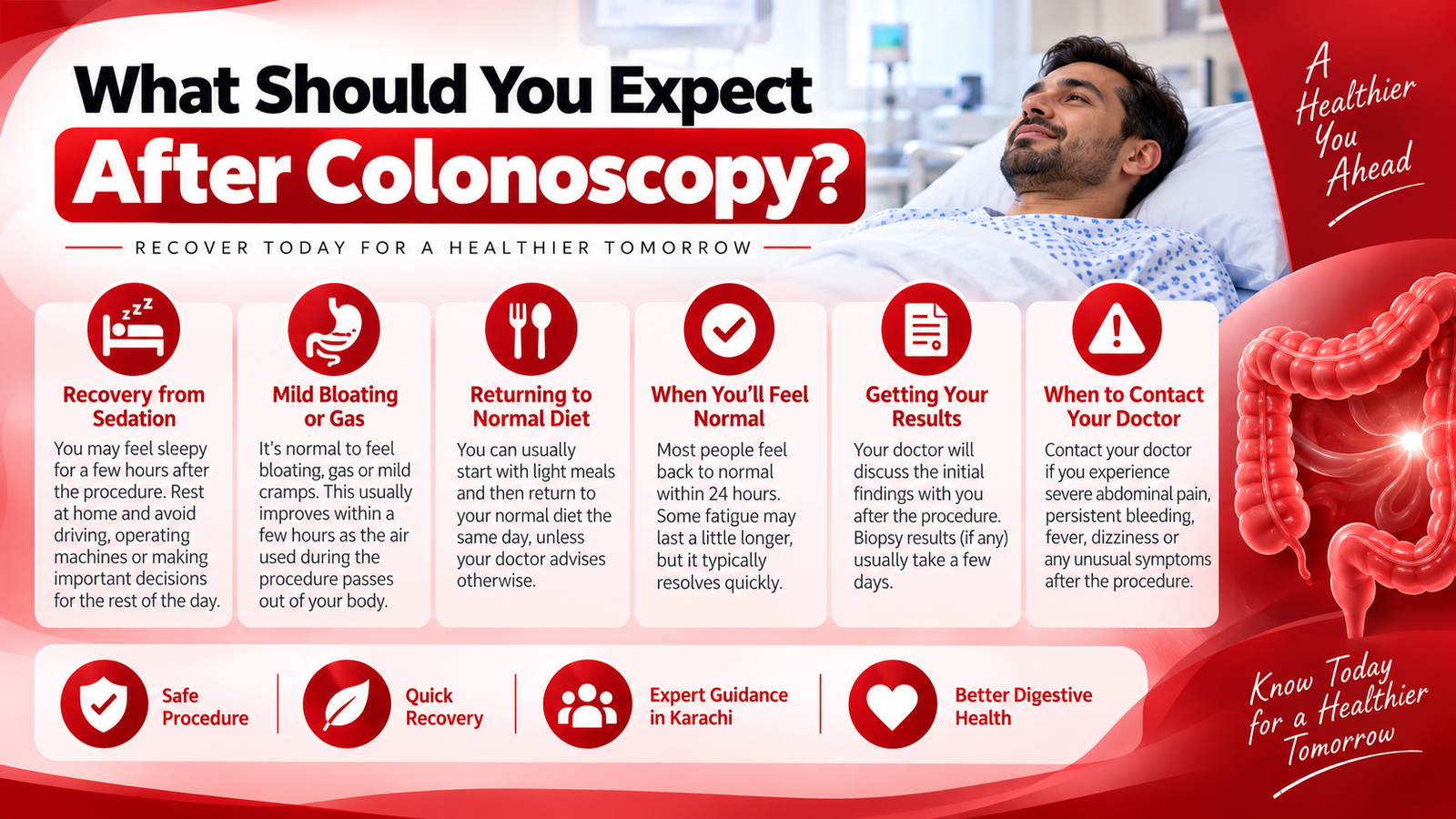
Mild bloating or abdominal cramping can occur for a short time after the examination. Some patients may also notice a small amount of blood after a biopsy or polyp removal.
If sedation is used, you may need someone to take you home and should follow the facility’s instructions about driving and other activities. NHS guidance, for example, advises patients not to drive for 24 hours after sedation.
Seek urgent medical advice if you develop heavy or increasing bleeding, severe or worsening abdominal pain, fever, or other concerning symptoms after the procedure.
Considering Dr Azizurrehman for Colonoscopy Consultation in Karachi
Patients researching a colonoscopy specialist in Karachi may also come across Dr Azizurrehman. Publicly available healthcare listings identify Dr Aziz Ur Rehman as a gastroenterologist and internal medicine specialist, with MBBS, FCPS (Medicine), and MCPS (Medicine) listed among his qualifications.
His publicly available practice information also describes gastroenterology and endoscopy related services.
If you are considering a consultation, discuss your symptoms, previous reports, family history, medicines, and the reason for considering colonoscopy. Also confirm the doctor’s current qualifications, clinical role, procedure location, preparation instructions, sedation arrangements, and follow up directly with the relevant healthcare facility.
The aim should be to find a medically appropriate specialist and procedure setting for your individual situation rather than relying only on online labels or rankings.
When Should You Seek Medical Attention?
Some bowel symptoms deserve timely medical assessment rather than prolonged self treatment.
Important symptoms can include persistent rectal bleeding, unexplained weight loss, ongoing changes in bowel habits, unexplained iron deficiency anemia, persistent abdominal symptoms, or a strong family history of colorectal cancer or certain polyps.
These symptoms do not automatically indicate cancer. They simply mean that a healthcare professional may need to investigate the underlying cause.
Important warning signs after colonoscopy
Contact the medical facility or seek urgent medical assessment if you experience:
- Heavy or worsening rectal bleeding
- Severe or increasing abdominal pain
- Fever or significant chills
- Other sudden symptoms that concern you after the procedure
These symptoms can occasionally indicate a complication and should not be ignored.
Common Mistakes Patients Make Before Colonoscopy
One common problem is treating bowel preparation as a minor part of the procedure. Inadequate preparation can reduce visibility and may result in an incomplete examination or the need for another procedure.
Another mistake is failing to tell the medical team about medicines or important health conditions. Blood thinners, diabetes medicines, kidney problems, heart conditions, and other factors can affect preparation or procedural planning.
Patients should also avoid assuming that every colonoscopy follows exactly the same preparation schedule. Follow the instructions provided by your own healthcare team.