
What Is a Colonoscopy?
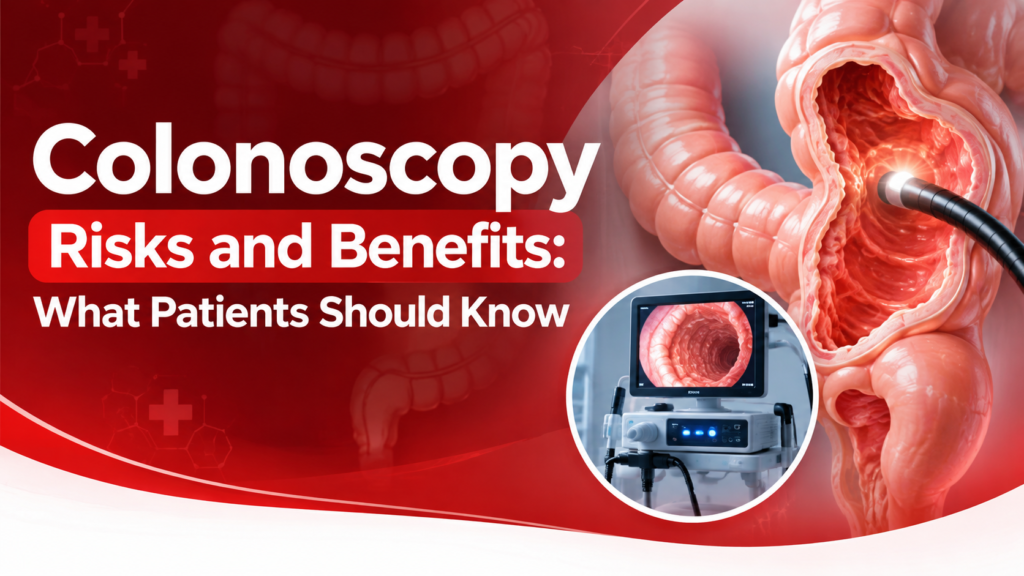
A colonoscopy is a test used to examine the large intestine, also called the colon. During the procedure, a doctor gently passes a colonoscope through the rectum and into the colon.
The colonoscope has a small camera. It sends pictures to a screen, allowing the doctor to check the inside lining of the bowel.
A colonoscopy can help find:
- Polyps
- Inflammation
- Ulcers
- Sources of bleeding
- Abnormal tissue
- Signs of colorectal cancer
If the doctor sees something unusual, they may remove a polyp or take a small tissue sample called a biopsy.
A colonoscopy may be done because a person has symptoms. It may also be used as a screening test for people who do not have symptoms but have reached the recommended age for colorectal cancer screening.
Why Do Doctors Recommend a Colonoscopy?

Doctors may recommend a colonoscopy when they need a closer look at the colon.
Common reasons include:
- Blood in the stool
- Bleeding from the rectum
- Long-lasting changes in bowel movements
- Ongoing diarrhea
- Unexplained abdominal pain
- Unexplained weight loss
- A history of colon polyps
- An abnormal result from another screening test
Colonoscopy is also used for colorectal cancer screening. For adults at average risk, the U.S. Preventive Services Task Force recommends colorectal cancer screening from ages 45 to 75. Adults aged 76 to 85 may need an individual discussion with their doctor.
People with a higher risk may need screening at a different age or more often. This can include people with a strong family history of colorectal cancer, previous polyps, inflammatory bowel disease, or certain inherited conditions.
Your doctor can recommend a screening plan based on your personal history and risk factors.
What Are the Benefits of Colonoscopy?
One of the main benefits of colonoscopy is that it allows the doctor to see the colon directly. It can also allow some problems to be treated during the same procedure.
1. It Gives a Clear View of the Colon
A colonoscopy allows the doctor to look directly at the lining of the rectum and colon.
This can help find problems that may not be clear from blood tests or other basic tests. The doctor can look for swelling, ulcers, bleeding, polyps, and other unusual areas.
2. Polyps Can Be Removed
Polyps are small growths that can develop on the lining of the colon. Many polyps are not cancerous, but some types can become cancer over time.
During a colonoscopy, the doctor can often remove polyps that are found. The removed tissue can then be sent to a laboratory for testing.
Removing certain types of polyps can help lower the risk of colorectal cancer.
3. A Biopsy Can Be Taken
If the doctor finds tissue that looks unusual, they can take a small sample for testing.
This is called a biopsy. The sample is examined in a laboratory to help identify the cause of the abnormal tissue.
Most patients do not feel the biopsy being taken.
4. It Can Find Colorectal Cancer
Colonoscopy can find colorectal cancer and some growths that may become cancer later.
Finding cancer or precancerous growths early can give patients an opportunity to receive treatment sooner.
For this reason, colorectal cancer screening is an important part of preventive healthcare for people who meet the screening criteria.
5. It Can Help Find the Cause of Digestive Symptoms
Doctors may use colonoscopy when symptoms such as rectal bleeding, ongoing bowel changes, or unexplained weight loss need further investigation.
However, not every digestive problem requires a colonoscopy. The decision depends on the person’s symptoms, age, medical history, and other test results.
What Are the Risks of Colonoscopy?

Colonoscopy is generally considered a safe procedure, but it is not completely risk free.
The main risks include bleeding, a tear in the colon, and problems related to sedation. The level of risk can vary from person to person.
Bleeding
Bleeding can happen after a biopsy or removal of a polyp.
A small amount of bleeding may occur and may not be serious. In some cases, however, bleeding can be heavier or happen several days after the procedure.
The U.S. Preventive Services Task Force evidence review estimated major bleeding at about 14.6 cases per 10,000 screening colonoscopies. The risk for an individual patient may be different.
Bowel Perforation
A bowel perforation is a small tear or hole in the wall of the colon.
This is uncommon but can be serious. The National Institute of Diabetes and Digestive and Kidney Diseases reports that perforation occurs in about 3 out of every 10,000 screening colonoscopies.
Some cases may require surgery or other treatment.
The risk can be higher in certain situations, including when some types of polyps are removed.
Reaction to Sedation
Many people receive medicine to help them relax or sleep during the procedure.
Sedation is usually well monitored, but it can sometimes affect breathing, blood pressure, or heart rate.
Before the procedure, tell your healthcare team about your medical conditions, allergies, and all medicines or supplements you take.
This information can help the team choose the safest approach for you.
Bloating and Cramping
Some people feel bloated or have mild abdominal cramps after a colonoscopy.
This can happen because air or gas is used during the examination to help the doctor see the colon.
These feelings usually improve after a short time. However, severe or increasing abdominal pain should be checked by a doctor.
The Test May Miss Some Problems
No medical test can find every abnormality.
If the bowel is not cleaned well, stool can block the doctor’s view. In some cases, an abnormal area may also be missed.
This is why following the bowel preparation instructions is very important.
Colonoscopy Benefits vs Risks
The balance between the benefits and risks depends on why the test is being done.
Part of the procedure | Possible benefit | Possible concern |
Direct examination | The doctor can see the colon lining directly | It is an invasive test |
Polyp removal | Some polyps can be removed before they cause problems | Removal can increase bleeding risk |
Biopsy | Abnormal tissue can be tested | Minor bleeding can occur |
Cancer screening | Can find colorectal cancer and some precancerous growths | Bowel preparation and sedation may be needed |
Symptom investigation | Can help find the cause of certain symptoms | It may not explain every symptom |
Sedation | Can make the procedure more comfortable | Rare breathing or heart problems can occur |
Bowel preparation | Helps provide a clear view | It can cause frequent bowel movements and discomfort |
Your doctor can explain how these benefits and risks apply to your particular situation.
What Happens Before a Colonoscopy?
Good bowel preparation is an important part of a successful colonoscopy.
Your doctor or healthcare team will give you instructions about what to eat and drink before the procedure. You may need to change your diet and drink a bowel cleansing solution.
The preparation usually causes frequent bowel movements. It is a good idea to stay near a bathroom during this time.
Do not change the preparation plan on your own. Follow the instructions given by your healthcare provider.
Tell your doctor about all medicines, vitamins, supplements, allergies, and health conditions before the test. Some medicines may need special instructions before the procedure.
If you will receive sedation, arrange for someone to take you home. You should not drive until the effects of the medicine have worn off and your healthcare team says it is safe.
What Happens During a Colonoscopy?
A colonoscopy is usually performed at a hospital, clinic, or endoscopy center.
You will lie on an examination bed. The healthcare team may give you sedation or other medicine to help keep you comfortable.
The doctor then gently guides the colonoscope through the rectum and into the colon.
The camera shows the inside of the colon on a screen. If the doctor finds a polyp or unusual tissue, they may remove it or take a biopsy.
The colonoscopy itself often takes less than an hour. However, your total time at the facility may be longer because of preparation and recovery.
What Should You Expect After a Colonoscopy?
After the procedure, you may stay at the facility for a short time while the effects of sedation wear off.
You may have mild bloating or abdominal cramps. A small amount of bleeding may also occur after a biopsy or polyp removal.
Your doctor will give you instructions about eating, medicines, physical activity, and when to seek medical help.
If a tissue sample was taken, it will be sent to a laboratory. The results may take several days or longer.
Your doctor can explain the results and tell you if you need any further tests or treatment.
When Should You Seek Medical Help After Colonoscopy?
Most people recover without serious problems. However, some symptoms should not be ignored.
Contact your doctor or seek urgent medical care if you have:
- Severe or worsening abdominal pain
- Fever
- Heavy or ongoing rectal bleeding
- Bloody bowel movements that continue
- Severe dizziness or weakness
- Other symptoms that your healthcare team told you to watch for
These symptoms can sometimes be signs of bleeding, infection, bowel perforation, or another complication.
If you have severe symptoms, do not wait for a routine follow up appointment.
Is Colonoscopy Safe for Everyone?
Colonoscopy can be suitable for many people, but the decision should be based on the individual patient.
Your doctor may consider your age, symptoms, family history, previous colonoscopy results, medicines, and other health conditions.
The reason for the test also matters. A colonoscopy for routine screening may involve different considerations from one being done to investigate a serious symptom.
For adults at average risk, several colorectal cancer screening options are available. The USPSTF recommends screening adults aged 45 to 75. Colonoscopy is one option and is commonly performed every 10 years when used as a screening strategy.
People with a higher risk may need a different screening plan. Older adults may also need an individual discussion with their doctor.
Colonoscopy vs Virtual Colonoscopy
Virtual colonoscopy, also called CT colonography, is different from a standard colonoscopy.
It uses X ray images and computer technology to create pictures of the colon. It usually does not require sedation, but bowel preparation is still needed.
One important difference is that virtual colonoscopy cannot remove a polyp or take a biopsy. If an abnormal area is found, a standard colonoscopy may still be needed.
A standard colonoscopy allows the doctor to examine the colon directly and remove certain polyps or take tissue samples during the same procedure.
Your doctor can help you decide which test is suitable based on your symptoms and health history.
Questions to Ask Before a Colonoscopy
Before having a colonoscopy, it can be helpful to ask your doctor:
- Why do I need this test?
- Is it for screening or to investigate symptoms?
- What are my personal risks?
- How should I prepare?
- Which medicines should I take or avoid?
- Will I receive sedation?
- Do I need someone to take me home?
- What happens if a polyp is found?
- When will I receive my biopsy results?
- Which symptoms should make me seek medical help?
Asking these questions can help you feel more prepared and understand what will happen during and after the procedure.
Colonoscopy Risks and Benefits in Karachi
If you are looking for information about colonoscopy risks and benefits in Karachi, choosing a qualified doctor and suitable medical facility is an important part of the process.
Ask the doctor why colonoscopy has been recommended for you. You can also ask about the bowel preparation, sedation, possible risks, biopsy results, and follow up care.
If Dr Azizurrehman has recommended a colonoscopy, discuss your symptoms and medical history with him and ask how the procedure may help in your particular case.
A colonoscopy should be recommended based on your symptoms, screening needs, risk factors, and medical history rather than a general rule that applies to everyone.
Key Points to Remember
Colonoscopy can be a useful test for checking the large intestine and finding certain digestive problems.
The main points to remember are:
- Colonoscopy allows the doctor to see the inside of the colon.
- It can help investigate bleeding and changes in bowel habits.
- Polyps can often be removed during the procedure.
- A biopsy can be taken if unusual tissue is found.
- Colonoscopy can help find colorectal cancer and some precancerous growths.
- Bleeding and bowel perforation are uncommon but possible.
- Sedation can rarely cause breathing or heart problems.
- Good bowel preparation helps the doctor get a clear view.
- Severe pain, heavy bleeding, fever, or severe dizziness after the procedure needs medical attention.
- The decision to have a colonoscopy should be based on your symptoms, age, health history, and personal risk.