
Do you often feel a burning sensation in your chest after eating? Does your stomach feel bloated even after a light meal?
Many people experience these problems every day, but they ignore them because they think they are normal.
Acidity and gas can affect your work, sleep, and daily routine. Constant discomfort can make it difficult to enjoy meals or spend quality time with family and friends.
If these symptoms persist for an extended period, they may indicate a more serious digestive condition.
Visiting an acidity and gas doctor in Karachi can help you find the real cause of your problem and receive the right treatment before complications develop.
What Does an Acidity and Gas Doctor in Karachi Treat?
An experienced digestive health specialist diagnoses and manages many stomach-related conditions.
These include acid reflux, excessive gas, bloating, indigestion, heartburn, and stomach ulcers.
A doctor carefully reviews your symptoms and medical history before recommending the best treatment plan.
Sometimes simple lifestyle changes are enough, while other patients may need medication or further medical tests.
The goal is to reduce symptoms and improve your overall digestive health.
What Causes Acidity and Gas Problems?
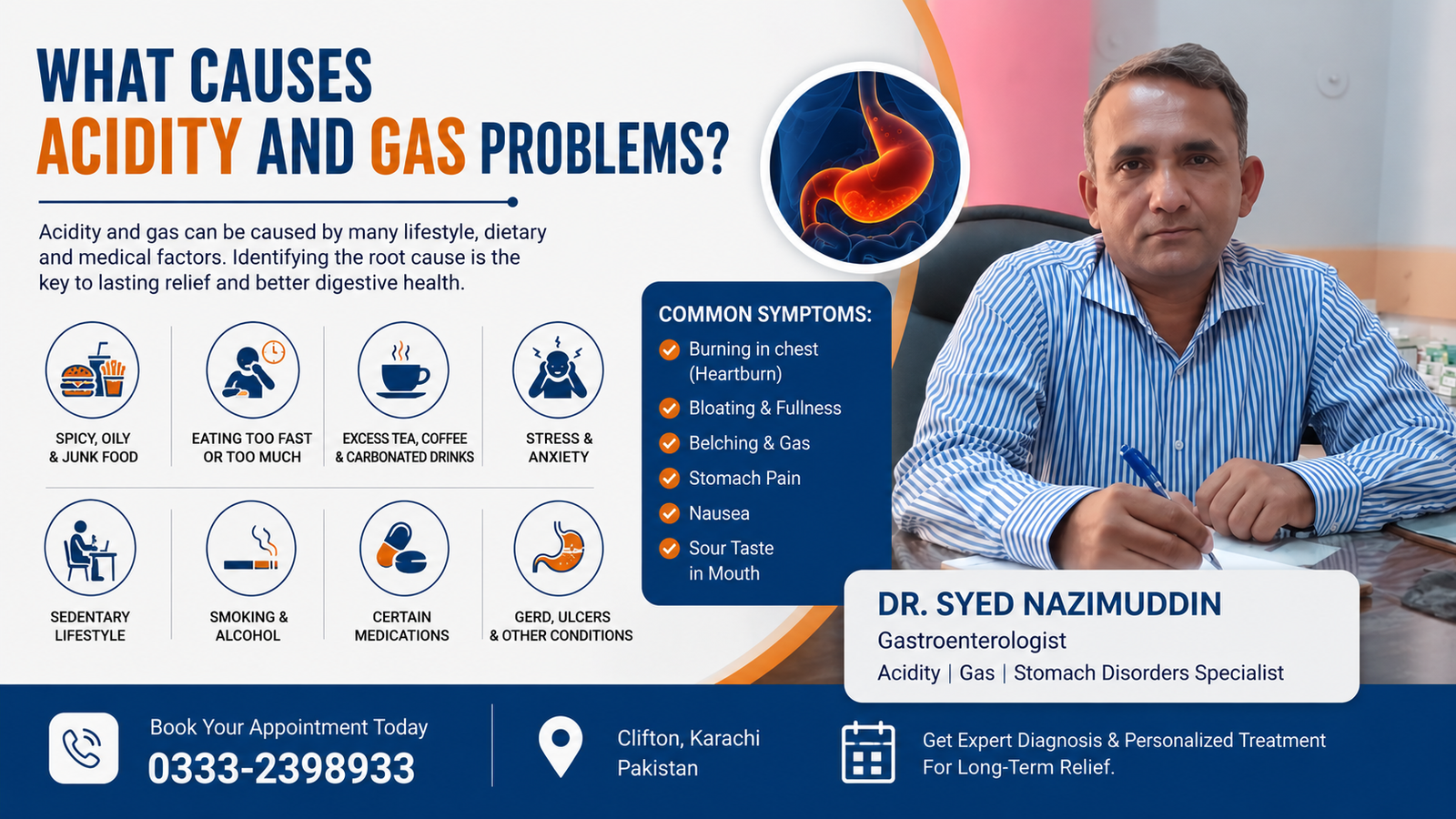
Many factors can trigger digestive discomfort. Some are related to diet, while others may be linked to medical conditions.
Common causes include:
- Eating spicy foods
- Overeating
- Eating too quickly
- Drinking carbonated beverages
- Stress and anxiety
- Smoking
- Lack of physical activity
- Food intolerances
- Acid reflux disease
Identifying the cause is important because proper treatment depends on the reason behind your symptoms.
What Are the Most Common Symptoms of Acidity and Gas?
Many people experience different symptoms depending on the severity of their condition.
Common signs include:
- Burning sensation in the chest
- Sour taste in the mouth
- Frequent burping
- Stomach bloating
- Pain in the upper abdomen
- Feeling full after eating small amounts
- Excessive gas
- Nausea
If these symptoms happen several times a week, you should seek medical advice.
Why Should You Visit an Acidity and Gas Doctor in Karachi Instead of Self-Treating?
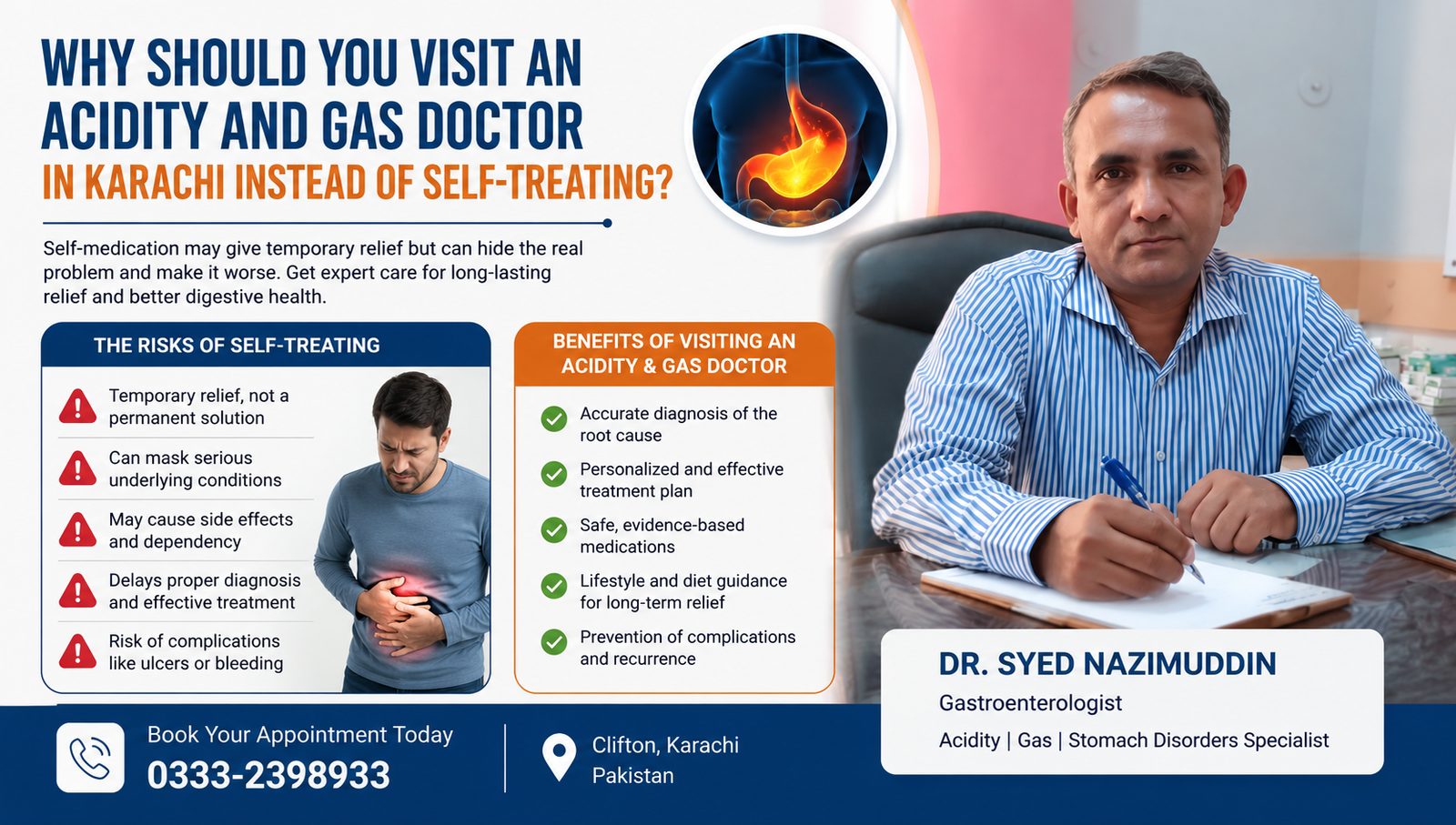
Many people buy medicines without consulting a doctor. While these medicines may provide temporary relief, they do not always solve the actual problem.
A qualified acidity and gas doctor in Karachi can determine whether your symptoms are caused by acid reflux, gastritis, ulcers, or another digestive condition.
Professional treatment reduces the risk of complications and helps you recover faster.
Can Poor Eating Habits Make Acidity Worse?
Yes. Daily eating habits play a major role in digestive health.
Certain habits can increase acid production and lead to discomfort, including:
- Skipping meals
- Eating late at night
- Consuming too much oily food
- Drinking large amounts of tea or coffee
- Lying down immediately after eating
Making healthier food choices can significantly reduce symptoms and improve your quality of life.
How Does Stress Affect Your Digestive System?
Stress not only affects your mind. It can also affect your stomach.
When you feel stressed, your body produces hormones that may increase stomach acid and slow digestion.
This can lead to bloating, heartburn, and abdominal discomfort.
Managing stress through exercise, proper sleep, and relaxation techniques can support better digestive health.
What Tests May Be Recommended for Acidity and Gas Problems?
If your symptoms continue despite treatment, your doctor may recommend additional tests to identify the cause.
These may include:
- Blood tests
- Stool examination
- Ultrasound
- Endoscopy
- Helicobacter pylori testing
These investigations help doctors create a more accurate treatment plan.
How Can an Acidity and Gas Doctor in Karachi Help You Feel Better?
A specialist creates a treatment plan based on your symptoms and medical history.
Treatment may include:
- Acid-reducing medicines
- Dietary advice
- Lifestyle improvements
- Treatment for infections
- Follow-up care
A professional approach helps control symptoms while preventing future digestive issues.
What Foods Should You Avoid If You Have Frequent Acidity?
Certain foods can trigger acid production and increase discomfort.
It is often helpful to reduce:
- Fried foods
- Spicy dishes
- Carbonated drinks
- Chocolate
- Citrus fruits
- Processed snacks
- Excessive caffeine
Eating smaller meals and drinking enough water can also support healthy digestion.
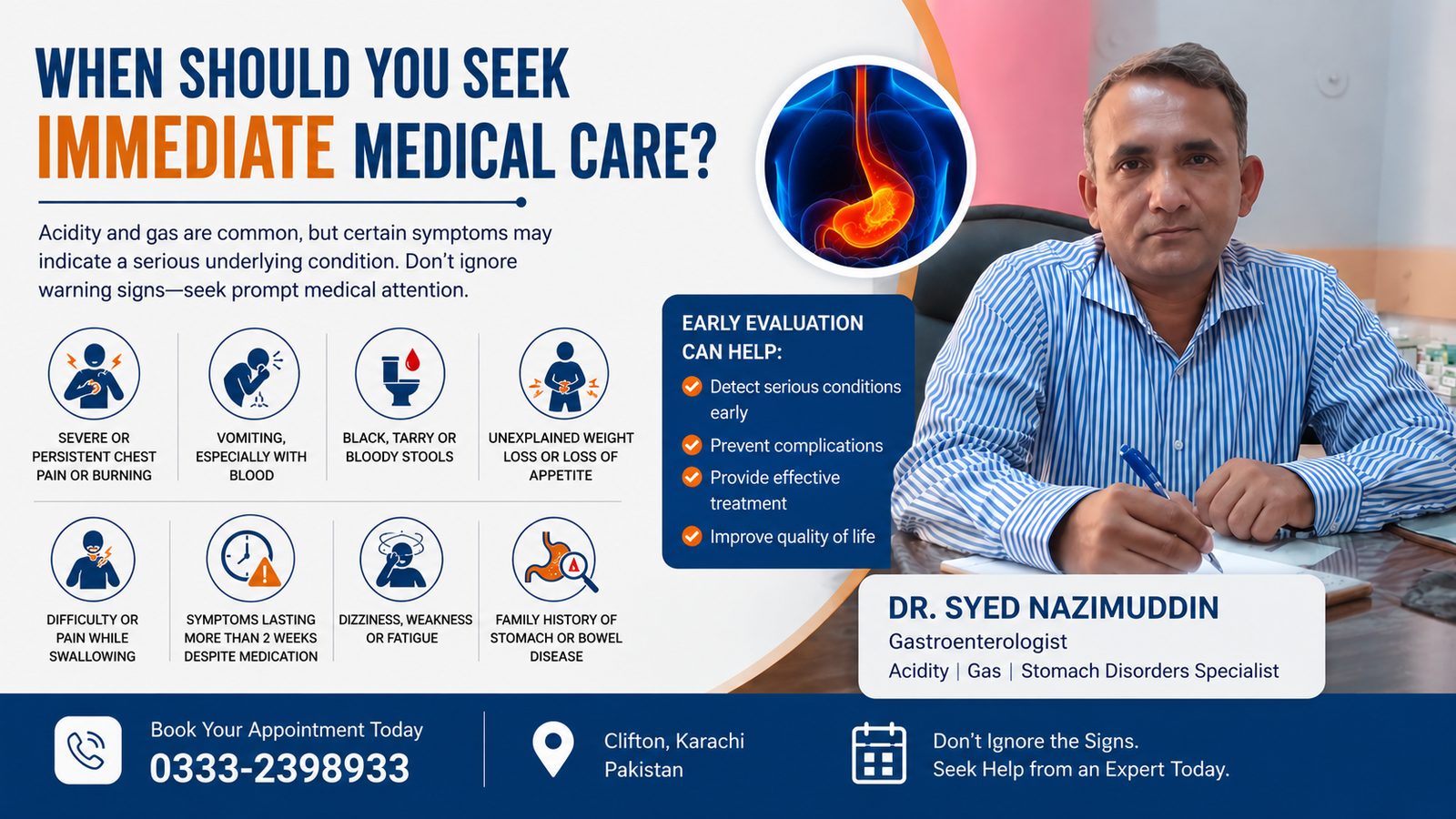
When Should You Seek Immediate Medical Care?
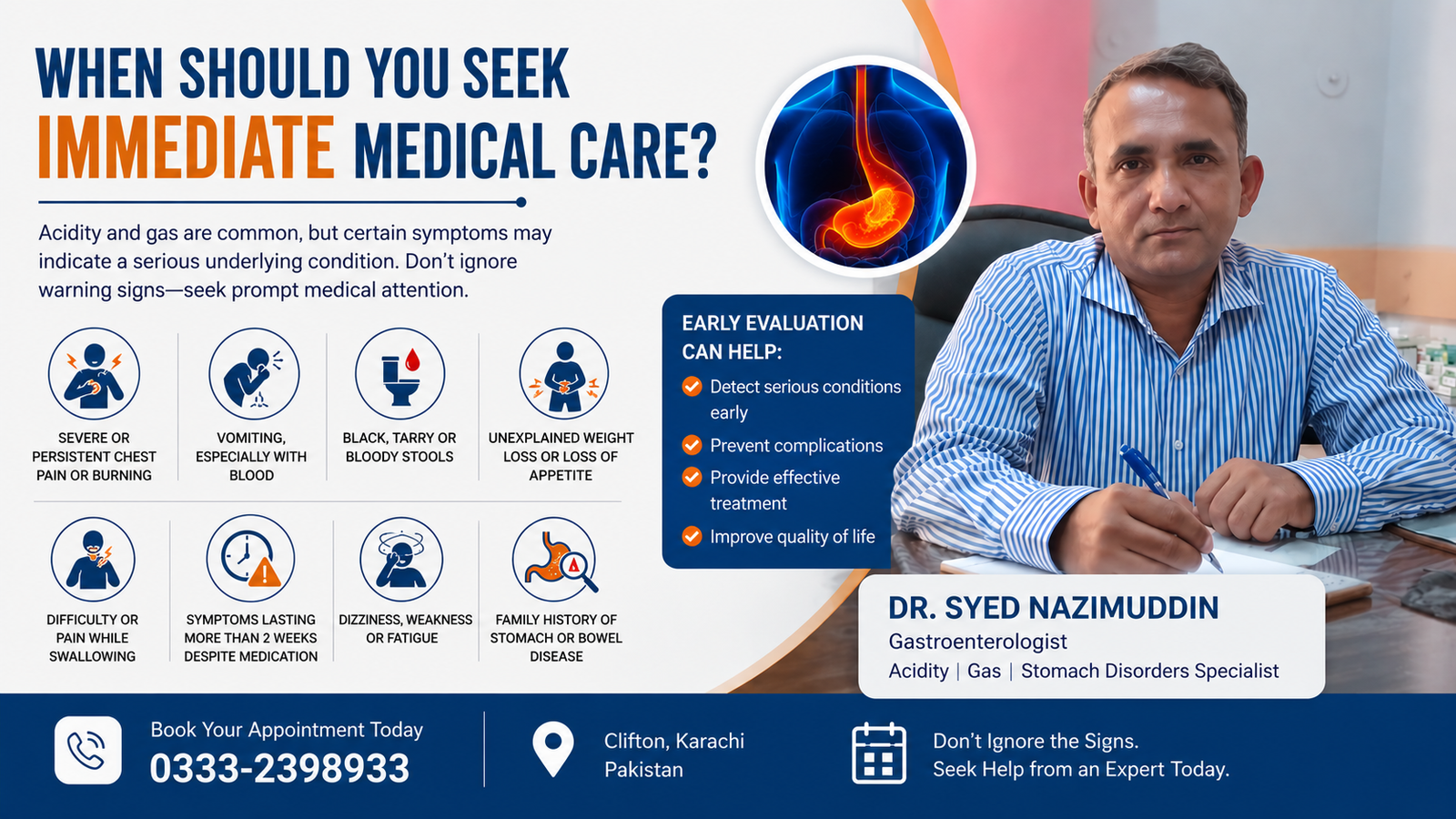
Although mild acidity is common, some symptoms require urgent medical attention.
You should contact a doctor if you experience:
- Severe chest pain
- Difficulty swallowing
- Vomiting blood
- Black colored stools
- Sudden weight loss
- Persistent vomiting
These symptoms may indicate a serious digestive condition that needs prompt evaluation.
How Can You Prevent Acidity and Gas Naturally?
Simple lifestyle habits can lower your risk of digestive problems.
Healthy habits include:
- Eating balanced meals
- Avoiding overeating
- Walking after meals
- Maintaining a healthy weight
- Drinking enough water
- Managing stress
- Getting regular exercise
These changes often improve digestion and reduce recurring symptoms.
Frequently Asked Questions
What doctor should I see for acidity and gas problems?
A digestive health specialist or gastro doctor can diagnose and treat acidity, gas, and related stomach conditions.
Can stress cause acidity?
Yes. Stress can increase stomach acid production and make symptoms worse.
Is frequent gas a sign of a serious problem?
Occasional gas is normal, but frequent or severe symptoms should be evaluated by a doctor.
What foods commonly trigger acidity?
Spicy foods, fried meals, carbonated drinks, chocolate, and excessive caffeine are common triggers.
When should I visit an acidity and gas doctor?
You should seek medical advice if symptoms occur regularly, disturb your sleep, or do not improve with simple lifestyle changes.
Conclusion
Finding the right acidity and gas doctor in Karachi can make a big difference in your daily comfort and long-term health.
Frequent acidity and gas should never be ignored because they may signal an underlying digestive condition.
Professional medical care, healthy eating habits, and timely treatment can help you manage symptoms and prevent future complications.
If stomach discomfort is affecting your quality of life, seeking expert advice is the best step toward lasting relief.