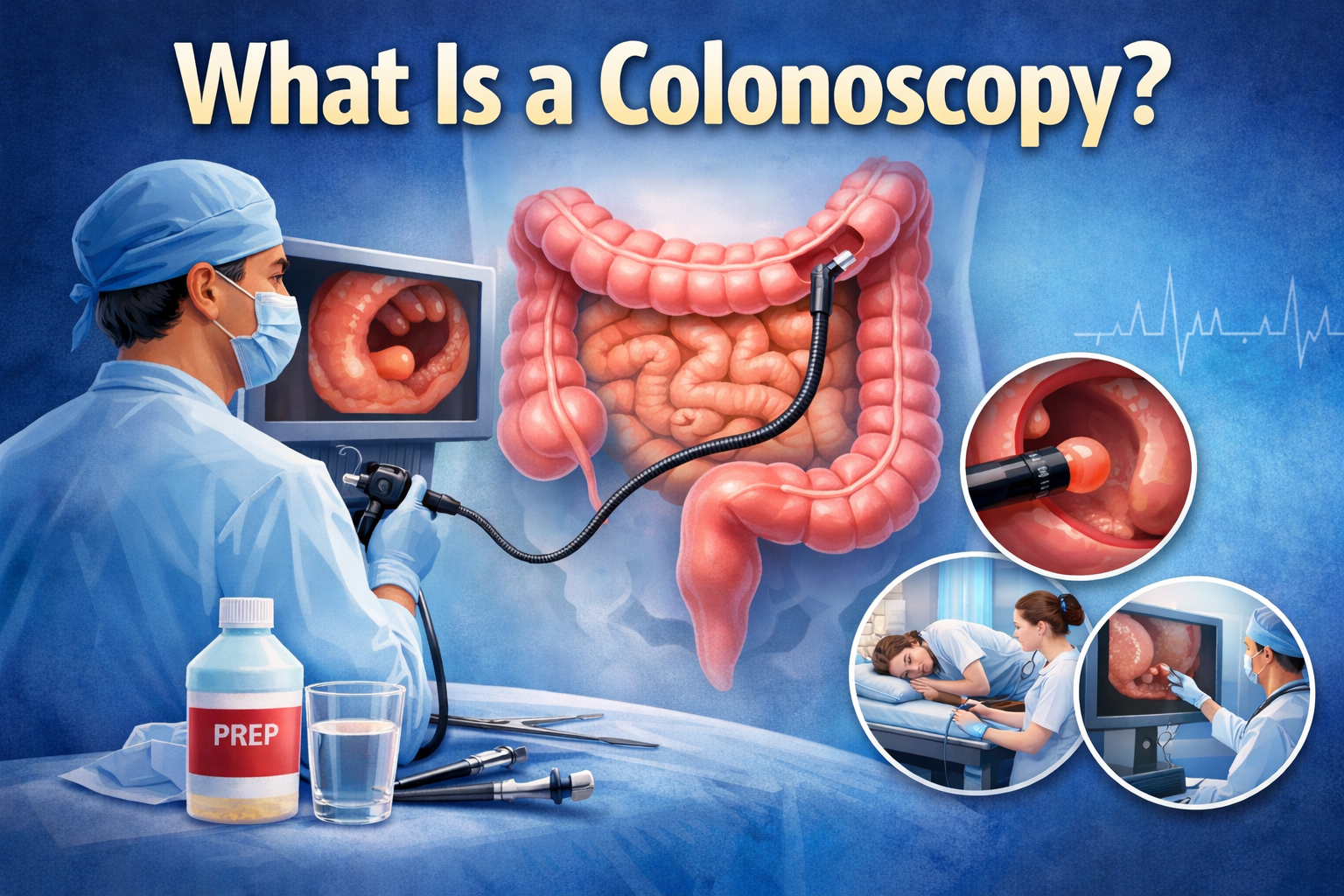
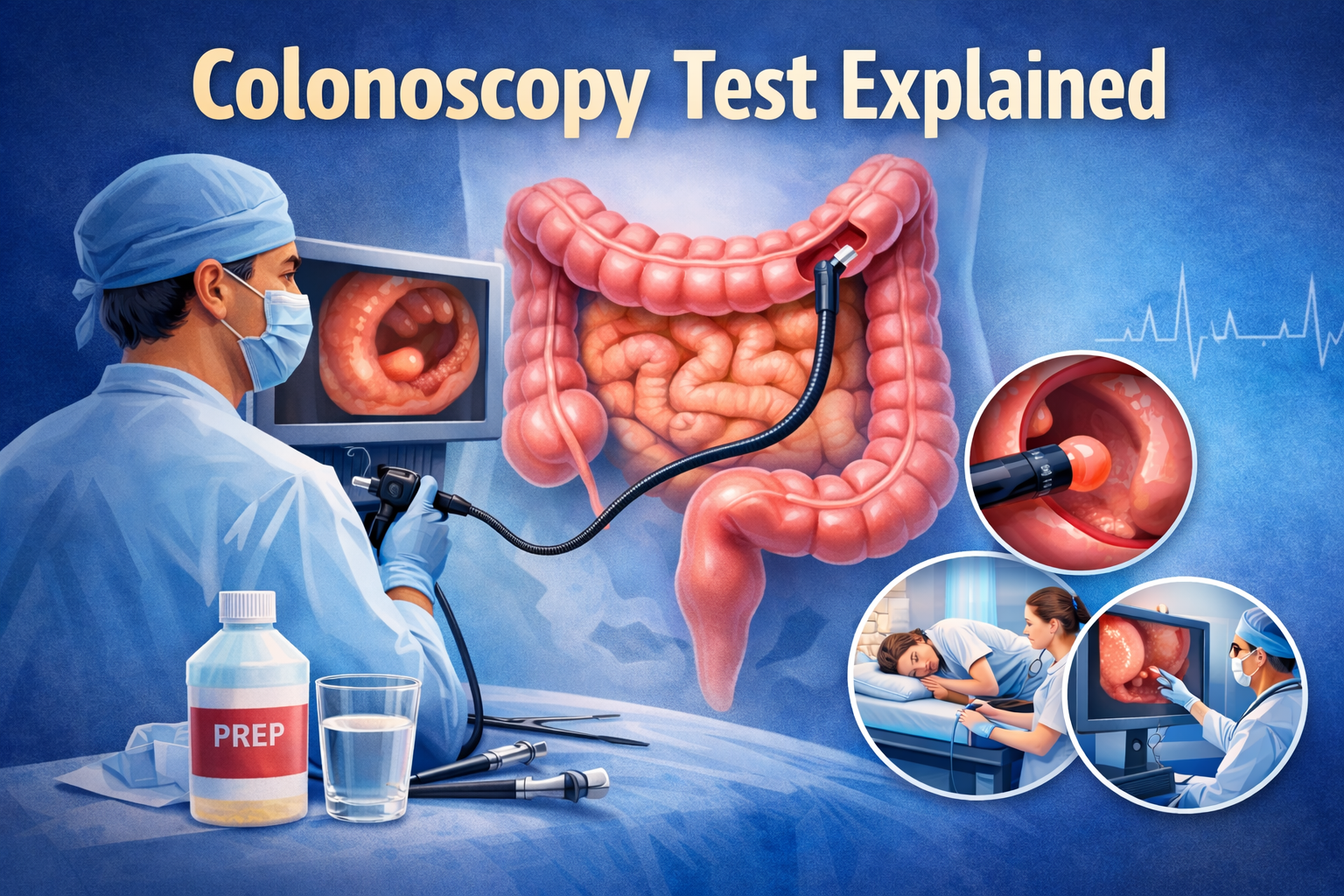
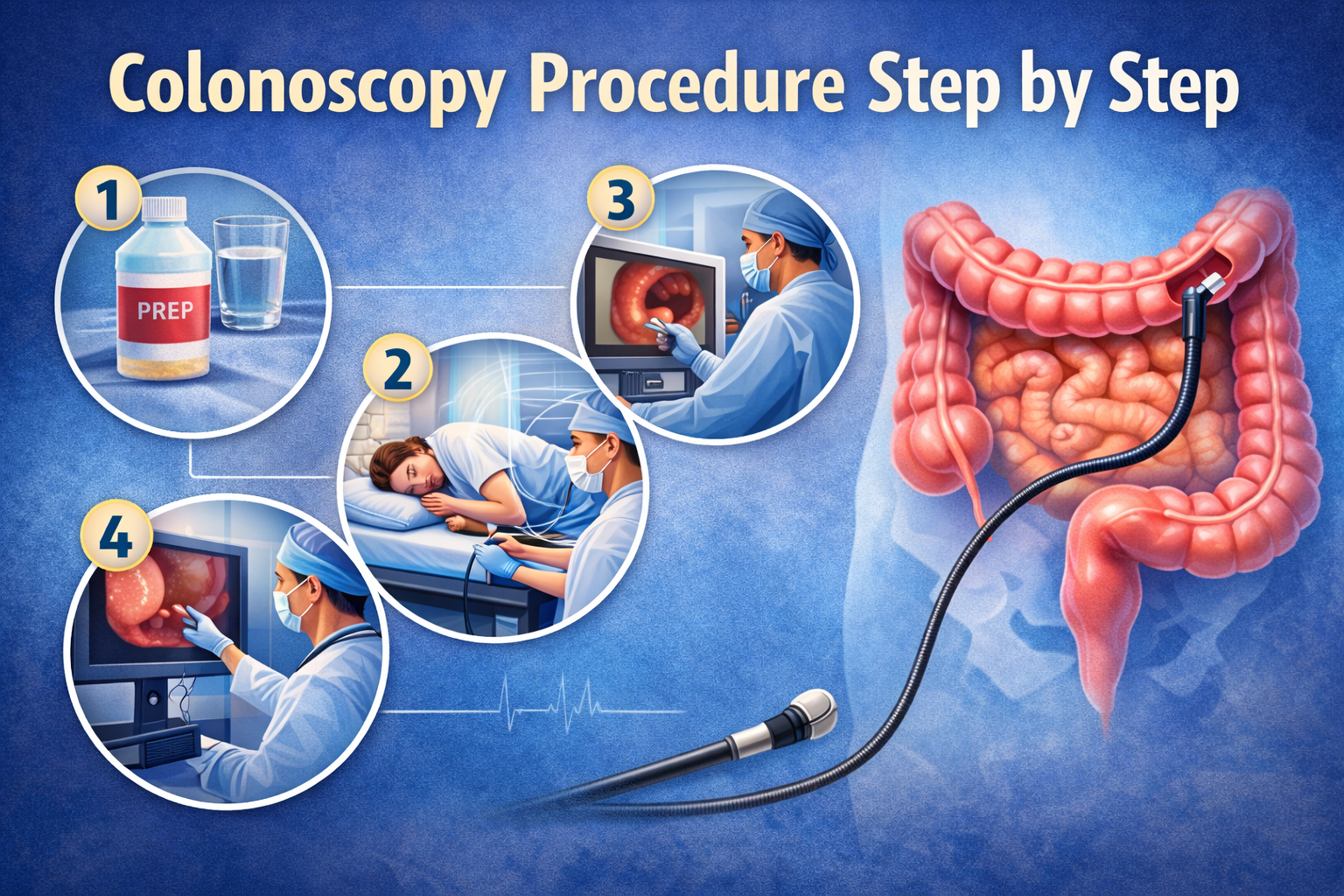
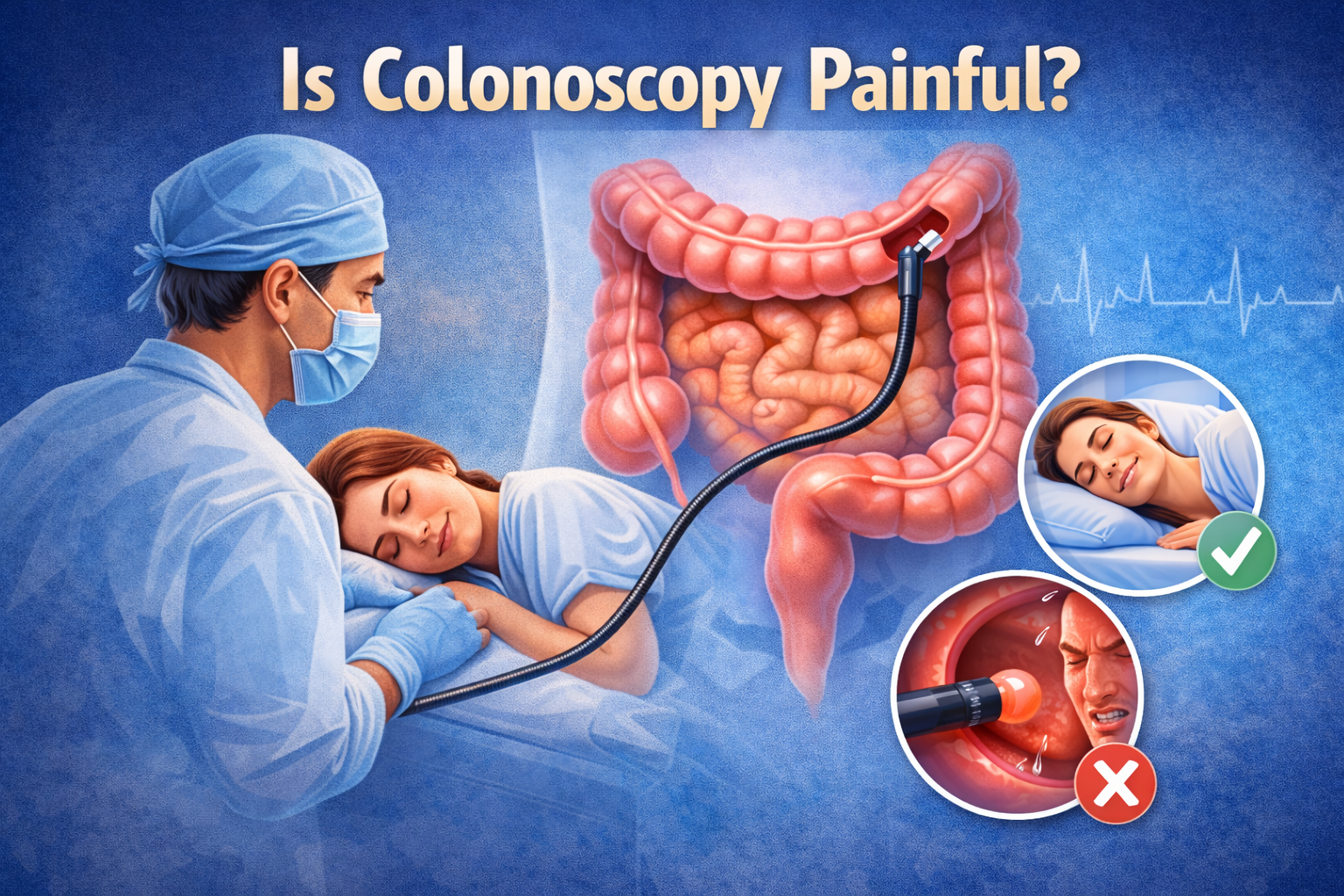
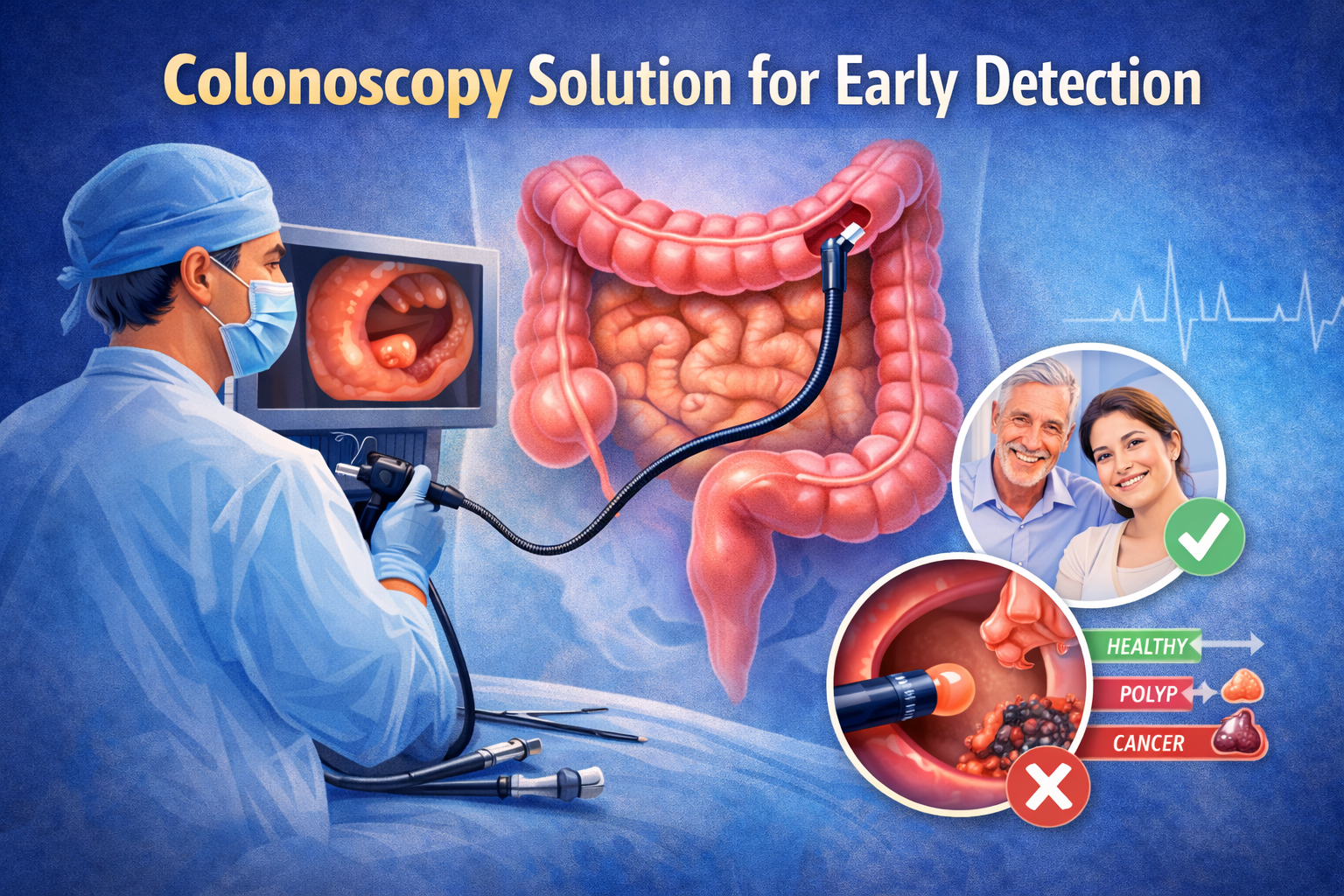
By Tekcurio / January 22, 2026 Colonoscopy | Published: January 22, 2026 What Is a Colonoscopy? Complete Guide to Procedure, Pain, Safety, and Recovery More on : All Blogs Summarize this post with Chat GPT Perplexity [chatgpt_button] This page covers: – What Is a Colonoscopy – Why People Avoid Colon Testing – Colonoscopy Test Explained – When Doctors Recommend This Test – Colonoscopy Procedure Step by Step – Recovery After the Procedure – Is Colonoscopy Painful – Why Fear Is Often Worse Than Reality – Colonoscopy Solution for Early Detection – Who Benefits the Most – Colonoscopy Side Effects – Safety and Medical Reliability – Colonoscopy Kit Explained – Importance of Following Instructions – Mental Preparation Matters – Lifestyle Changes After Testing – Colon Health and Daily Habits – Why Colon Screening Saves Lives – Common Myths About Colonoscopy – FAQs: -What exactly happens during a colonoscopy? – What is the reason for a colonoscopy? – Are you awake during a colonoscopy? – Will it hurt to poop after a colonoscopy? – What can go wrong during a colonoscopy? – Conclusion When a doctor recommends a colon test, many other individuals are scared and lost. The first thing that crosses the mind is the feeling of discomfort, pain, or something serious lurking within the body. The majority of individuals fail to take the test as soon as possible, as they are not aware of what exactly occurs during it. It is a huge health danger since colon issues tend to develop without complaints. Symptoms may arise too late, when the condition may be severe. Physicians worldwide have been encouraging early testing as it may save lives. So the big question most patients ask is what is a c and why it is so important for health. Everything has been described in this article using simple language, so you are confident rather than afraid. All the steps to be followed are described in detail, starting with preparation up to recovery. Book An Appointmeny For Best Treatment What Is a Colonoscopy What is a colonoscopy is a medical test that allows doctors to look inside the large intestine and rectum. The colon is examined by inserting a thin, flexible tube into the rectum with a camera attached to it. Live images are transmitted to a screen by the camera. This assists physicians in examining swelling, ulcer, bleeding, polyps, or cancer early signs. The test has been known to be one of the most valid ways of identifying colon diseases at an earlier stage. It is normally prescribed to individuals over the age of forty five years or to any person who is experiencing chronic stomach pain, bleeding diarrhea, constipation, or unexpected loss of weight. Why People Avoid Colon Testing This test is postponed because of fear and misinformation among many patients. Others think that it is incredibly painful. Others are ashamed or nervous. These concerns prevent individuals from maintaining their health. As a matter of fact, nowadays this test is safe, fast, and comfortable since modern methods of medicine provide this. As soon as the truth is revealed, people tend to stop being scared. Colonoscopy Test Explained A colonoscopy test is performed to examine the inner lining of the colon. It assists physicians in detecting digestive problems and avoiding serious diseases before they pose harm. This test is normally used to diagnose colon cancer in its early stages. It is also capable of detecting polyps, which are small structures that can eventually become cancer unless picked at the right time. Even the small polyps can be removed by the doctors during the test, which lessens the risk of future complications and prevents surgery. When Doctors Recommend This Test The test can be recommended by physicians in case a patient has frequent stomach pains, chronic constipation, diarrhea that does not heal, or blood in stool. It is also recommended for those whose family history has shown a history of colon disease. Preventive health care today has one of the most potent weapons, which is routine screening. Colonoscopy Procedure Step by Step The colonoscopy procedure follows a clear medical process that ensures safety and accuracy. Patients are requested to clean the colon before the test. This is generally accompanied by the intake of a liquid solution that relieves the intestine of stool. A colon is clean and assists the doctors in seeing clearly. A mild sedation is administered to the patient on the test day. This aids the body in unwinding and avoiding pain. The majority of the patients are relaxed and drowsy during the process. The physician puts a tube into the rectum very carefully and pushes it through the colon. The camera takes photographs and examines each part thoroughly. The whole procedure normally lasts between twenty and forty minutes. The patient takes a rest after the completion and goes home. Recovery After the Procedure The majority resume normal activities on the same day. Mild bloating or gas could be caused as a result of air in the test, which disappears soon. Physicians give direct instructions on dieting and rest. There are very few serious issues. Is Colonoscopy Painful A question that has been searched for the most is whether a colonoscopy is painful or not. The most sincere response is the fact that the majority of the population experiences minimal or no pain. Sedation maintains the body in a relaxed position, and most patients do not even recall what happened during the process. Others can experience a little pressure or a little discomfort, which will not be prolonged. Suffering is unusual, and excruciating suffering is exceptionally uncommon. The patients are closely monitored by medical teams to be comfortable and safe during the process. Why Fear Is Often Worse Than Reality Fear mostly comes from stories shared online or from people who experienced older methods. Modern techniques have changed the experience completely. Most patients say afterward that the test was much easier than expected. Colonoscopy Solution for Early Detection A colon exam has been regarded as one of the most effective health preventive solutions in the modern world. The colonoscopy solution allows doctors to detect problems before symptoms become serious. Early diagnosis implies that treatment becomes easier, the recovery becomes quicker, and the chances of survival are much better. This test is not only a disease-diagnosing test. It prevents it. Early removal of polyps prevents the occurrence of cancer. This is the reason why physicians highly encourage regular screening. Who Benefits the Most Individuals who have a history of colon disease in their family background are the ones who gain a lot of advantages from early testing. Regular screening also protects adults who are above middle age. Symptoms can be hidden even in people who have none. This test is a relief and long term health insurance. Colonoscopy Side Effects Similar to any medical operation, there are minor side effects. Common colonoscopy side effects include gas, bloating, and mild stomach cramps. These effects normally fade away in a matter of hours. Rest and consumption of fluids aid in recovery. Severe complications are highly rare. Doctors are fully cautious and employ modernized equipment to minimize risk. The patients are only required to contact their doctor in case of severe pain, constant bleeding, or fever, which is extremely rare. Safety and Medical Reliability This practice is accepted all over the globe and is utilized millions of times annually. Its effectiveness and safety are medically established for the detection of early diseases. Colonoscopy Kit Explained A colonoscopy kit is usually provided before the procedure. It has bowel cleansing preparations and bowel cleansing instructions. The kit is aimed at making the colon absolutely clean to enable the camera to get clear images. The patients are instructed step by step on how to use it. Adequate preparation enhances the accuracy of the test and eliminates the necessity of doing the test twice. Importance of Following Instructions Failure to take preparation measures may result in ambiguous outcomes. This can be in the form of a repeat of the test. By adhering to the guide, one will have a successful process. Mental Preparation Matters Fear can be augmented through mental strain. Knowing the facts will relax the mind. Anxiety is natural when patients are informed of what to expect. Nurses and doctors are specially trained to help patients with the process, both emotionally and physically. Lifestyle Changes After Testing After the exam, doctors may recommend small changes such as a balanced diet, fiber intake, hydration, and regular checkups. These steps help protect colon health and reduce future risk. Colon Health and Daily Habits A healthy colon depends on daily habits. Eating fruits, vegetables, whole grains, and staying active supports digestion. Avoiding smoking and excessive processed food also lowers disease risk. Routine medical checks combined with healthy habits provide long lasting protection. Why Colon Screening Saves Lives Colon cancer often develops slowly and silently. By the time symptoms appear, treatment becomes difficult. Screening allows doctors to stop the disease before it grows. This is why medical organizations strongly support regular testing. Common Myths About Colonoscopy Many people think the test is embarrassing or dangerous. In reality, doctors perform it professionally every day. It is a normal medical procedure focused purely on health. Another myth is that only older people need it. In fact, digestive issues can affect adults at any age. FAQs What exactly happens during a colonoscopy? During a colonoscopy, a doctor uses a small camera tube to check the inside of the colon. The process is done gently while the patient stays relaxed. What is the reason for a colonoscopy? A colonoscopy is done to find colon problems early, such as polyps, bleeding, or signs of cancer, before they become serious. Are you awake during a colonoscopy? Most patients are not fully awake. Light sedation is given so the body stays calm and comfortable during the test. Will it hurt to poop after a colonoscopy? Usually no. Some people may feel mild gas or pressure, but bowel movements return to normal within a short time. What can go wrong during a colonoscopy? Serious problems are very rare. Minor effects like gas or bloating may happen, but they usually go away on their own. Conclusion Ignoring digestive symptoms can lead to serious complications. Early testing offers clarity, safety, and confidence. When patients understand the process, fear turns into relief. Knowledge empowers better health decisions. Now you clearly know what is a colonoscopy and why doctors consider it one of the most effective medical tests for colon health. It helps detect problems early, prevents serious disease, and provides long term protection. The procedure is safe, quick, and usually painless. With proper preparation and guidance, most people complete it smoothly and return home the same day. Taking this step at the right time can protect your future health and give peace of mind that no symptom can replace. Please enable JavaScript in your browser to complete this form.Please enable JavaScript in your browser to complete this form. Number Message Comment Name *EmailPhone Number *Comment or MessageSubmit