
When Should You See a Liver Specialist in Karachi?
A hepatologist is a liver specialist, medical professional who specializes in liver diseases and conditions. These physicians make diagnoses and treat liver issues that last for a short or long duration.
Several different liver diseases can happen—such as fatty liver disease, viral hepatitis, liver inflammation, liver fibrosis, and cirrhosis.
A liver specialist assesses symptoms, reviews past medical history, analyzes blood test results, and makes appropriate recommendations for further investigations or treatment.
Patients with these issues may benefit from a liver specialist:
- Fatty liver disease
- Hepatitis B and C
- Liver inflammation
- Abnormal liver function tests
- Liver fibrosis
- Liver cirrhosis
- Alcohol-related liver disease
- Unexplained jaundice
- Liver-related abdominal swelling
Consultation at an early stage can help to identify liver issues at an early stage before they get more serious.
10 Signs That You Should See a Liver Specialist
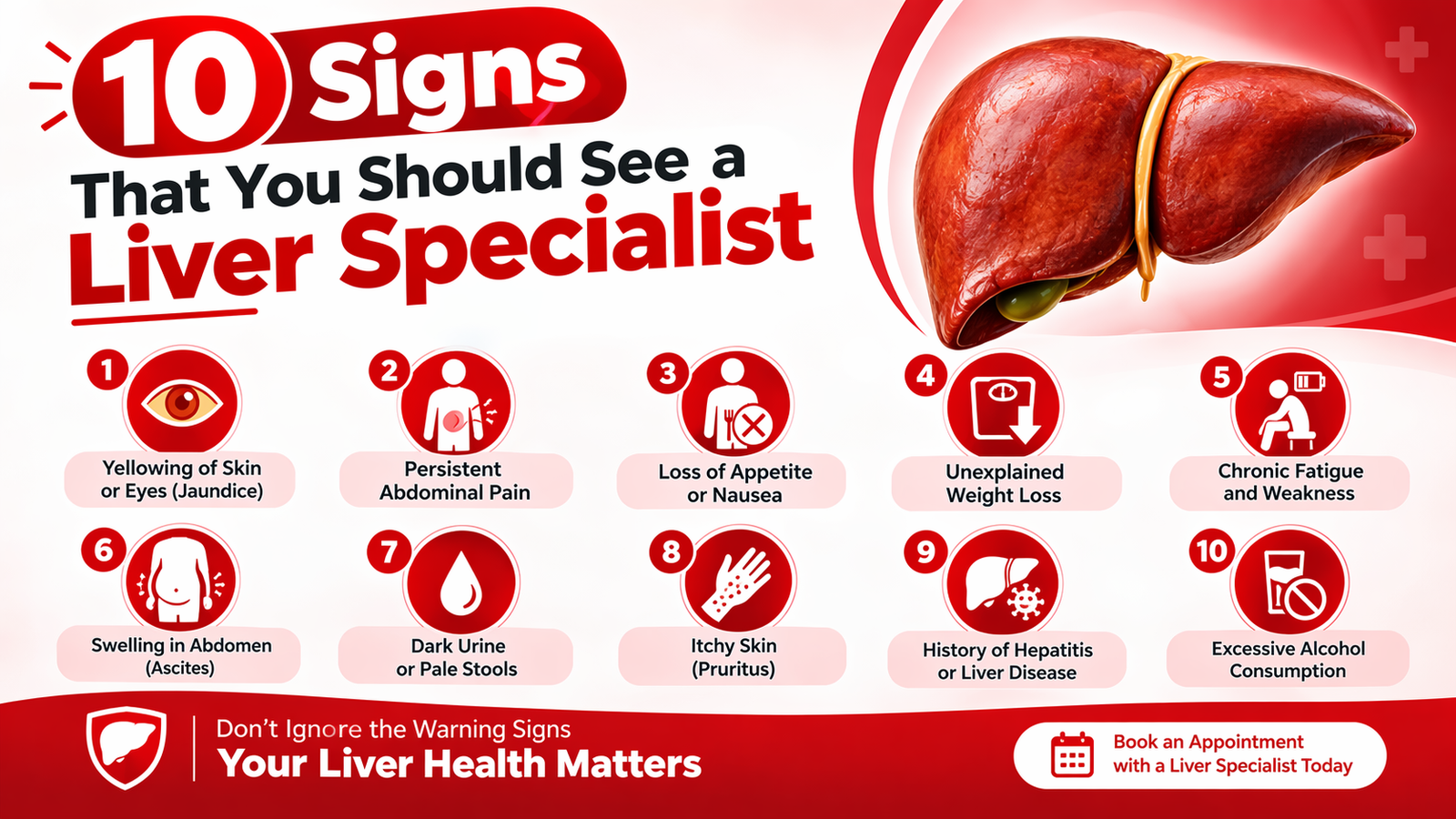
Liver disease may not always be evident in the early stages. But some of the changes in your body can mean that your liver requires medical attention.
The following are some warning signs.
Yellow eyes or skin.
Jaundice is when the eyes or skin turn yellow. When bilirubin, a yellow bile pigment formed as red blood cells are broken down, accumulates in the body.
Jaundice may occur with various disorders such as hepatitis, problems with the bile ducts, and other liver diseases.
Seek immediate medical attention if you have any eyes or skin turning yellow. Don’t expect it to go away on its own without being evaluated by a medical professional.
Upper right side of the abdomen pain
The liver is in the upper right side of the abdomen, below the ribs. Discomfort or pain in this area may result from some liver conditions.
You may experience:
- Right rib pain under the ribs
- A sensation of pressure in the upper part of the abdominal cavity
- Abdominal discomfort
- Liver tenderness around the liver area.
Not all upper abdominal pain is related to the liver. Other medical conditions that can bring about similar symptoms include gallbladder, stomach, and other diseases. Doctors can assist in determining the exact cause.
Fatigue and weakness for long periods of time.
It’s normal to feel tired after a busy day. If a person continues to experience fatigue for no known reason, however, it is important that they seek medical attention.
Those who have liver disease may feel:
- Constant tiredness
- Low energy levels
- General weakness
- Problems with doing daily tasks.
Anemia, thyroid disorders, sleep disorders, liver problems, and other disorders may cause fatigue. If it persists or interferes with your life, talk to your health care provider.
The color of the urine and bowel movements will be dark.
Colours of urine and stool can sometimes be affected by an issue with bilirubin processing/bile flow.
The following are indicators of possible warning signs:
- Dark brown urine
- Feces that are light or clay-coloured.
- Jaundice (jowndis)
- Itching along with other symptoms
Such changes should be evaluated by a physician, especially if occurring simultaneously.
Swelling in the Abdomen.
Swelling in the abdomen can also occur if fluid accumulates inside the abdomen. This is referred to as ascites.
It can be linked to liver complications, such as cirrhosis. Patients may notice that their belly expands or feels different.
Other possible symptoms are:
- Increased abdominal size
- Discomfort or pressure
- Sudden weight changes
- When swelling gets worse, it will be difficult to breathe.
If a child’s tummy is bigger than usual but it cannot be explained, it should be assessed by a doctor.
Itchy skin that can’t be explained.
Sometimes, conditions of the liver or bile duct can be related to chronic itching.
Others may get itchiness without any skin reaction or rash. It can occur at night or in other areas.
While the itching may be caused by allergies, skin disorders, and health issues, persistent itching without a known cause should be discussed with a physician.
Nausea, Loss of Appetite
In some cases, liver issues can also have a negative effect on digestion and appetite.
You may experience:
- Frequent nausea
- Reduced appetite
- Feeling full quickly
- Unexplained weight loss
- Discomfort after eating
These symptoms don’t distinctly point to liver disease. If they persist or occur in combination with other signs or symptoms, however, medical evaluation is important.
Bruising or unusual bleeding easily
Several of the proteins in the blood necessary for clot formation are made in the liver. If the liver function is affected seriously, the body may not be able to regulate bleeding.
Possible signs include:
- Bruises appearing easily
- Frequent nosebleeds
- Bleeding gums
- More prolonged bleeding.Prolonged bleeding.
Abnormal bleeding, such as menstruation, shouldn’t be overlooked. Consult your doctor to find out what is causing it.
Swelling in the Legs and Ankles
In the later stages of liver disease, some will experience swelling in their legs and ankles. The swelling is called peripheral edema.
You may notice:
- Puffy ankles
- Swollen feet
- Restriction of motion around the lower leg area
This could lead to shoes becoming tight. You may notice that your shoes feel snug.
Swelling of the legs may also be due to a heart, kidney, vein, or drug-related issue. A medical professional can find out the cause.
Abnormal Liver Function Test Results
Liver issues can be found at a routine blood test before symptoms are noticed, sometimes.
Liver function tests may be ordered to look at various indicators of liver function.
If the test results are abnormal, a doctor may recommend more tests. A poor result doesn’t necessarily indicate serious liver disease, but needs to be considered in relation to other results and your medical history.
When Should You See a Liver Specialist for Abnormal Liver Tests?
Liver function tests are commonly used to evaluate liver health. They can help doctors identify signs of inflammation, injury, or problems with bile flow.
Some important markers include:
Test | What It Helps Assess |
ALT | An enzyme that may increase with liver cell injury |
AST | An enzyme found in the liver and other body tissues |
ALP | May increase with bile duct or certain bone conditions |
Bilirubin | Helps assess how the body processes and removes bilirubin |
Albumin | A protein produced by the liver |
GGT | An enzyme that can help assess liver and bile duct problems |
You should discuss abnormal liver test results with your doctor, especially when:
- ALT or AST levels remain elevated.
- Bilirubin levels are higher than normal.
- Multiple liver markers are abnormal.
- You have a history of hepatitis B or hepatitis C.
- You have diabetes, obesity, or other metabolic risk factors.
- Your doctor suspects fatty liver disease or another liver condition.
A liver specialist may recommend repeat blood tests, imaging, or additional investigations depending on the results.
Which People Have a Higher Risk of Liver Disease?
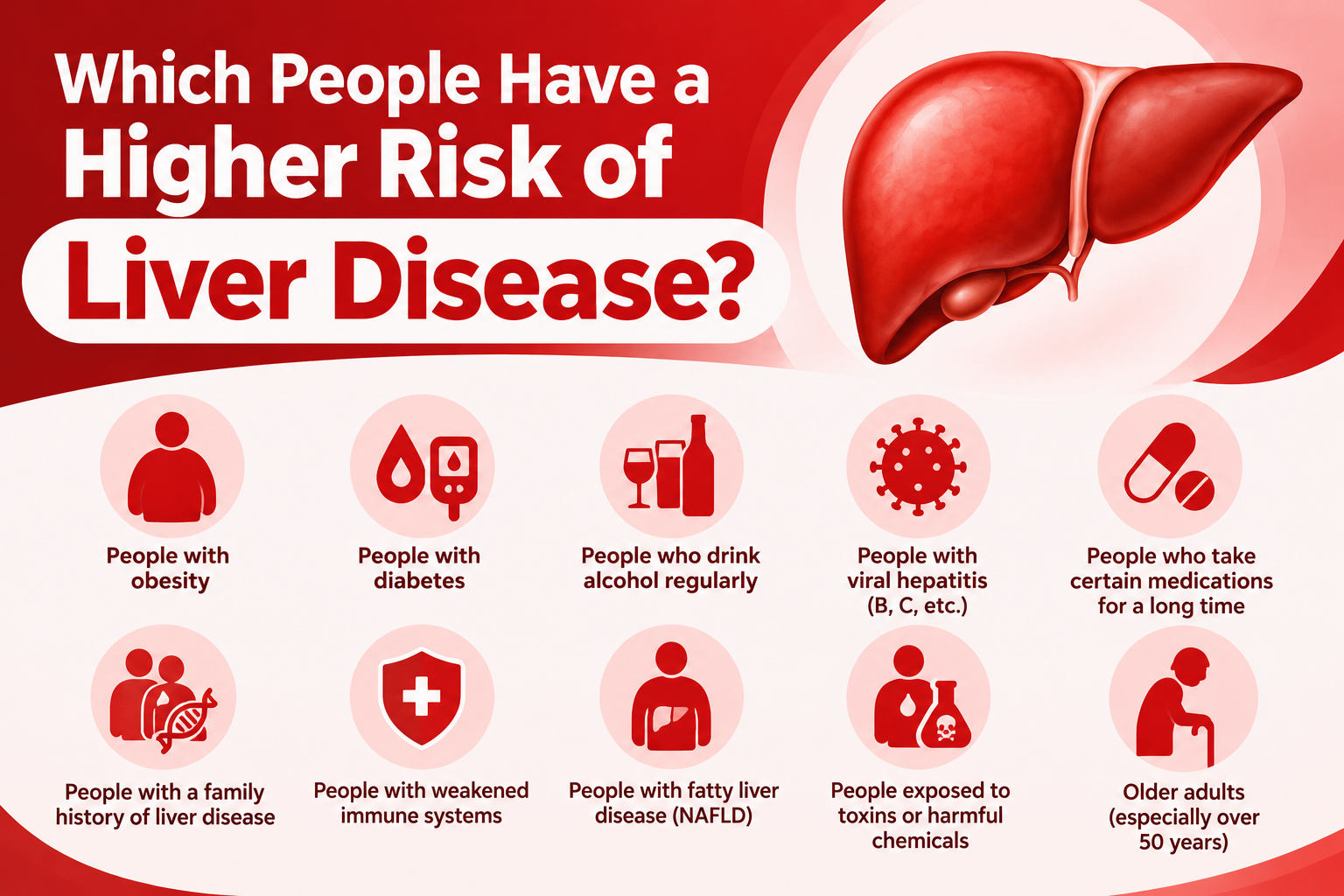
Individuals with a family history of liver disease, a history of liver disease, or other health conditions have a greater risk of liver disease.
If you have one or more of the following risk factors, you might need frequent medical evaluations.
Fatty Liver Disease
Fatty liver occurs when there is an increase in fat in liver cells. It is frequently linked with obesity, insulin resistance, type 2 diabetes, and abnormal cholesterol levels.
Many people don’t have any symptoms early on. Blood tests or imaging may be used to detect the condition by a doctor.
Hepatitis B & C
Hepatitis B and C are viral diseases which may lead to liver inflammation. If not assessed and managed properly, chronic infections can result in damage to the liver over time.
Those who have been exposed to hepatitis or tested positive for the disease should seek advice from an experienced medical practitioner.
Diabetes and Obesity
Fatty liver disease is linked with type 2 diabetes, excess body weight, and metabolic problems.
A person at risk for these conditions might want to talk with his or her healthcare provider about liver health screening.
Family History of Liver Disease
Certain types of liver disease are inherited. If a close family member has been diagnosed with a liver disease, speak with a health care provider about your risk of developing liver disease.
Long-Term Medication Use
Some medications and natural remedies may hurt the liver. But, don’t stop taking prescribed drugs without talking to your doctor.
If you have more than one medicine/supplement, give your health care provider the full list.
The liver is responsible for eliminating toxins from the body.The liver functions as a filter to remove toxins from the body.
Common Liver Diseases That Require Specialist Care
A liver specialist is able to diagnose and treat several diseases that impact liver health.
Fatty Liver Disease
Fatty liver disease is the condition that develops when fat accumulates in the liver. It is frequently linked to obesity, diabetes, high cholesterol, and metabolic syndrome.
Some patients may have no symptoms; others may have symptoms of discomfort or fatigue in the upper right abdomen.
Depending on the patient’s signs and symptoms, blood tests, ultrasound, and other examinations may be performed.
Hepatitis B and Hepatitis C
Hepatitis B and C are liver diseases caused by viruses. They can become chronic infections, which need medical supervision and management.
Blood tests may be ordered by a specialist to check the infection and see if treatment is necessary.
Liver Fibrosis
Liver fibrosis is a scarring of the liver as a result of repeated injury or inflammation.
Early identification is crucial as ongoing liver damage could result in further scarring.
Liver Cirrhosis
Cirrhosis is a late form of liver scarring where the liver becomes made up of scar tissue instead of healthy liver tissue.
Abdominal fluid accumulation, swelling in the legs, jaundice, and bleeding are possible complications.
Specialist assessment and regular monitoring is required for patients with suspected or diagnosed cirrhosis.
Alcohol-Related Liver Disease
Excessive drinking over time can lead to liver inflammation, fatty liver and cirrhosis.
If someone is having symptoms or concerns about liver damage from drinking, they should talk to a health professional.
Liver Specialist vs Gastroenterologist: Who Should You Visit?
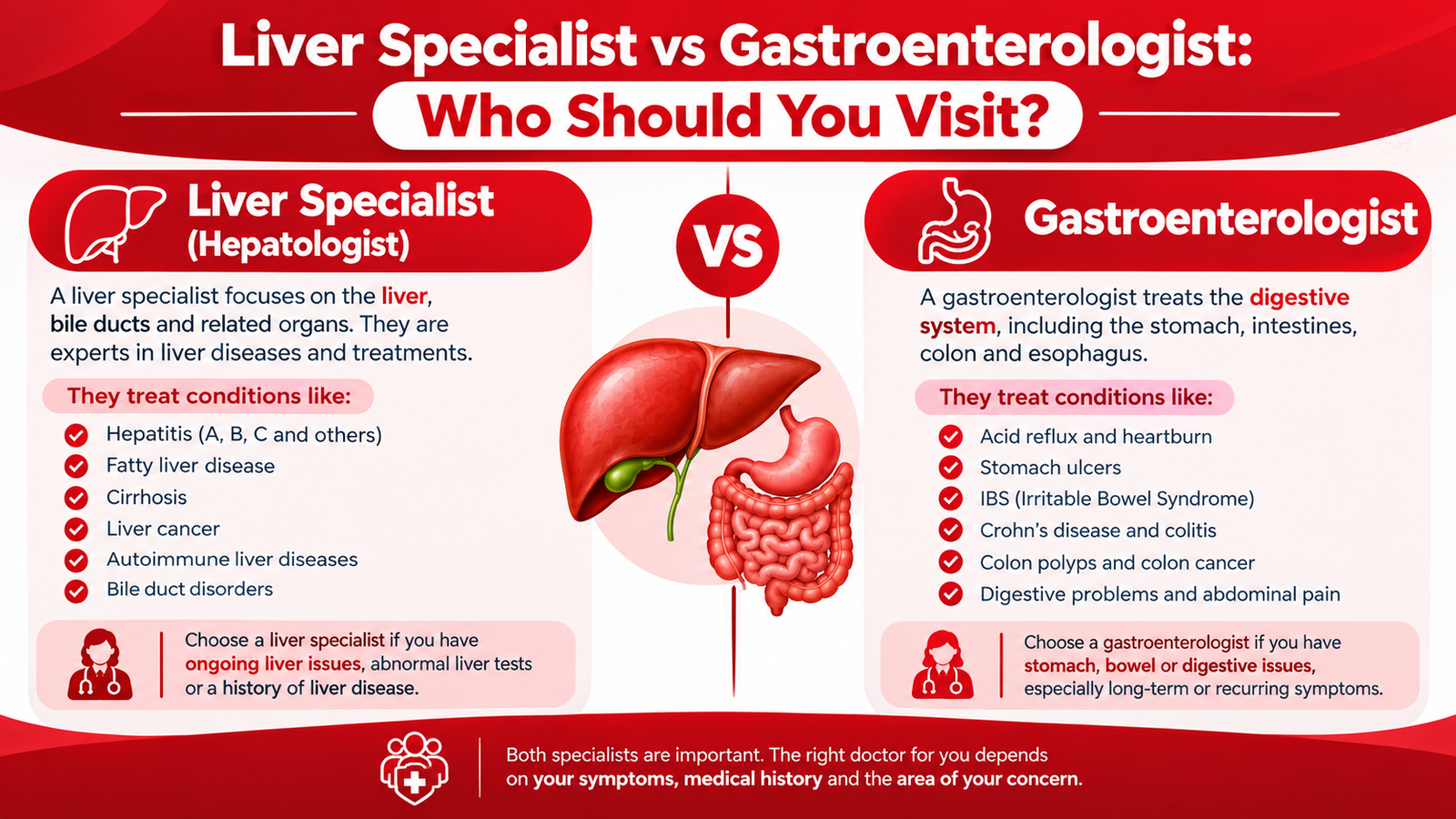
Many patients are unsure whether they should consult a gastroenterologist or a liver specialist.
Both doctors may deal with conditions affecting the digestive system, but their areas of focus can differ.
Liver Specialist (Hepatologist) | Gastroenterologist |
Focuses on liver conditions | Focuses on digestive system conditions |
Manages hepatitis and cirrhosis | Manages stomach and intestinal disorders |
Evaluates liver inflammation and fibrosis | Evaluates acid reflux and gastritis |
Monitors chronic liver disease | Manages many digestive disorders |
Assesses liver-related complications | May also investigate liver problems |
If your main concern is hepatitis, fatty liver, cirrhosis, or persistently abnormal liver tests, a liver specialist may be an appropriate choice.
For stomach pain, acid reflux, and other digestive concerns, a gastroenterologist may be suitable. Your primary doctor can also guide you towards the right specialist.
What Happens During Your First Liver Specialist Appointment?
The first visit to a liver specialist could be confusing, particularly if you are not going for a liver-related consultation for the first time.
The first step to diagnosing the problem usually involves a specialist learning about your symptoms, medical history, and your past test results.
Medical History Review
The doctor will ask about:
Your current symptoms
Previous liver problems
History of liver diseases in the family
Existing medical conditions
Today’s prescription drugs and over-the-counter products
If applicable, the amount of alcohol consumed;
Previous hepatitis testing
Getting the answers to these questions will enable the doctor to understand your health situation.
Physical Examination
The doctor will check for physical changes in the abdomen and signs of jaundice and swelling.
The exam is based on your symptoms and medical history.
Recommended Tests
The doctor may suggest:
Liver function tests
Screening for Hepatitis B and C.
Abdominal ultrasound
Liver stiffness measurement (LSM) or other liver stiffness measurement.
Additional blood tests
Additional tests or scans as needed
Not all of these tests are required in all patients. Investigations are chosen by the doctor based on the suspected condition.
How to Prepare for a Liver Specialist Appointment
Planning will make your consultation more beneficial.
Here are some tips you could try:
- Please bring old blood test and ultrasound results.
- Note any symptoms and the onset of symptoms.
- Make a list of any medications and supplements you take.
- Talk about previous hepatitis diagnosis or liver treatment.
- Give pertinent family medical history.
Have questions regarding your diagnosis and treatment, and follow-up plan.
Accurate information helps your doctor make a more informed assessment.
How Can You Support Your Liver Health?
Good health practices can benefit the health of the liver and may help control some liver diseases.
But lifestyle changes can’t be used instead of medical treatment if a liver disease has been diagnosed.
Keep a Healthy Weight
Obesity has been linked to fatty liver disease. Slow and healthy weight loss can be beneficial for reducing liver fat if you are overweight.
Eat a balanced diet.
Follow a nutritionally balanced diet pattern that emphasizes vegetables, fruits, whole grain foods, and appropriate protein sources.
Eat as little as possible of highly processed foods, sugary beverages, and too much added sugar.
Stay Physically Active
Exercise is good for metabolic health and may lower the risk of fatty liver disease.
Select activities that are suitable to your fitness level and medical condition.
Do not use medicines or supplements unless necessary.
Some medications, herbs, and supplements may impact liver health.
Please do not begin or discontinue supplements or prescription medications without first consulting a health care provider.
Go to regular medical examinations.
For those with diabetes, obesity, or a prior liver diagnosis, please keep up to date with your physician’s guidelines for monitoring and testing.
When Is Liver Disease an Emergency?
There are some liver symptoms which are more serious and need urgent care instead of a typical visit to the doctor.
If you have any of the following symptoms, please seek emergency medical attention:
- Vomiting blood
- Black, tarry stools
- Abdominal pain (very bad or sudden)
- Any confusion or unusual drowsiness that appears for the first time or occurs again.
- Fainting, or extreme tiredness or weakness.
- Severe difficulty breathing
- Sudden abdominal distention, along with other troubling signs.
These symptoms can mean that there is a serious problem or that there is some other serious condition that needs attention.
If these symptoms are present, don’t postpone an appointment with your routine liver specialist.
Finding a Liver Specialist in Karachi
In Karachi, there are health care centers where patients can be assessed for various liver ailments. The type of specialist needed will depend on the symptoms, the medical history, and the form of care that you require.
If you have an on-going feeling of tiredness, a yellow look to your skin, abnormal liver function tests, a suspected fatty liver, or if your liver disease is a history, you may want to schedule a medical appointment.
You can send your report to a liver specialist, who can review it, determine what may have caused it, and suggest a course of treatment or monitoring.
If you are seeking liver-related consultation in Karachi, Dr. Aziz Ur Rehman is a doctor that you might want to go to. Please refer to drazizurrehman.com for consultation details.
Always check with the doctor before visiting to ensure that he/she is qualified, offers services, and provides accurate appointment information.