
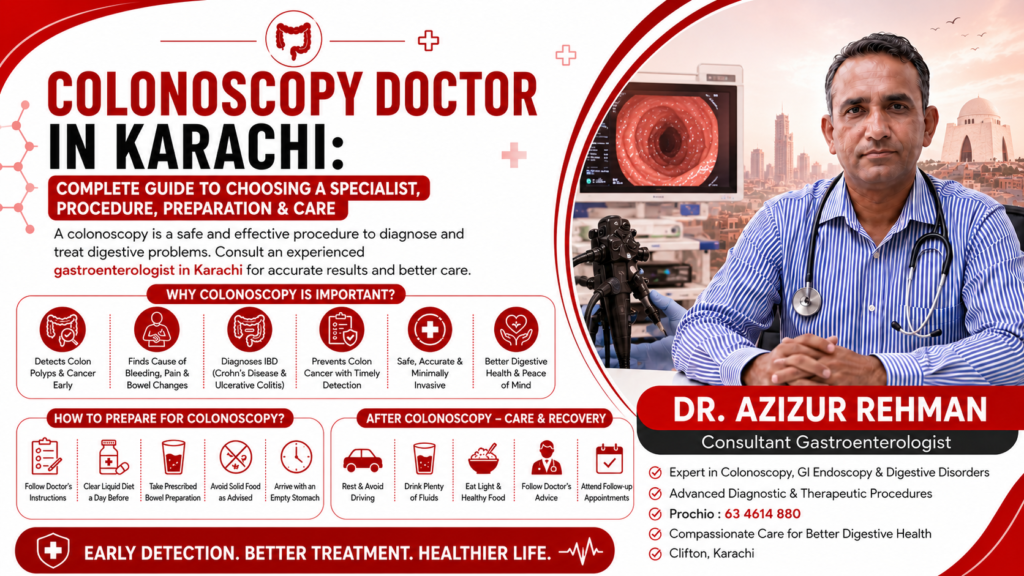
What Does a Colonoscopy Doctor in Karachi Do?
A colonoscopy provider is usually a gastroenterologist with particular training and experience in examining the digestive system, comprising the colon and rectum.
A colonoscopy uses a flexible tube, called a colonoscope, that is inserted into the rectum.
It carries a small camera, which the doctor can use to look at the inside of the large intestine. When an abnormal area or polyp is detected, a biopsy may be performed, or the doctor might remove an appropriate polyp at the same time.
A colorectal doctor in Karachi may refer a patient to a practitioner of conditions dealing with the colon and rectum. But gastroenterologists and colorectal surgeons specialize in different types of surgery.
Gastroenterologists are usually the physicians who diagnose digestive diseases and undertake endoscopic treatment, and colorectal surgeons specialize in surgical treatment of colon, rectum, and anal diseases.
The first step for a patient undergoing a colonoscopy evaluation may be a consultation with an experienced gastroenterologist.
When Should You See a Colonoscopy Specialist in Karachi?
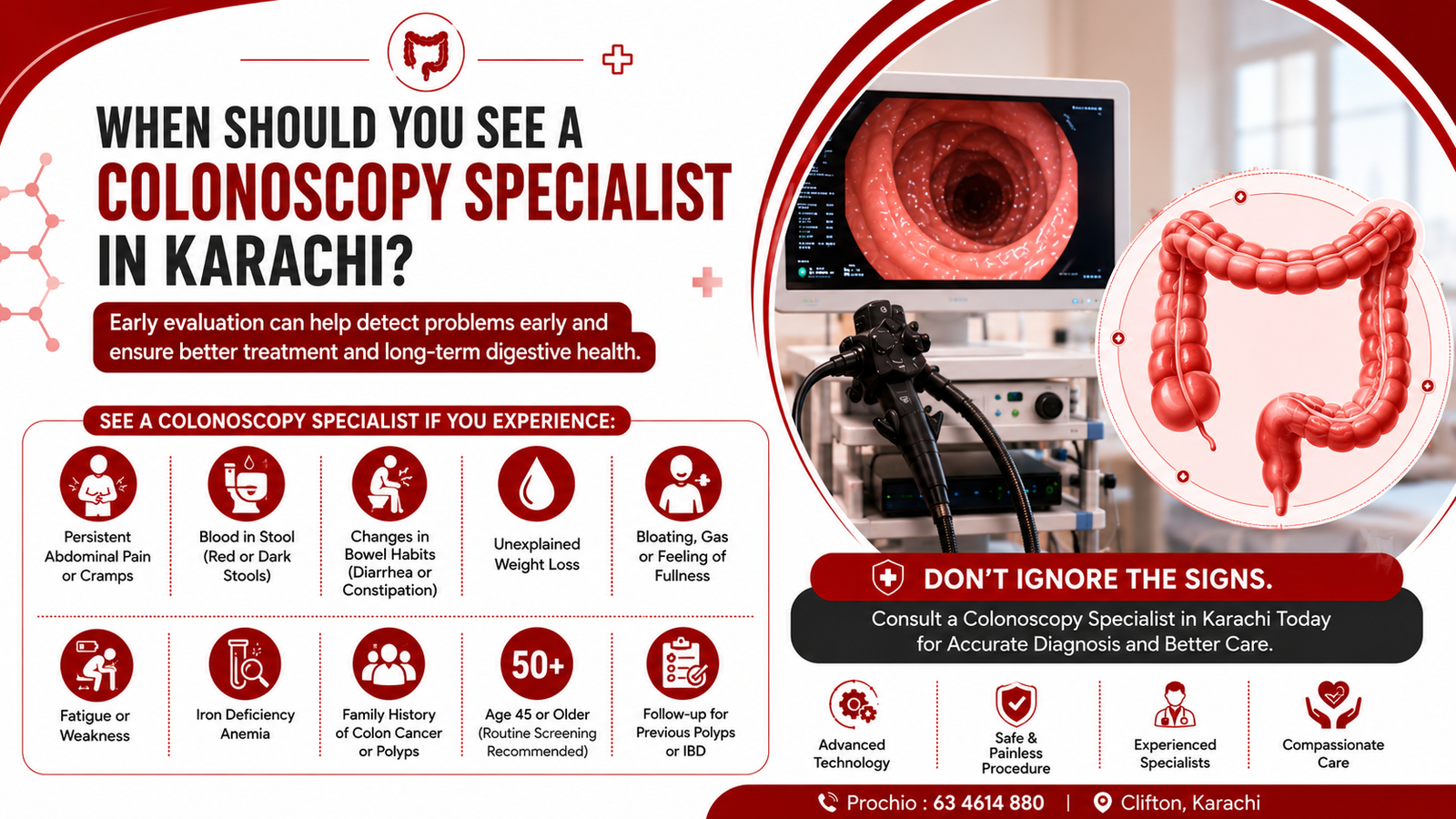
A colonoscopy may be performed to diagnose or to screen for colorectal cancer.
For instance, if bowel habits are persistently changed and this is accompanied by other worrying symptoms, then investigations should be carried out.
Bleeding from the rectum should also be assessed, not just taken for granted to be due to hemorrhoids.
Unusual bowel symptoms, after polyps have been found in the past, abnormal stool tests, or age-related and individual risk screening may warrant a colonoscopy.
The U.S. Preventive Services Task Force (USPSTF) suggests that adults at average risk for colorectal cancer should get screening starting at age 45.
Individual screening plans may be necessary for individuals with a family history of polyps, inflammatory bowel disease (IBD), certain inherited conditions, or previous polyps.
Symptoms that might require medical assessment
- Any changes in bowel movements that continue without an obvious cause, such as diarrhea or constipation.
- Blood in the stool / rectal bleeding
- Unexplained iron-deficiency anemia
- Aching or recurring abdominal pain/discomfort
- Weight loss with digestive complaints and no explanation.
- Polyps identified in the past and deemed to need surveillance.
- A colon exam that shows cancer or something else is not normal.
- An important family history of colorectal cancer (CRC) or certain polyps (colon cancer).
Having one of these symptoms does not automatically mean that you need a colonoscopy.
Other tests may be ordered when appropriate, and a doctor will look at the full clinical picture.
How Do You Choose the Right Colonoscopy Specialist in Karachi?
It is advisable to pay attention to more than taglines like “best doctor” or online rankings while selecting a colonoscopy specialist in Karachi.
The right specialist needs to be qualified, experienced, familiar with colonoscopy, available at an appropriate medical facility and have a plan for patient safety and follow-up.
Patients should be able to ask the doctor why he has recommended the colonoscopy and what he expects he will be able to determine during the examination.
When considering a consultation with Dr. Azizurrehman, you can discuss your symptoms, medical history, previous test results, and whether or not colonoscopy is right for you.
As with any specialist, patients should check the doctor’s current qualifications, clinical role, facility, and procedure arrangements with the relevant healthcare provider.
A good consultation should make you feel confident in the reason for the procedure, how it is prepared, the type of sedation that may be used, what you might find, and what you will need to do after.
What to expect from a Specialist?
Training and qualifications in gastroenterology or colorectal surgery relevant to the job.
Have performed diagnostic and therapeutic colonoscopy procedures.Have experience in performing diagnostic and therapeutic colonoscopy procedures.
- An explanation that describes the reasons for recommending the procedure.
- Discussion of preparation, sedation, and potential complications appropriate
- Availability of suitable endoscopy and patient monitoring facilities
- A scheme of biopsy, removal of polyps and pathology if needed.
- Provide post-procedure instructions and follow-up.
Commissioner’s readiness to respond to questions without making unrealistic commitments
The objective is not to seek out a doctor who does colonoscopy. It is to seek out a specialist who can determine whether the procedure is suitable and who can give safe and well-explained care during the procedure.
What Is a Colonoscopy Procedure in Karachi Like?
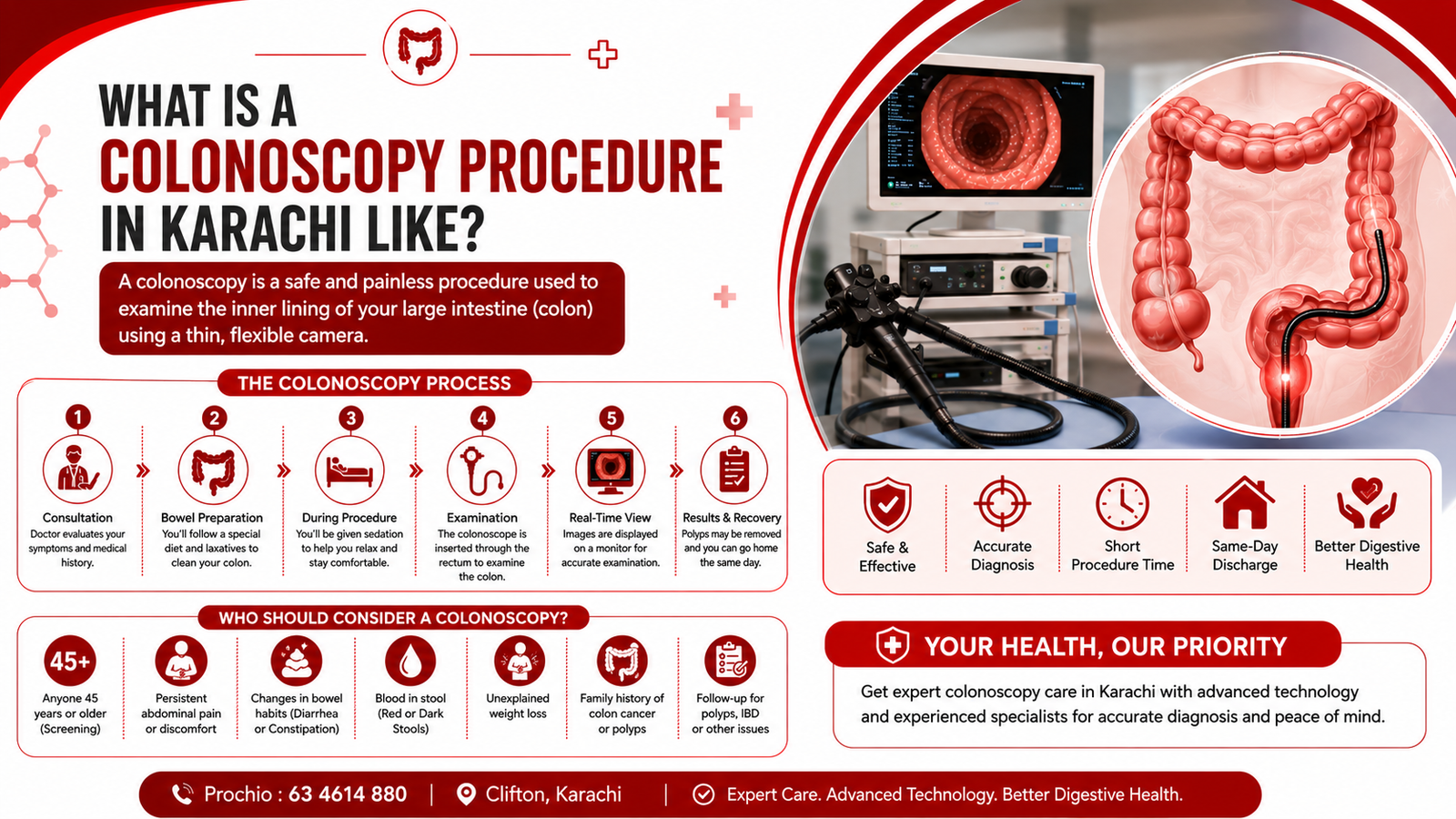
The colonoscopy procedure is the same as in other parts of the world and the same as is used in medical practice.
This experience may differ from hospital to hospital, endoscopy clinic to endoscopy clinic, doctor to doctor, and patient to patient.
The management of the procedure can vary based on your age, medical history, medications, previous procedures, and sedation plan.
The first phase is a consultation and medical evaluation. The initial phase involves consultation and medical assessment.
Your doctor will discuss your symptoms and medical history prior to the procedure.
You should inform the medical team of any medications that you have been taking regularly, allergies, prior reactions to sedation or anesthesia, and any significant medical conditions.
Some medications might need to be taken into account prior to colonoscopy. Don’t stop any prescription medicine by yourself; consult your doctor about what to do.
Step 2: Bowel Preparation
The colon needs to be thoroughly cleaned prior to the examination. Colon cleansing is typically done with a bowel prep medication.
Your diet and bowel preparation will usually be explained. This preparation can lead to regular bowel movements; patients should make sure to be near a bathroom.
It is important to follow all the instructions carefully so that the doctor can see the lining of the colon clearly and can perform the colon exam properly.
During
step 3, sedation is used to help the person feel better and relax.
Medications may be given to help some patients relax or feel comfortable during colonoscopy. The sedation technique and how deep the sedation is will depend on the clinic, doctor, procedure, and patient’s health.
Talk with the child about his or her anxiety or discomfort before the exam. It helps to know what to expect and will make it easier to deal with stressors.
Step 4: Examination
The colonoscope is gently inserted into the rectum and slowly moved through the colon.
The camera magnifies the inside of the colon. The doctor checks for any abnormalities like inflammation, polyps, bleeding points, or suspicious lesions.
When a polyp is found it can be removed if clinically suitable. Another procedure is a biopsy of an abnormal area that is sent to a laboratory to be examined.
Step 5: Recovery
You may need to be closely watched following the procedure, especially if sedated.
Air or gas may be introduced into the colon during the exam that can cause bloating or discomfort. These symptoms tend to get better as the gas evacuates.
If you have been sedated, adhere to the guidelines provided by the facility for transportation home, driving, and other activities.
How Should You Prepare for a Colonoscopy?
A useful colonoscopy is one of the most important things that can be accomplished through proper preparation.
Your doctor or endoscopy center will give individual directions. The directions may vary based on your health, medications, bowel preparation instructions given, and time of your procedure.
Instructions must be followed, not just on the internet.
Consume the fluids recommended unless directed otherwise by your health care team.
Before making any changes to your regular medications, ask about them, especially if you are taking medications that may affect blood clotting or medications for diabetes.
If you are not able to do the bowel preparation, talk to your health care provider before doing it—don’t just do it.
Is Colonoscopy Painful?
It’s different for everyone.For some, there is pressure, bloating, abdominal cramping, and/or the need to defecate. Sedation may be helpful in select cases to enhance comfort.
It’s important to be open and honest with your colon specialist in Karachi about your anxiety levels, past painful experiences, or concerns regarding sedation when discussing your plan with them.
Also keep in mind that the bowel preparation may be more noticeable to the patient than the examination will be.
What Can a Colonoscopy Detect?
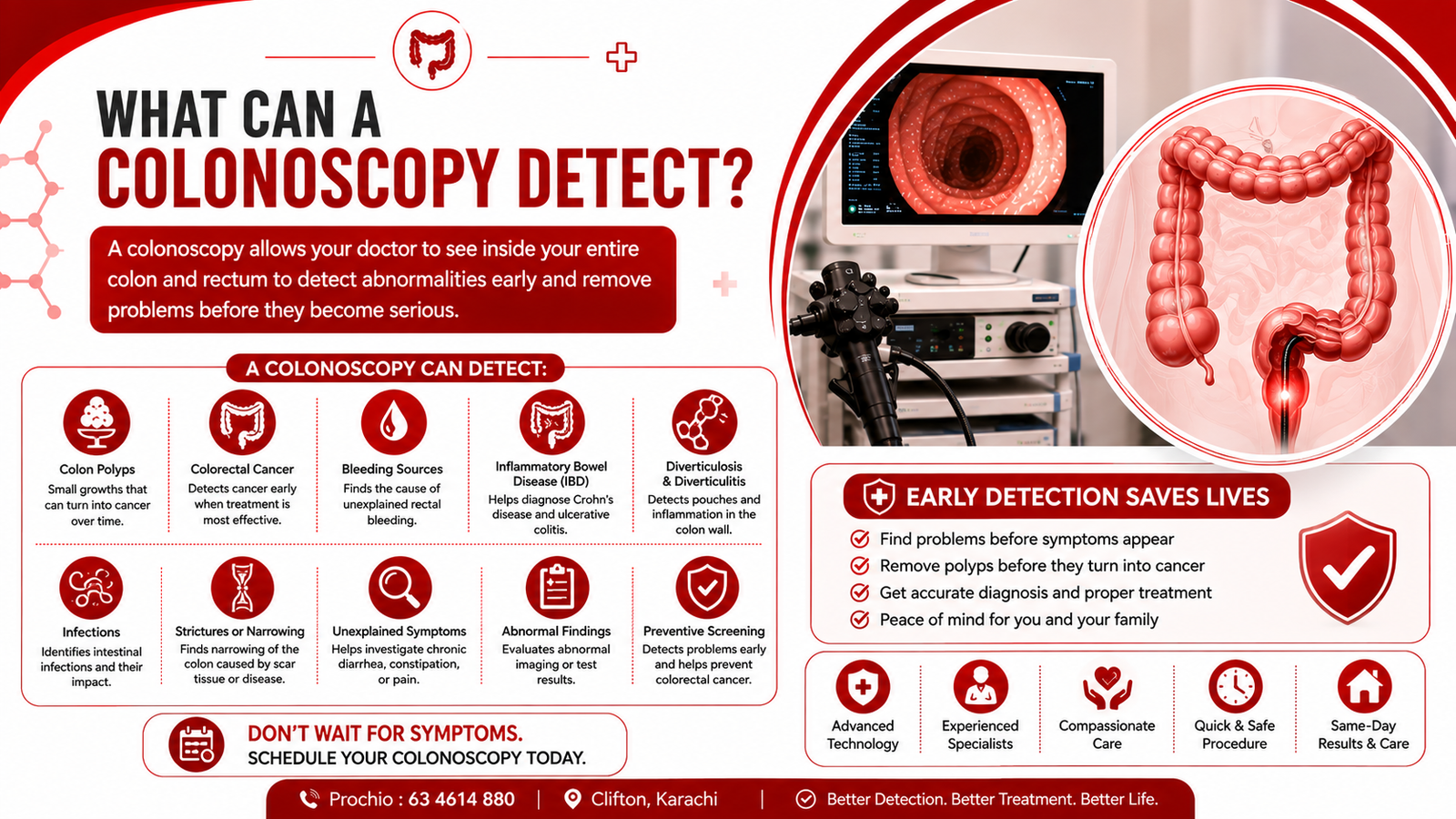
Colonoscopy provides a direct view of the colon and can help identify a range of abnormalities.
Finding | What colonoscopy can help with |
Polyps | Detection and removal of many suitable polyps |
Abnormal bleeding | Investigation of a possible bleeding source |
Inflammation | Identification and biopsy of inflamed areas |
Suspicious lesions | Direct visualization and tissue sampling |
Colorectal cancer | Identification of suspicious areas and biopsy |
Previous polyps | Follow-up and surveillance |
Changes in bowel habits | Investigation of possible structural causes |
Finding a polyp or abnormal-looking tissue does not automatically mean cancer. Many abnormalities have different causes, and laboratory examination of biopsy tissue may be required before a diagnosis is made.
What Are the Benefits and Risks of Colonoscopy?
One of the big benefits of colonoscopy is that the doctor is able to look at the colon directly.
Conducted during colonoscopy, the removal of some polyps and obtaining tissue samples can provide additional information, unlike tests that only provide indirect information.
Even so,
colonoscopy is an invasive medical procedure and has some possible side effects.
Benefits of Colonoscopy
- Visualization of the colon directly
- Unusual gastrointestinal symptoms investigated.
- The identification of polyps and other abnormalities.
- The ability to take biopsies.The capacity to get biopsies.
- The removal of many suitable polyps.
- As one of the important means of colorectal cancer screening.
- Able to explore some causes of lower gastrointestinal bleeding
The risks are rare, but may involve serious bleeding, perforation of the bowel, and sedation side effects.
The risk may be different depending on the patient’s overall health and other procedures that may be performed at the same time as colonoscopy, like removal of polyps.
What Happens After a Colonoscopy?
Appropriate recovery and monitoring most patients can go home.
Following the examination, there may be some mild bloating and cramping. Your doctor will discuss with you the symptoms you may experience and when to seek medical care if a tissue was taken for biopsy or if a polyp was removed.
The doctor may be able to explain some findings soon after the procedure. Results of the biopsy and polyp usually must be looked at by a laboratory, though, so the diagnosis may take longer.
If you experience any of the following after the procedure to the point of severe or worsening abdominal pain, heavy bleeding, fever, fainting, or other symptoms that concern you, contact your healthcare provider immediately.
How Much Does Colonoscopy Cost in Karachi?
The price of colonoscopy is not fixed in Karachi.
The costs may vary by hospital or endoscopy center, doctor fees, sedation or anesthesia, pathology fees, biopsy, polyp removal, and more.
If you call a facility, you should ask if the fee quoted includes the doctor’s fee, facility fee, sedation fee, pathology fee, and if there may be any other procedure that needs to be performed.
While it’s crucial to consider the cost, it shouldn’t be the sole deciding factor when choosing a colonoscopy doctor in Karachi.
Other factors to consider include the specialist’s experience in the relevant field, the standard of facilities, monitoring of patients, instructions for preparation, and follow-up plans.
What Questions Should You Ask Before Colonoscopy?
A consultation will be a good time to learn exactly why the exam has been advised.
Inquire with your specialist exactly what they are searching for, exactly what you need to anticipate, if they plan on using sedation, and what will occur if they discover something is wrong.
You may also want to inquire about when to expect your results and what signs that a procedure may have left that would warrant immediate medical attention.
These questions can assist you in making an informed choice and help minimize uncertainty before the exam.
Is Colonoscopy Better Than Other Digestive Tests?
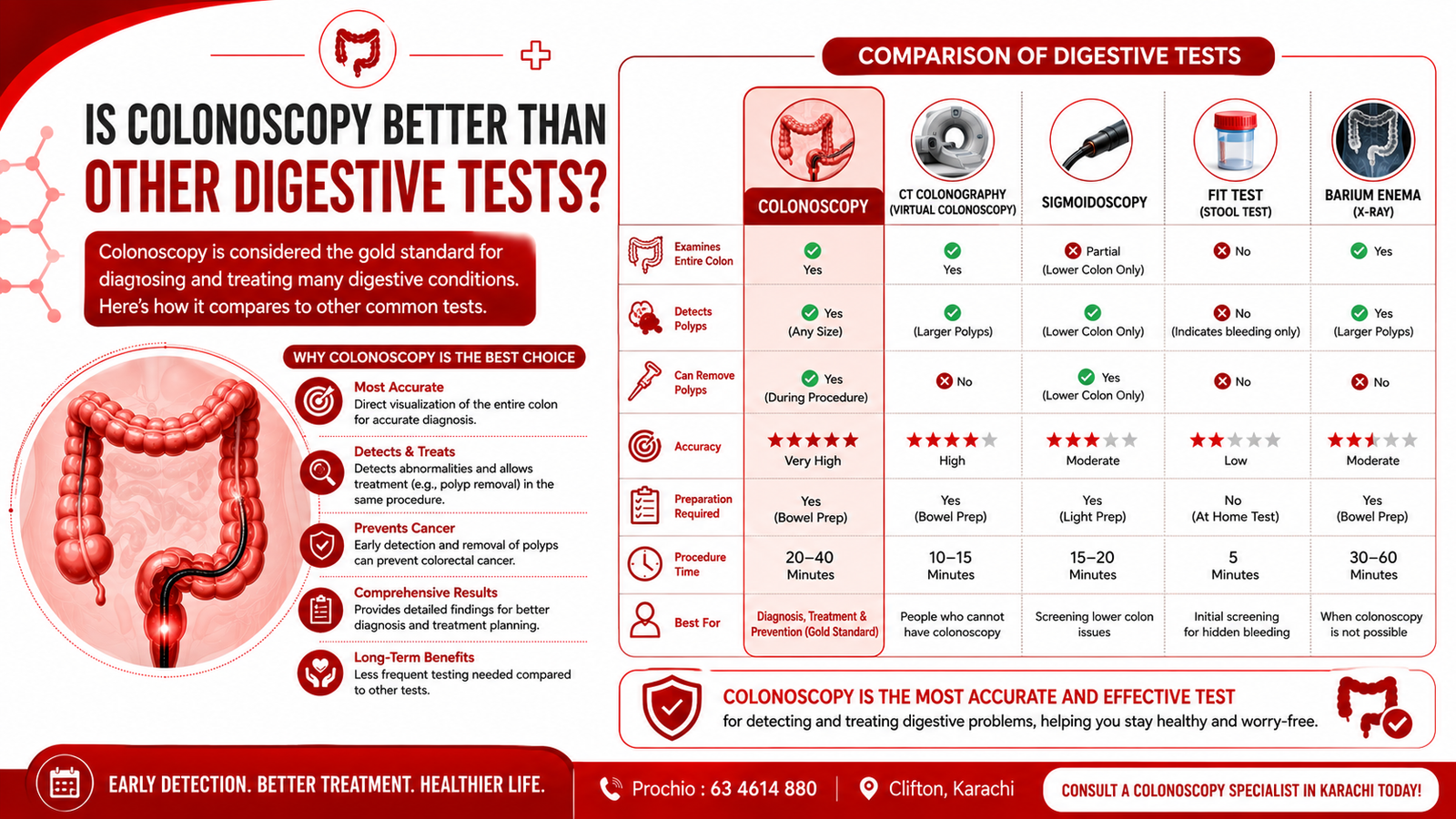
Not necessarily. There are various types of tests to address medical concerns.
Stool-based tests, imaging, upper gastrointestinal endoscopy or colonoscopy may be considered depending on the symptoms and risk profile.
There are evidence-based options for screening for colorectal cancer. Colonoscopy has the special benefit of directly assessing the colon, and some polyps can be removed at the time of the colonoscopy.
It’s not necessarily the “best” test for everyone, but the most appropriate test for you will be determined by your individual situation.
Why Is an Experienced Gastroenterologist in Karachi Important?
Colonoscopy involves more than simply using a camera to look inside the colon. Quality care involves proper patient assessment, bowel preparation, careful examination, appropriate biopsy or removal of a polyp, monitoring, and follow-up.
A Gastroenterologist in Karachi can also make the decision on the need for colonoscopy or not. Depending on the patient’s symptoms, however, in some cases, another investigation might be more appropriate.
The gastroenterologist might refer the patient to a colorectal surgeon for surgery if the condition does not require endoscopic treatment.