
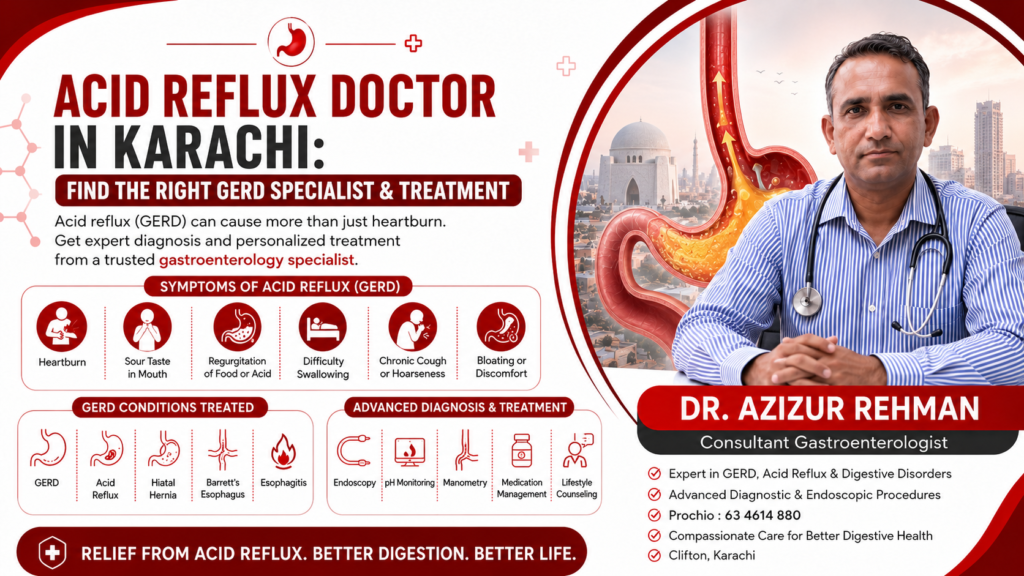
What Is Acid Reflux and What Is GERD?
Acid reflux occurs when stomach contents move back into the esophagus. The esophagus is the tube that carries food from your mouth to your stomach.
Most people experience reflux from time to time. It can cause heartburn or a sour taste.
When reflux becomes frequent and causes troublesome symptoms or complications, doctors may diagnose gastroesophageal reflux disease, commonly called GERD. (niddk.nih.gov)
The lower esophageal sphincter normally helps keep stomach contents inside the stomach.
When this muscle does not work properly, stomach contents can move upward into the esophagus. Repeated exposure can irritate the esophageal lining and lead to uncomfortable symptoms.
GERD does not look exactly the same in every person.
Some people mainly experience heartburn, while others notice regurgitation, swallowing problems, coughing, or throat symptoms. (niddk.nih.gov)
When Should You See an Acid Reflux Doctor in Karachi?
Occasional heartburn after a heavy meal does not always require specialist care.
However, if symptoms keep returning, it is worth discussing them with a doctor.
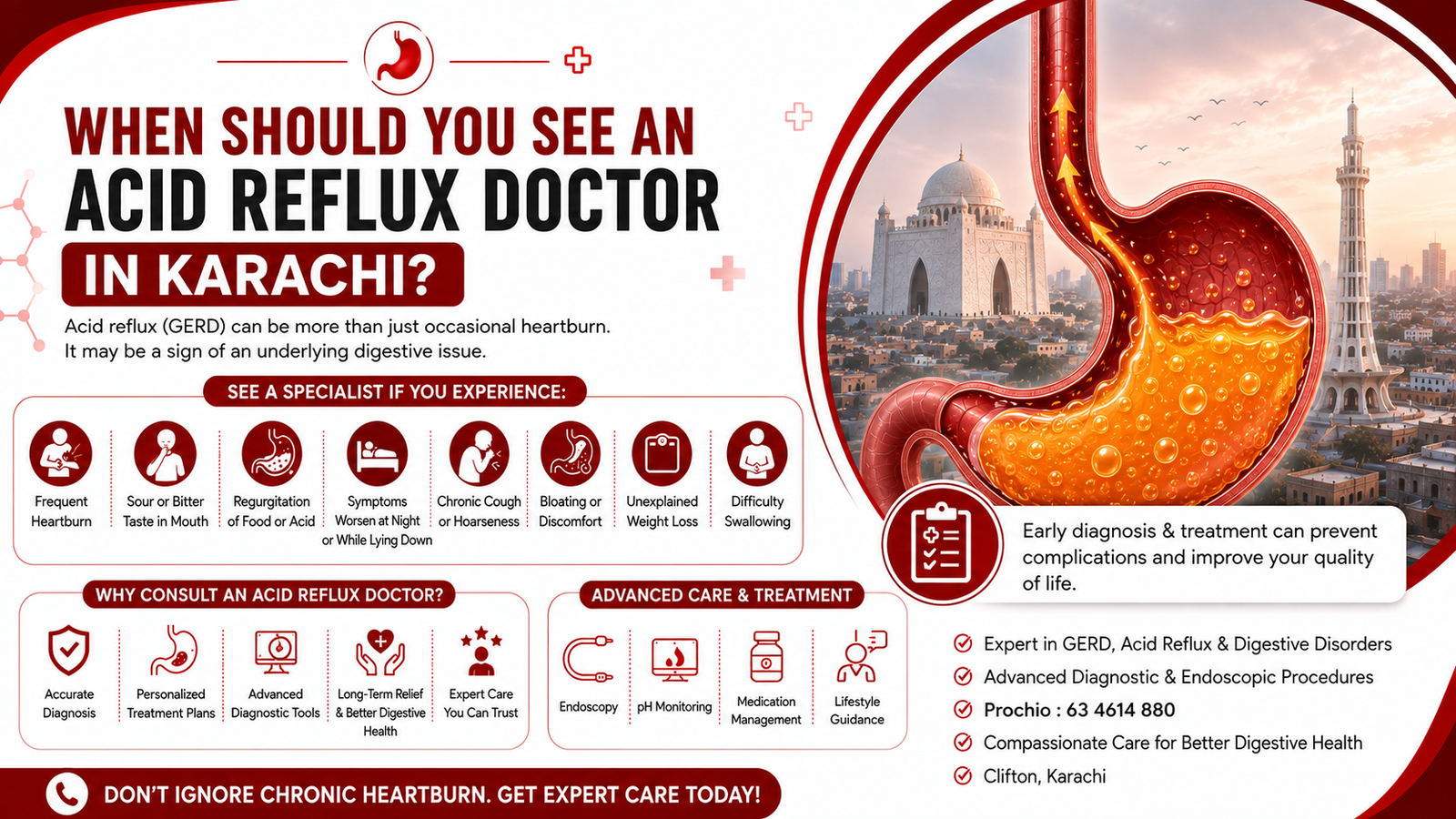
You should consider seeing an acid reflux doctor in Karachi if:
- Heartburn happens frequently or keeps coming back.
- Acid reflux affects your sleep or daily activities.
- Symptoms continue despite lifestyle changes.
- You regularly need medicines for heartburn.
- Food feels difficult or painful to swallow.
- You experience repeated regurgitation or vomiting.
- You have unexplained weight loss.
- You notice blood in your vomit or black stools.
- You have persistent or unusual chest pain.
These symptoms can occur with GERD, but some may also point to another digestive or medical condition.
A doctor can decide whether you need treatment, further testing, or specialist care.
When Is Chest Pain an Emergency?
Chest pain should never automatically be blamed on acid reflux.
GERD can cause chest discomfort, but heart problems can sometimes feel similar to severe heartburn.
If chest pain is new, severe, unexplained, or occurs with shortness of breath, sweating, fainting, or pain that spreads to the arm, jaw, shoulder, or back, seek urgent medical care. (niddk.nih.gov)
Who Is the Right Acid Reflux Specialist in Karachi?
For ongoing or complicated reflux, a gastroenterologist is usually the most suitable specialist.
Gastroenterologists are trained to diagnose and treat diseases of the digestive system.
Their work includes conditions affecting the esophagus, stomach, intestines, liver, pancreas, and gallbladder. Because the esophagus and stomach are directly involved in acid reflux, gastroenterologists commonly manage GERD.
You may see terms such as GERD doctor in Karachi, GERD specialist in Karachi, or acid reflux specialist in Karachi when searching online.
These terms can describe doctors who treat reflux disease. However, the doctor’s qualifications, experience, and approach to diagnosis are more important than the exact title used.
Acid Reflux Doctor vs. Gastroenterologist
Doctor type | Main role | When they may help |
General physician | Initial assessment and treatment | New or mild reflux symptoms |
Gastroenterologist | Diagnosis and treatment of digestive diseases | Frequent or persistent reflux |
GERD-focused gastroenterologist | Management of difficult reflux cases | Symptoms that do not improve |
Gastroenterologist who performs endoscopy | Examines the upper digestive tract when needed | Suspected complications or unclear symptoms |
If your symptoms are frequent or continue despite treatment, a gastroenterologist can look for the underlying reason instead of treating heartburn as an isolated symptom.
What Causes Acid Reflux and GERD?
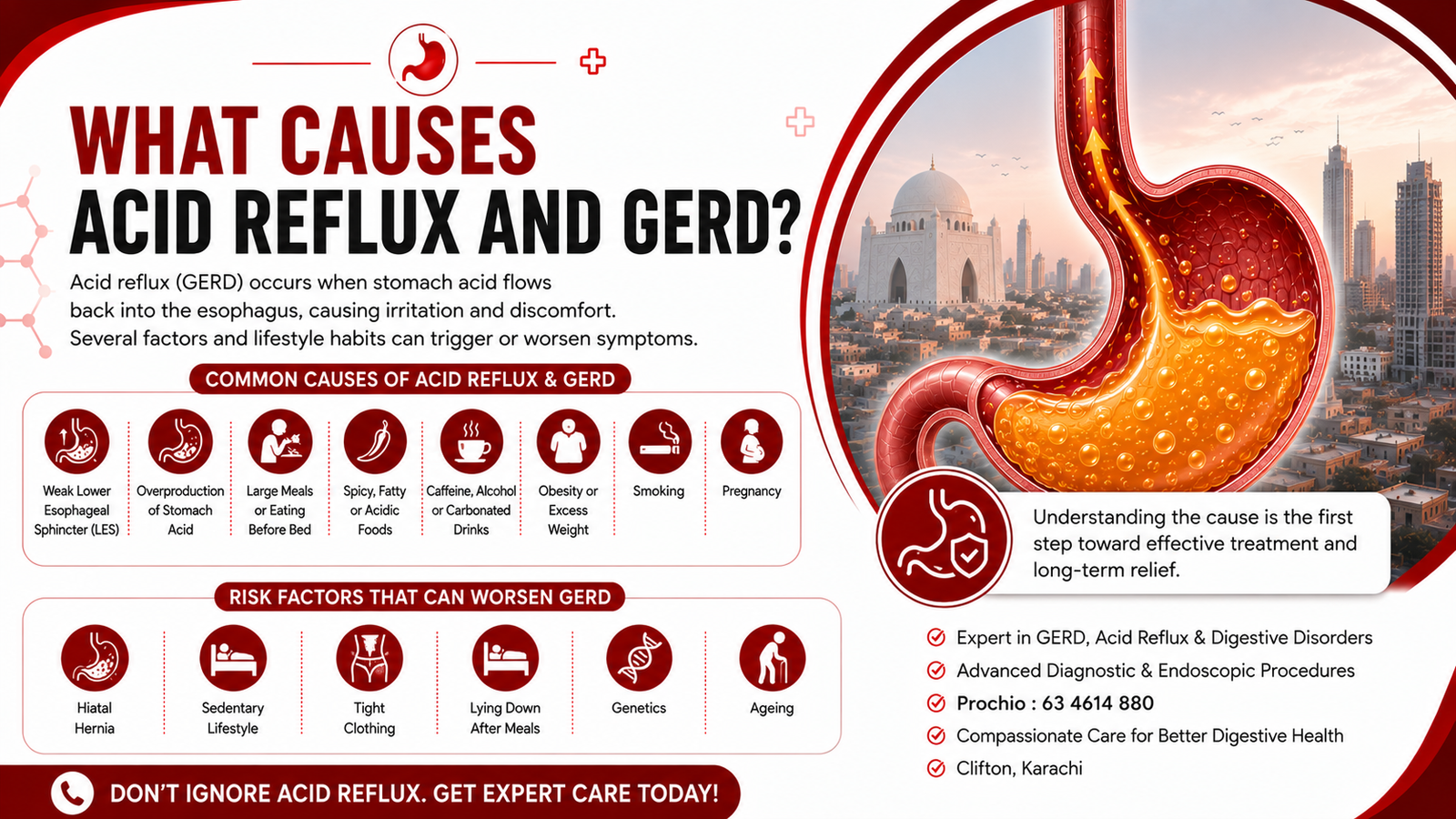
Acid reflux can happen when the normal barrier between the stomach and esophagus does not work properly.
Several factors may increase the chance of GERD or make symptoms worse.
These include excess body weight, pregnancy, smoking, certain medicines, and a condition called a hiatal hernia. (niddk.nih.gov)
Eating habits can also affect symptoms. Some people notice more reflux after spicy foods, high-fat meals, coffee, chocolate, mint, tomatoes, citrus foods, or alcohol.
However, food triggers are different for everyone.
For this reason, it is not always necessary to remove every possible trigger from your diet. It is usually more useful to notice which foods actually make your symptoms worse.
What Are the Common Symptoms of Acid Reflux?
Heartburn is one of the most common symptoms of acid reflux.
It usually feels like a burning sensation behind the breastbone and may move toward the throat.
Regurgitation is another common symptom.
This happens when stomach contents come back toward the mouth and may leave a sour or bitter taste.
Some people also experience chest discomfort, nausea, swallowing problems, chronic cough, or hoarseness.
These symptoms can have other causes as well, so persistent symptoms should be evaluated instead of being self-diagnosed as GERD. (niddk.nih.gov)
Nighttime reflux can be especially uncomfortable. Lying down after eating can make symptoms more noticeable in some people.
How Does a GERD Doctor in Karachi Diagnose Acid Reflux?
GERD diagnosis usually begins with your symptoms and medical history.
Your doctor may ask about when the symptoms started, how often they happen, whether they become worse after meals, and whether they disturb your sleep.
They may also ask about medicines, eating habits, previous treatments, and other symptoms.
In many cases, a doctor can make an initial diagnosis from the symptom pattern and medical history.
Further testing may be considered when symptoms do not improve, complications are suspected, or another condition may be causing similar symptoms.
What Tests May Be Used for GERD?
An upper GI endoscopy allows a gastroenterologist to look at the lining of the esophagus and stomach with a flexible camera.
It can help identify inflammation, narrowing, ulcers, or other abnormalities.
Another test is esophageal pH monitoring, which measures acid exposure in the esophagus.
It can help doctors confirm reflux in selected patients or investigate symptoms that continue despite treatment.
Some patients may also need esophageal manometry.
This test measures pressure and movement in the esophagus and may be useful when doctors need to assess how the esophagus is functioning.
Not everyone with heartburn needs these tests.
The decision depends on symptoms, medical history, treatment response, and the doctor’s clinical judgment.
What Is Acid Reflux Treatment in Karachi?
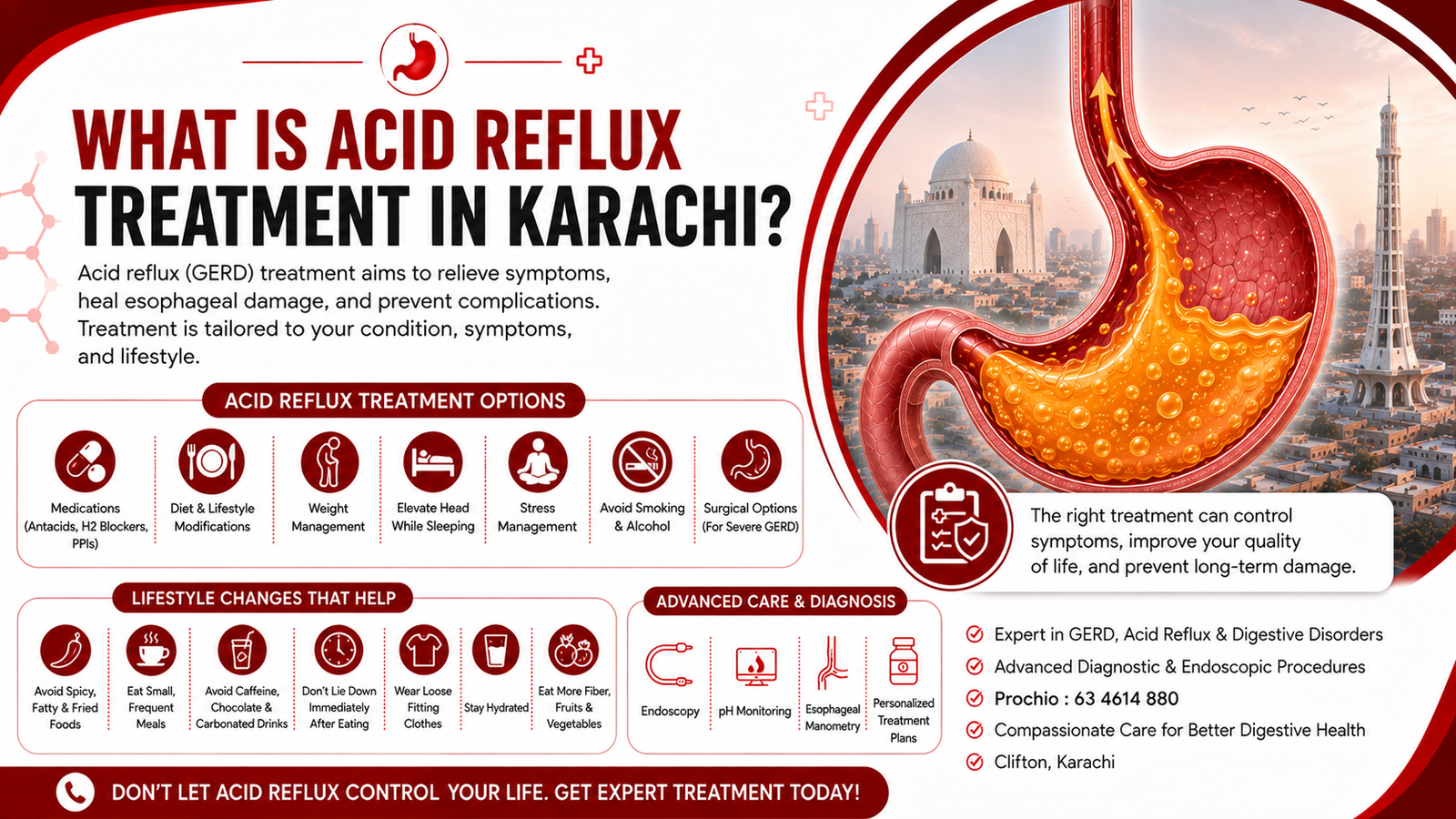
Acid reflux treatment in Karachi may include lifestyle changes, medicines, or both. The treatment depends on how often symptoms occur, how severe they are, whether the esophagus has been damaged, and how the patient responds to treatment.
Lifestyle changes are often an important part of GERD management. Doctors may recommend changing meal timing, avoiding personal food triggers, managing body weight when appropriate, stopping smoking, and changing sleeping habits when nighttime reflux is a problem.
Can Changing Meal Timing Help?
Yes. If you often experience reflux at night, avoiding food shortly before going to bed may help.
NIDDK recommends eating meals at least three hours before lying down or going to bed when nighttime GERD symptoms are a problem. (niddk.nih.gov)
Large meals may also make symptoms worse in some people.
Smaller meals and paying attention to personal triggers can be useful.
Which Medicines Are Used for Acid Reflux?
Different medicines can be used depending on the symptoms and severity of GERD.
Antacids can provide short-term relief from mild heartburn by neutralizing stomach acid.
They are generally used for occasional symptoms rather than as a long-term solution for persistent GERD.
H2 blockers reduce the amount of acid produced by the stomach and can help control reflux symptoms.
Proton pump inhibitors (PPIs) reduce stomach acid more strongly and are commonly used to treat GERD.
They can also help heal acid-related damage to the esophagus. (niddk.nih.gov)
The choice of medicine and treatment duration should be based on your individual situation.
If you often need nonprescription medicines, talk with a doctor instead of repeatedly changing your treatment on your own.
Can Acid Reflux Be Treated Without Surgery?
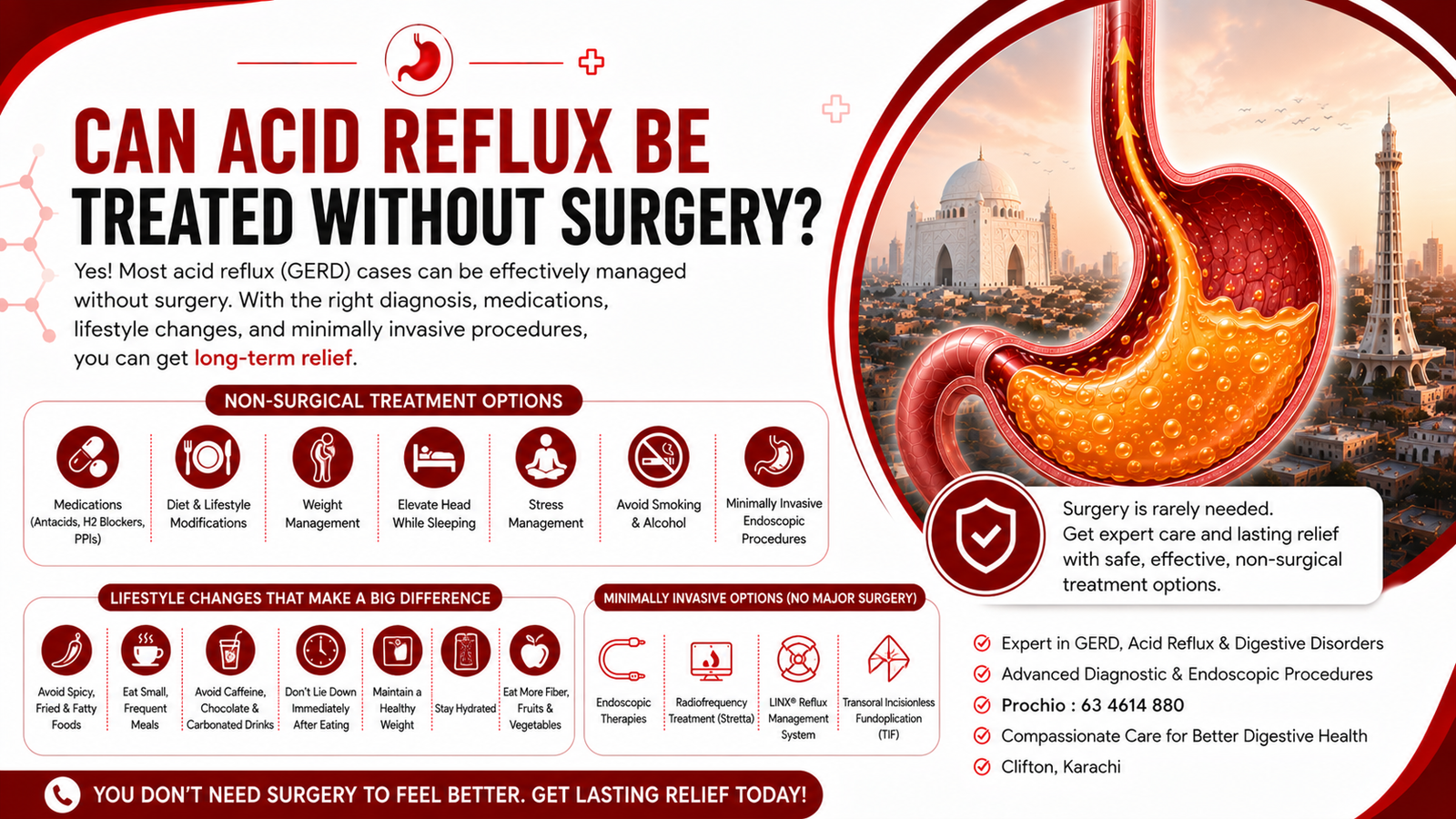
Yes. Many people with GERD can manage their symptoms without surgery.
Lifestyle changes and medicines are common treatment options. Procedures or surgery may be considered for selected patients when medical treatment does not provide enough control or when there is another medical reason to consider an intervention.
Surgery is therefore not usually the first option for occasional heartburn.
A gastroenterologist can help determine whether more advanced treatment is appropriate.
What If Acid Reflux Does Not Improve With Treatment?
When symptoms continue despite treatment, the answer is not always to take a stronger medicine.
A GERD specialist in Karachi may review whether the original diagnosis is correct, whether the medicine is being used properly, or whether another digestive condition is causing similar symptoms.
The doctor may also consider whether there is an underlying complication or whether additional testing would provide useful information.
Persistent heartburn-like symptoms can have more than one cause.
A careful reassessment can therefore be more helpful than simply adding another medicine.
Can Long-Term GERD Cause Complications?
GERD can usually be managed, but persistent reflux may cause complications in some people.
One possible problem is esophagitis, which means inflammation of the esophagus. Long-term reflux can also cause an esophageal stricture, where scar tissue narrows the esophagus and may make swallowing difficult.
Another condition associated with long-term GERD is Barrett’s esophagus.
It involves changes in the lining of the esophagus and can increase the risk of esophageal cancer.
Not everyone with GERD develops Barrett’s esophagus or other serious complications.
This is why frequent or persistent symptoms should receive proper medical attention.
Can Dr. Aziz Ur Rehman Help With Acid Reflux in Karachi?
Dr. Aziz Ur Rehman is a Karachi-based gastroenterologist and internal medicine specialist whose published services include gastric and acid reflux management.
His clinic information also lists gastroenterology services and diagnostic procedures such as upper GI endoscopy. (dr-azizurrehman.com)
For patients experiencing ongoing heartburn, regurgitation, or other digestive symptoms, consultation with a qualified gastroenterologist can help determine whether GERD is the likely cause and whether further evaluation is needed.
Dr. Aziz Ur Rehman’s clinic is listed at Room #03, 2nd Floor, Taj Medical Complex Residential, M.A. Jinnah Road, Central Jacob Lines, Karachi.
Patients should confirm the current clinic schedule and appointment details before visiting. (dr-azizurrehman.com)
The focus of a good consultation should be more than simply reducing heartburn for a short time.
The doctor should consider the symptom pattern, medical history, possible triggers, previous treatment, and whether further investigation is appropriate.
How Should You Choose an Acid Reflux Doctor in Karachi?
When searching for an acid reflux doctor in Karachi, do not choose a doctor only because a website describes them as the “best” or “number one.”
Look at the doctor’s medical qualifications, relevant gastroenterology experience, approach to diagnosis, and ability to explain treatment options clearly.
It is also useful to choose a doctor who can arrange appropriate testing when required.
If symptoms continue, proper follow-up can help determine whether the diagnosis or treatment plan needs to change.
A good doctor should also explain why a particular treatment is recommended rather than simply prescribing medicine without discussing the problem.
How Can You Prepare for Your GERD Appointment?
A little preparation can make your consultation more useful.
Before visiting a gastroenterologist for acid reflux in Karachi, note:
- When your symptoms usually occur.
- How often you experience heartburn or regurgitation.
- Whether symptoms become worse after meals.
- Whether reflux wakes you during the night.
- Foods or drinks that seem to trigger symptoms.
- Medicines and supplements you currently use.
- Previous tests or treatments you have received.
- Any swallowing problems, vomiting, bleeding, or unexplained weight loss.
A short food and symptom diary can also help.
It may show patterns that are difficult to remember during a consultation.
What Are the Most Important Things to Remember About Acid Reflux?
Acid reflux is common, but frequent symptoms should not simply be ignored.
GERD can often be managed successfully when the condition is properly assessed and treated.
If your symptoms are mild and occasional, lifestyle changes may be enough.
If they happen often, disturb your sleep, or continue despite treatment, it is reasonable to consult an acid reflux specialist in Karachi.
A gastroenterologist can determine whether you have GERD, whether another condition may be responsible, and whether you need medicine or further testing.
The most useful approach is to avoid unnecessary self-treatment and focus on finding the reason behind persistent symptoms.