
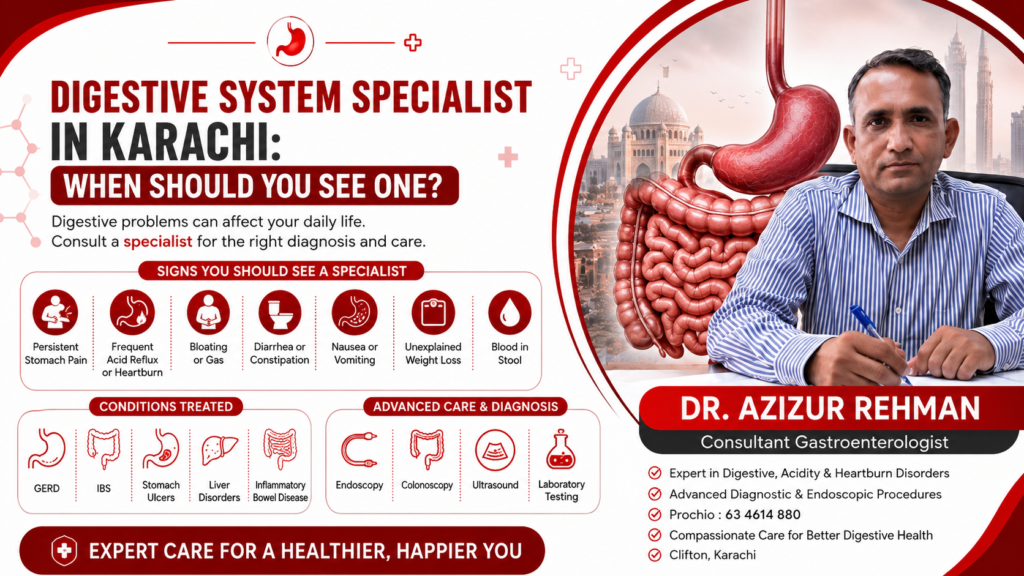
What Is a Digestive System Specialist?
A digestive system specialist is a doctor who treats diseases of the digestive system. This doctor is typically referred to as a gastroenterologist.
The digestive organs are the esophagus, stomach, small intestine, large intestine, liver, gallbladder, and pancreas.
A gastroenterologist is able to identify issues arising with these organs.
Some of the common problems that arise are acid reflux, gastritis, ulcers, IBS, liver disease, gallstones, and others.
When a stomach ailment is recurring, it is better to identify the cause of the ailment rather than treat it over and over.
What Problems Does a Digestive Specialist Treat?
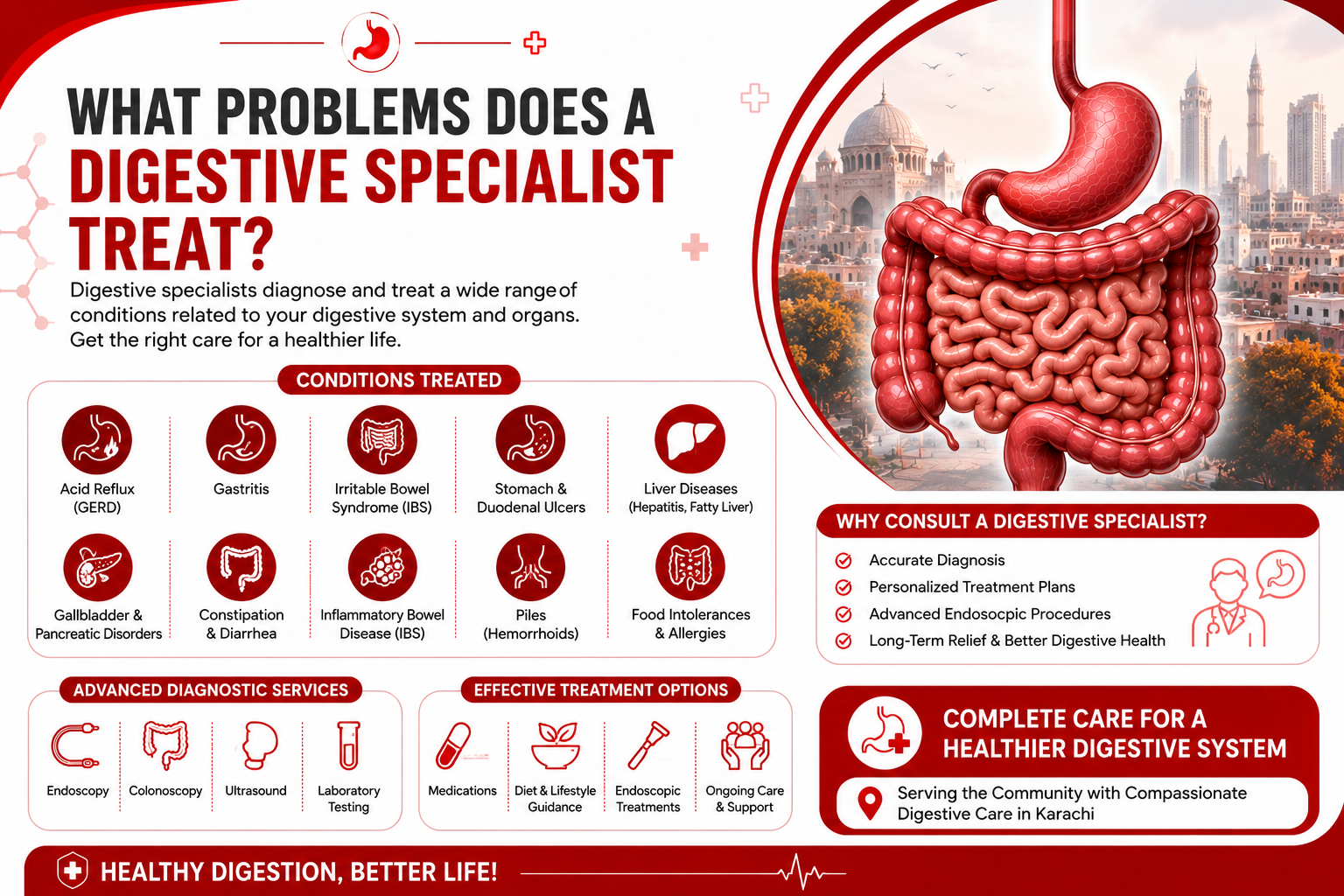
Many digestive issues can be treated by a gastroenterologist. Some are common; others require tests and routine follow-up.
Digestive specialists frequently treat the symptoms of acid reflux and GERD, indigestion, gastritis, stomach and peptic ulcers, abdominal pain, bloating, constipation, long-term diarrhea, and irritable bowel syndrome (IBS).
They can also treat more serious diseases like Crohn’s disease, ulcerative colitis, gallstones, and pancreatic disorders, as well as fatty liver, hepatitis, digestive tract bleeding, colon polyps, and other conditions.
Digestion issues can come from various reasons, from individual to individual. For instance, those with indigestion may experience acid issues, H. pylori infection, some medications, or functional digestive disorders.
Therefore, treatment should be based on a correct medical assessment.If you have symptoms that persist and return or if there is no obvious cause, you should reach out to a digestive specialist.
If the discomfort is mild and is just one occurrence, medical intervention may not be necessary.
When Should You See a Digestive System Specialist in Karachi?
If you have symptoms that persist and return or if there is no obvious cause, you should reach out to a digestive specialist.
If the discomfort is mild and is just one occurrence, medical intervention may not be necessary.
If symptoms recur, however, it’s time to pay them more attention, particularly if they are interfering with your daily life, work, sleep, or eating habits.
Symptoms of digestion that should be evaluated.
Different symptoms can occur with digestive issues. Common signs include:
- Stomach or upper abdominal pain that occurs a lot of times
- Having heartburn or acidity often.
- Excessive flatulence or distention for long periods of time
- Nausea or vomiting often, more than once.
- Altered bowel movements.
- Chronic diarrhea or recurrent constipation.
- Dark, bloody stools or black stools
- Trouble swallowing
- Loss of appetite
- Unplanned weight loss
Additionally, indigestion can lead to pain, burning sensations, gut fullness, nausea, or belching in the upper abdominal area.
A doctor can check if these symptoms persist or worsen, which may be a clue to the possible cause.
Which Digestive Symptoms Need Urgent Medical Care?
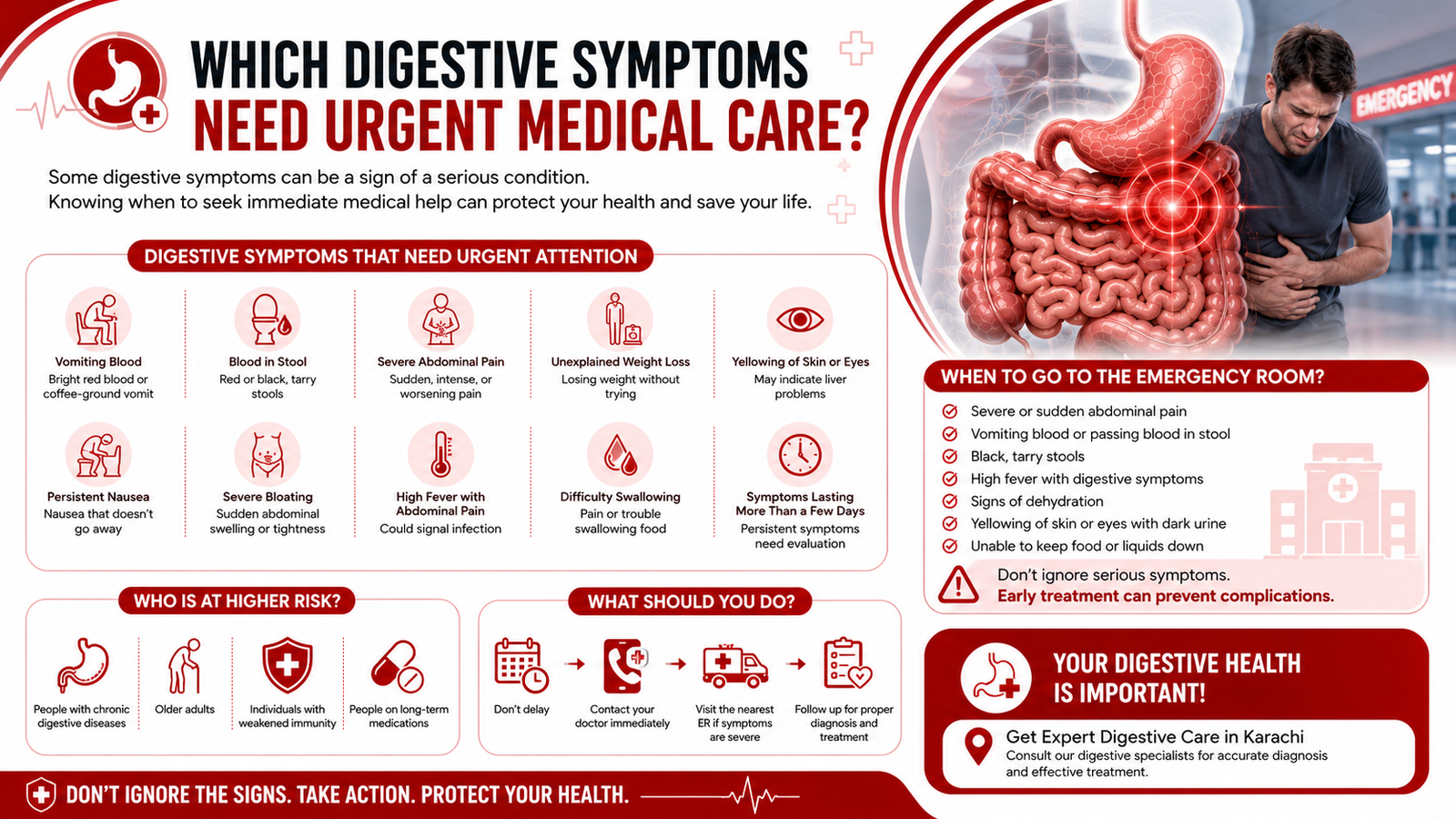
Symptoms requiring immediate medical care are listed below. They must not just be considered gas or acidity.
If someone vomits blood or has black, tar-like poop, it may be a sign that they’re bleeding in their stomach.
Abdominal pain, vomiting repeatedly, trouble eating, weight loss, yellow skin or eyes, and a large abdominal swelling should also be evaluated by a medical professional.
Don’t assume that chest pain is always due to acidity. Chest pain can be from other sources.
If the pain is new, severe, or if it is associated with breathing difficulties, sweating, weakness, or other symptoms that are of concern, get urgent medical attention.
Not every one of those symptoms indicates there’s a serious illness. Yet, these symptoms could be a warning and should be investigated without delay.
How Does a Digestive Specialist Find the Cause?
A gastroenterologist typically is not able to diagnose a digestive disease by a single symptom.
Your doctor will first ask you about your symptoms and medical history. Next, a physical exam can then be performed.
The doctor may recommend blood tests, stool tests, an imaging test, an endoscopy, a colonoscopy, or other tests, depending on your symptoms.
Tests required are based on your symptoms, medical history, age, and other clinical factors.
Medical History and Physical Examination
The doctor might ask how many and when your symptoms began during your visit. You also might be asked if symptoms come before or after a meal, what makes them worse or better, and if bowel movements have been altered.
The doctor may ask about any medications or supplements that you take. It may also be relevant to have previously been exposed to H. pylori or a family history of digestive disease.
A physical exam can aid the doctor in detecting signs of tenderness, pain, or swelling in the abdomen.
Providing clear information on your symptoms will assist the physician in determining the need for additional testing.
Blood and Stool Tests
Blood tests can be used to help the doctor look for problems, like anemia, inflammation, or changes related to some diseases.
A stool test may be performed to help identify the cause of diarrhea, bleeding, infection, or other bowel issues. If it’s appropriate, stool or breath tests may also be used to test for H. pylori infection.
Tests will be chosen based on the symptoms and suspected cause.
Ultrasound and Other Imaging
The doctor might use imaging tests when he or she wants to look at internal organs in the abdomen.
An ultrasound may be used to determine the size of the liver, gallbladder, and other abdominal organs. Sometimes, a CT scan, X-ray, or other imaging test might be required.
Some digestive issues do not need imaging. The selection is based on the patient’s symptoms and clinical examination.
Endoscopy and Colonoscopy
Upper GI endoscopy is a procedure that involves the use of a thin, flexible camera (endoscope) to look at the upper part of the digestive tract. May assist in the diagnosis of issues with the upper digestive tract, like ulcers, gastritis, bleeding, etc.
When a biopsy is necessary, a small piece of tissue is removed from the tissue lining the inside of the stomach (small intestine) during the endoscopy.
During a colonoscopy, a doctor can look into the colon. It can be prescribed for specific bowel symptoms, digestive bleeding, screening, or other medical reasons.
Not all patients require an endoscopy or colonoscopy. The doctor will determine if a procedure is appropriate based on the patient’s symptoms and medical history.
Digestive System Specialist vs General Physician
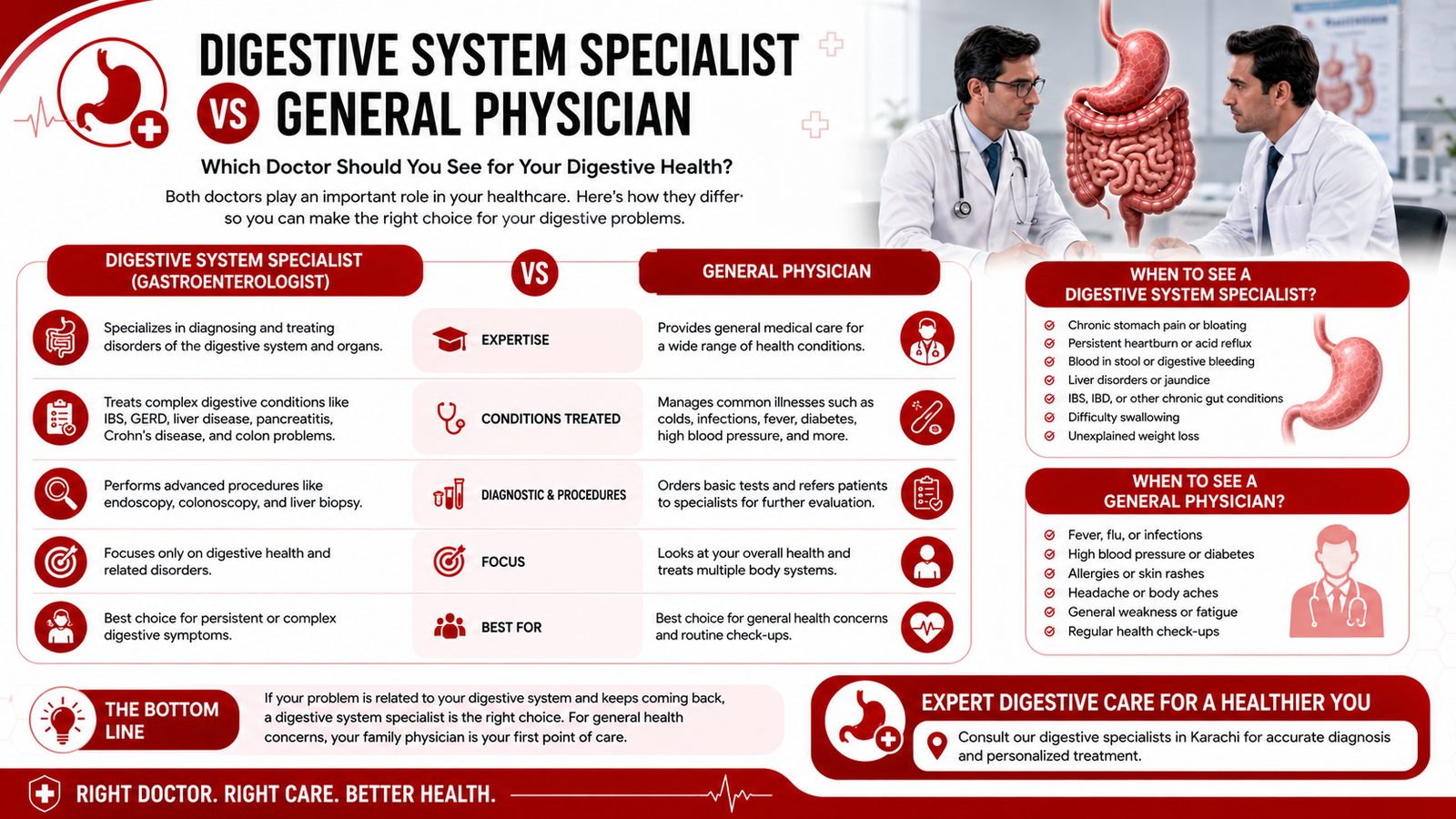
A general physician and a gastroenterologist can both help patients with digestive symptoms. The main difference is their area of medical focus.
Factor | General Physician | Digestive System Specialist |
Main focus | A wide range of health problems | Digestive system problems |
Mild new symptoms | Often a suitable first step | May also be suitable for digestive symptoms |
Ongoing digestive problems | Can assess and refer | Provides focused digestive care |
Complex digestive conditions | May refer to a specialist | Specializes in digestive conditions |
Endoscopy and colonoscopy | May arrange referral | May perform or arrange these procedures |
Liver, gallbladder and pancreas | Can assess general concerns | Has focused knowledge of these organs |
There is no single right choice for every patient. Your symptoms, medical history, and urgency should guide the decision.
A general physician may be a useful first point of care for a new or mild problem. A gastroenterologist may be more suitable when symptoms continue, return often, or need specialist testing.
What Treatment Can a Digestive Specialist Provide?
Treatment will vary depending on the cause of the problem.Changes in eating patterns and diet may be necessary for some patients. Some may require medicines, tests, procedures, or routine checkups.
For instance, the treatment for indigestion will vary based on the cause of the indigestion.
If necessary, a doctor might want to consider treatment for H. pylori, stomach acid-lowering medications, dietary adjustments, or other measures.
Some patients with chronic diseases might require continuous care. Some diseases, like Crohn’s disease and ulcerative colitis, may need to be monitored and treated regularly to manage symptoms and inflammation.
A gastroenterologist may also collaborate with other health care professionals in the case of a patient requiring further care. This can be a surgeon, dietitian, hepatologist, or other specialist.
The intent is not just to alleviate a symptom. The doctor should also take into account the cause and the patient’s general health.
What Services May Be Available at a Gastroenterology Clinic?
The services offered at Gastroenterology clinics can vary from clinic to clinic and depending on the doctor.
A digestive clinic can provide consultations, diagnostic evaluation, and ongoing treatment for digestive issues. Some facilities also offer services like endoscopy and colonoscopy.
Other conditions that can be helped include acid reflux and GERD, gastritis, ulcers, IBS, constipation, liver or hepatitis issues, gallbladder or pancreas issues.
Services may vary from clinic to clinic. Patients should verify what tests and procedures are available prior to scheduling an appointment.
Services offered by the official website of Dr. Aziz ur Rehman include gastroenterology services such as endoscopy, colonoscopy, liver and hepatitis, gastric and acid reflux, IBS and ulcer, pancreatic and gallbladder care, and constipation-related digestive care.
Not all patients require these services. Tests or treatments should be recommended by a doctor, based on an assessment.
How to Choose a Digestive System Specialist in Karachi
In the search for a specialist, it is not just about picking the doctor that Google brings up first in the search results.
Validate the doctor’s qualifications, the specialization in which they are engaged, the location of the clinic, the services offered, the process of making an appointment, and experience in addressing the specific issue you’re seeking assistance for.
Another factor to take into account is how easy the clinic is to access. This can be helpful if it requires multiple visits.
What Do You Need To Know Before Booking?
Prior to scheduling an appointment, think about:
- Is the doctor’s medical qualification prominent?
- Has the doctor experience treating digestive issues of your type?
- What is the address of the clinic?
- When necessary, are relevant tests or procedures available?
- Do patients have follow-up services?
- Is there information about appointments and fees?
- Are there any reports from the past that you can take with you for a review?
Never pick a physician due to a ranking, advertisement, or a claim made on the web. Seek out quality information and select care appropriate to your medical needs.
Dr. Aziz ur Rehman for Digestive Care in Karachi
Dr. Aziz ur Rehman is a doctor who can be seen by Patients searching for digestive care in Karachi.
His publicly available information states that he is a consultant physician, gastroenterologist, diabetologist, and internal medicine specialist. The listed qualifications are: MBBS, MCPS Medicine, and FCPS Medicine.
According to his published clinic information, he has a practice at Taj Medical Complex in Karachi.
Clinic times and appointments may be subject to change, so please check before attending.
This information is given to enable patients to do their own research. Don’t use it as a promise of treatment results or as a replacement for a medical consultation.
What Should You Take to Your First Appointment?
When you go to the doctor’s office with the right information you will save time and give the doctor a better idea of the problem.
Take any previous medical or blood test reports, ultrasound or other imaging reports, endoscopy reports, prescriptions and a list of medicines or supplements that you are currently taking.
It may also assist you to jot down your symptoms prior to the consultation. Be sure to indicate the time of onset, duration, and if it occurs after eating, and if so, whether some foods seem to worsen it.
If you have bowel symptoms, record bowel frequency, the appearance of stools, diarrhea, constipation, or blood in stool.
The false treatment of the same symptom over and over, without establishing the cause.
For instance, a person can continue to use acidity products for heartburn. If the issue persists, it may be more beneficial to consult with a health care provider regarding treatment rather than using repeated self-treatment alone.
Common Mistakes Patients Make With Digestive Problems
One error is believing that all stomach aches are due to gas. The pain in the abdomen may be caused by several different reasons, and the timing, location, intensity of the pain, and other symptoms are all important.
Another worry is the lack of respect for warning signals. If there is bleeding, black stools, severe pain, repeated vomiting, or unexplained weight loss, seek medical treatment.
Why Local Access Matters for Karachi Patients
When deciding on ongoing digestive care, the location of the clinic will be an important consideration because Karachi is a big city.
A clinic that is closer might make follow-up visits more convenient. This can be helpful if the patient requires further consultations, laboratory testing, imaging, or an endoscopic procedure.
It is also very important for patients to verify the current clinic schedule prior to commuting. Information on the Internet and older sources may not be accurate and may not contain the most up-to-date schedule.