
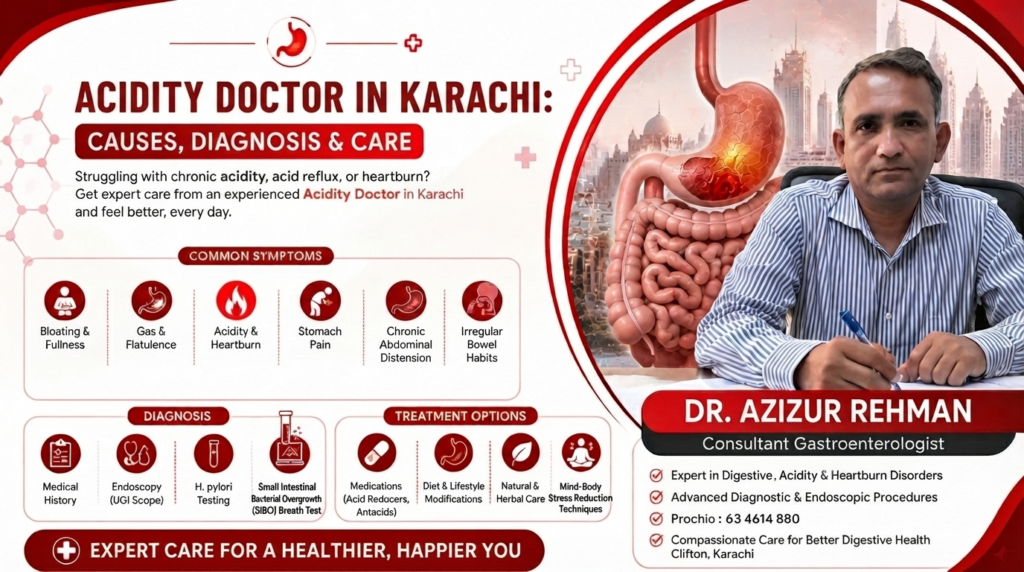
What Is Chronic Acidity?
Chronic acidity generally refers to recurring symptoms such as heartburn, acid reflux, a sour taste, upper abdominal discomfort, or indigestion that persist or recur. The term itself is not a specific medical diagnosis.
A doctor needs to determine whether GERD, gastritis, functional dyspepsia, an ulcer, medication effects, or another condition cause the symptoms.
Acid reflux occurs when stomach contents move back into the esophagus. When reflux becomes frequent and causes troublesome symptoms or complications, it may be classified as GERD.
This distinction matters because simply taking an antacid whenever symptoms appear may relieve discomfort temporarily without addressing the underlying cause.
“For example, you may notice that your acidity becomes worse after a late dinner and gets uncomfortable when you lie down. Tell your doctor about this pattern because it can provide useful clues about your symptoms.”
Common Symptoms of Long-Lasting Acidity
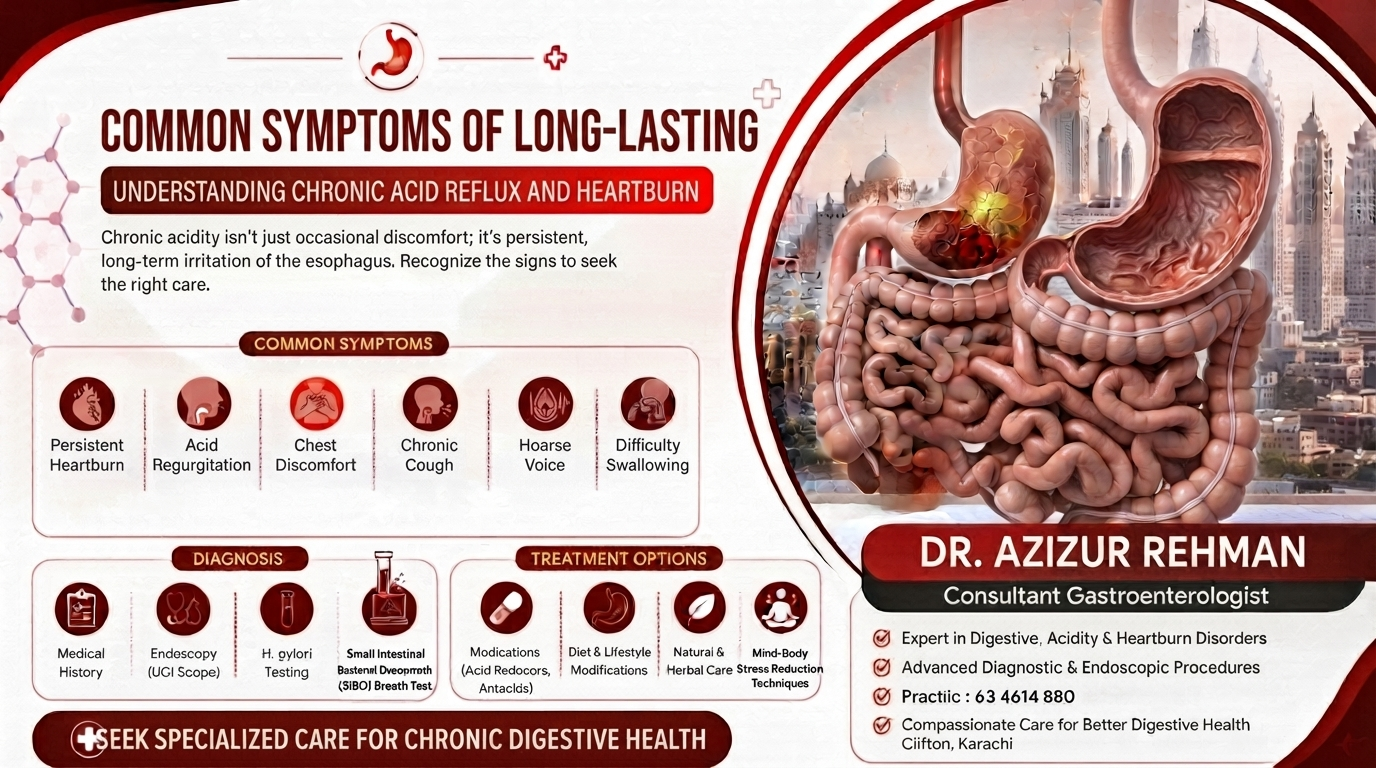
Frequent acidity can produce different symptoms depending on its cause. Some people experience classic heartburn, while others mainly notice indigestion, bloating, nausea, or throat symptoms.
Common symptoms may include:
- Burning pain behind the breastbone or in the upper abdomen
- Sour or bitter fluid coming into the mouth
- Food or stomach contents coming back up
- Frequent burping
- Bloating
- Nausea
- Upper abdominal discomfort
- Chronic cough or hoarseness
- Difficulty or pain when swallowing
Heartburn and regurgitation are common GERD symptoms, but GERD does not always present with these classic symptoms.
Some people can have chest discomfort, cough, hoarseness, or swallowing problems.
Persistent symptoms deserve more attention than occasional discomfort after a large or spicy meal.
What Causes Chronic Acidity?
There is no single cause of recurring acidity. The lower esophageal sphincter normally helps prevent stomach contents from moving backward into the esophagus.
If this barrier becomes weak or relaxes at inappropriate times, reflux can occur.
Several factors may contribute to recurring reflux or make symptoms worse. These can include excess body weight, pregnancy, smoking, certain medicines, and hiatal hernia.
Some foods and drinks may also trigger symptoms in particular individuals.
Other possible explanations for persistent upper digestive symptoms include gastritis, peptic ulcers, functional dyspepsia, or H. pylori infection.
Indigestion itself is a group of symptoms rather than one single disease, so the cause needs to be assessed when symptoms continue.
Why Self-Medication May Not Be Enough
Over-the-counter antacids can help with mild, occasional heartburn, but regularly relying on them without medical assessment can delay investigation of recurring symptoms.
NIDDK advises speaking with a doctor when symptoms do not improve with lifestyle measures or over-the-counter treatment.
The goal of a medical consultation is not simply to reduce acid. It is to determine why the symptoms are occurring and what treatment is appropriate for that individual.
When Should You See a Chronic Acidity Doctor in Karachi?
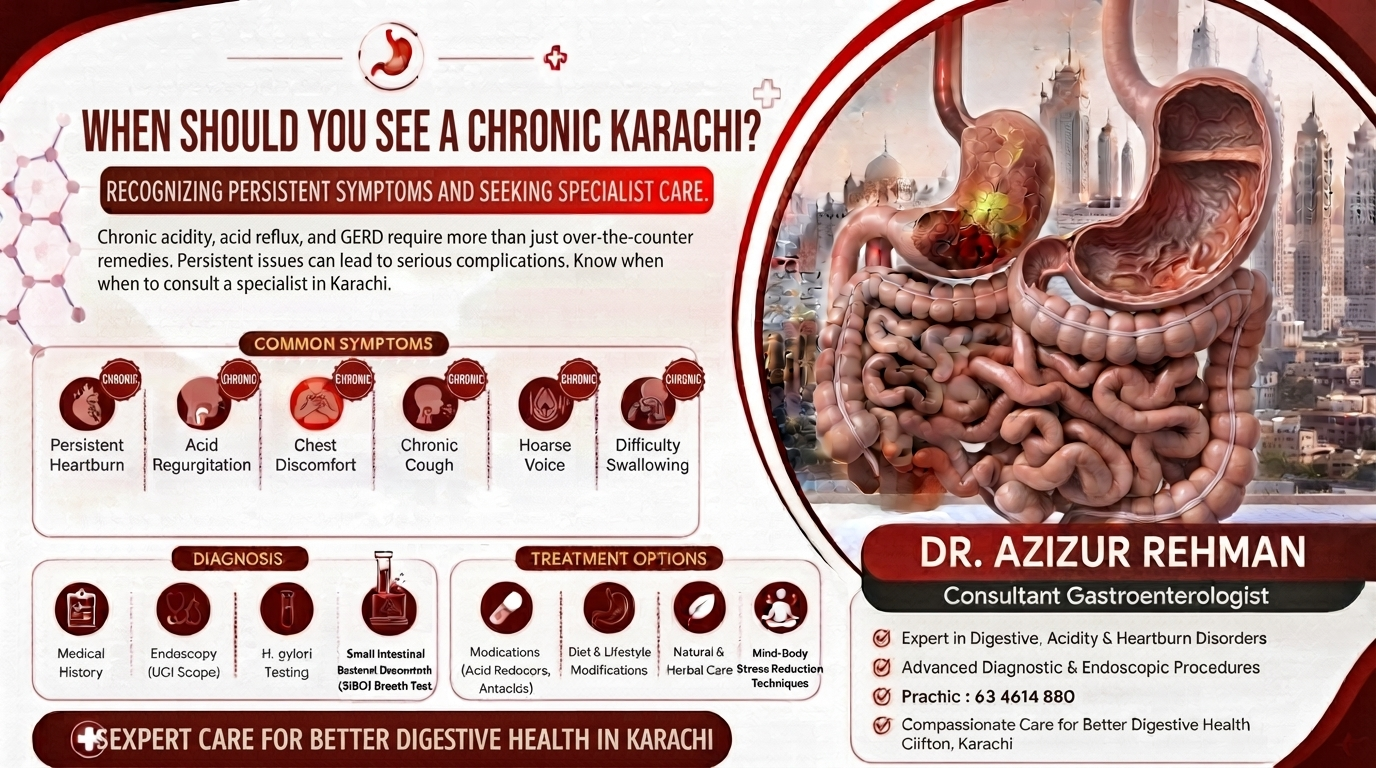
You should consider medical evaluation when acidity keeps returning, interferes with sleep or daily activities, does not improve with reasonable lifestyle measures, or requires frequent self-medication.
A specialist assessment can be particularly useful when symptoms are accompanied by swallowing difficulty, persistent vomiting, unexplained weight loss, bleeding, or significant chest or abdominal pain.
A gastroenterologist specializes in diseases involving the digestive system, including the esophagus, stomach, intestines, liver, gallbladder, and pancreas.
Persistent reflux or unexplained digestive symptoms can therefore be appropriate reasons to seek gastroenterology care.
How Is Chronic Acidity Diagnosed?
Doctors usually begin with your symptoms and medical history. They may ask when the burning occurs, whether it follows meals, whether symptoms become worse when lying down, what medicines you take, and whether particular foods trigger the problem.
In many cases, symptoms and medical history provide enough information for an initial management plan.
Testing may be considered when symptoms persist despite treatment, complications are suspected, or another condition could be causing similar symptoms.
Tests a Doctor May Consider
Depending on your symptoms, a doctor may recommend:
Upper GI endoscopy: A flexible camera is used to examine the esophagus, stomach, and duodenum. It can help identify inflammation, ulcers, and other abnormalities.
Esophageal pH monitoring: This test measures acid exposure in the esophagus and can help confirm reflux in selected patients.
Other investigations: Depending on the suspected cause, doctors may consider blood tests, H. pylori testing, imaging, or other gastrointestinal investigations.
Not every patient with acidity needs every test. The appropriate evaluation depends on symptoms, examination findings, medical history, and response to initial treatment.
Chronic Acidity Treatment: What Can a Doctor Recommend?
Treatment depends on the underlying cause, symptom severity, and the patient’s overall health.
It may involve lifestyle changes, medication, investigation of an underlying condition, or a combination of approaches.
Lifestyle and Dietary Changes
For some people, changes in eating and daily habits can reduce reflux symptoms. If you have nighttime reflux, avoiding meals close to bedtime can be particularly useful.
NIDDK notes that eating at least three hours before lying down may improve symptoms for some people.
Common measures a doctor may discuss include:
- Avoiding foods or drinks that consistently trigger your symptoms
- Eating meals earlier rather than immediately before bed
- Maintaining a healthy weight when appropriate
- Avoiding smoking
- Raising the upper body during sleep when nighttime reflux is a problem
- Keeping a record of foods and situations associated with symptoms
Commonly reported triggers include spicy or high-fat foods, chocolate, coffee and other caffeine sources, mint, tomatoes, citrus foods, and alcoholic drinks.
However, triggers differ between people, so eliminating large numbers of foods unnecessarily is not always helpful.
Medicines
Depending on the condition, doctors may use antacids, H2 blockers, proton pump inhibitors (PPIs), or other medicines.
PPIs reduce stomach acid production and are generally more effective than H2 blockers for treating GERD symptoms and healing the esophageal lining.
The appropriate medicine, dose, duration, and need for continued treatment should be determined according to the patient’s circumstances.
Long-term medication should not simply be continued indefinitely without appropriate medical review.
Chronic Acidity vs GERD vs Indigestion
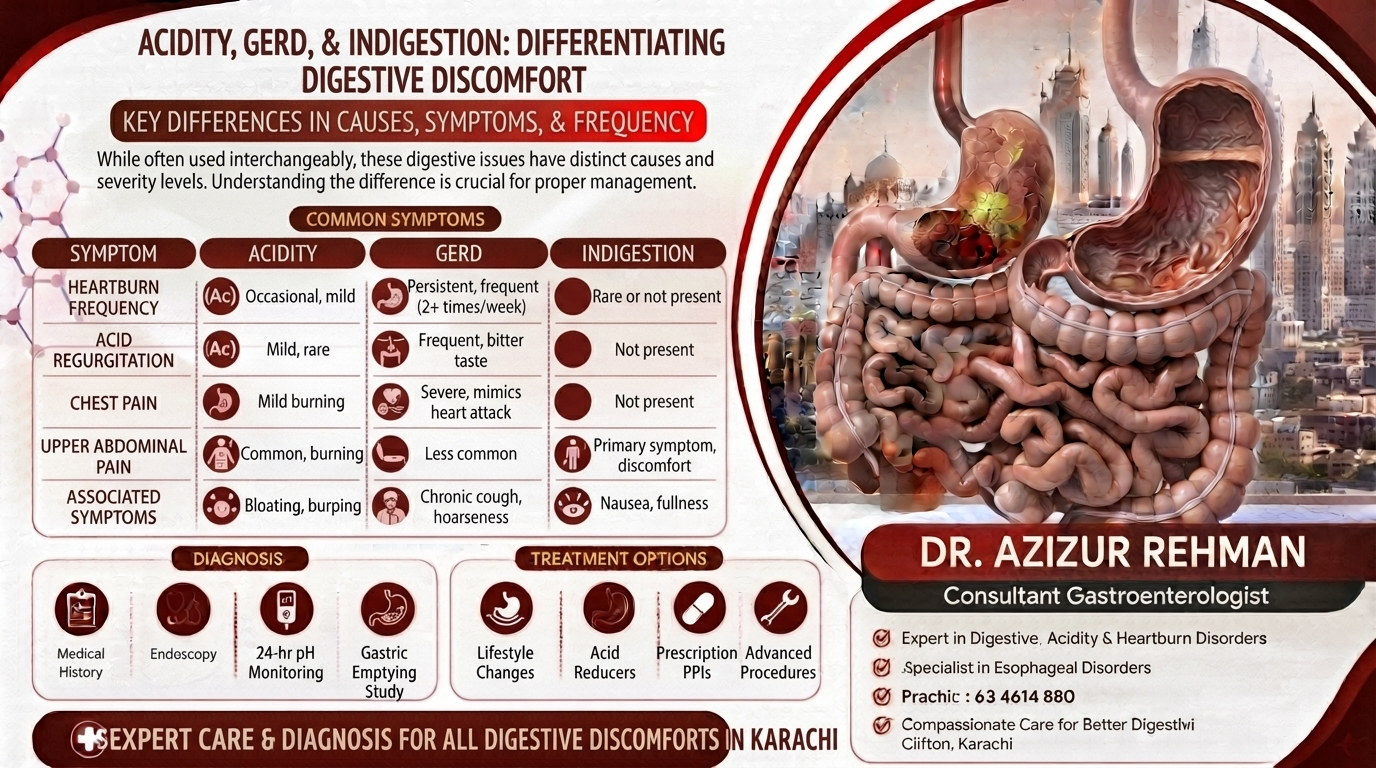
These terms are sometimes used interchangeably by patients, but they do not mean the same thing.
Condition or term | What it generally refers to | Common features | Medical evaluation |
Occasional acid reflux | Temporary movement of stomach contents into the esophagus | Occasional heartburn or sour taste | Often managed with basic measures if mild |
GERD | Frequent or troublesome reflux that may cause complications | Heartburn, regurgitation, chest discomfort, cough or throat symptoms | May require medical assessment |
Indigestion | A group of upper digestive symptoms | Upper abdominal discomfort, fullness, bloating, nausea or belching | Evaluation depends on symptoms |
Gastritis | Inflammation of the stomach lining | Upper abdominal discomfort, nausea and other digestive symptoms | May require investigation |
Peptic ulcer | A sore in the stomach or duodenal lining | Abdominal pain and possible bleeding | Requires medical evaluation |
These conditions can overlap, but one should not automatically assume that every episode of “acidity” is GERD. A healthcare professional can determine the most likely cause based on the overall clinical picture.
What Can Happen If Persistent Reflux Is Ignored?
Frequent GERD can sometimes lead to complications, including inflammation of the esophagus, narrowing of the esophagus, and Barrett’s esophagus.
These complications do not occur in everyone with reflux, but persistent symptoms are one reason appropriate evaluation matters.
This does not mean that every person with heartburn has a serious condition. It means that recurring or unexplained symptoms should not automatically be dismissed as ordinary acidity.
Choosing a Chronic Acidity Doctor in Karachi
Karachi has many physicians and gastroenterology providers, so choosing a specialist should involve more than searching for a doctor described as “best.”
Consider whether the doctor:
- Has relevant gastroenterology expertise
- Regularly evaluates reflux, stomach, and digestive disorders
- Takes a detailed medical history
- Explains why a particular test may be necessary
- Provides a clear treatment and follow-up approach
- Has access to appropriate diagnostic services when required
- Is conveniently accessible for follow-up
The right doctor for you depends on your symptoms and medical needs rather than an online ranking alone.
Dr. Azizur Rehman for Digestive and Acid Reflux Care in Karachi
Patients researching gastroenterology care in Karachi may consider Dr. Azizur Rehman, whose public professional profiles identify him with gastroenterology and internal medicine.
His clinic website lists gastric and acid reflux management among its services, including evaluation and management of heartburn, indigestion, GERD, and related stomach complaints.
“If you are considering gastroenterology care in Karachi, you may want to review Dr. Azizur Rehman’s publicly listed qualifications and services.
His clinic information includes gastric and acid reflux management, along with other digestive health services.”
His listed clinic address is Room #03, 2nd Floor, Taj Medical Complex Residential, M.A. Jinnah Road, Central Jacob Lines, Karachi. Patients should confirm current consultation availability and clinic details before visiting.
The doctor’s website states that he has more than 20 years of experience, while Healthwire publicly lists qualifications including MBBS, FCPS (Medicine), and MCPS (Medicine).
These are publicly stated professional details and should be independently confirmed if they are important to your healthcare decision.
Questions to Ask During Your Appointment
A good consultation is an opportunity to explain the full pattern of your symptoms rather than simply asking for an acidity medicine.
You can ask:
- What could be causing my recurring acidity?
- Could my symptoms be related to GERD, gastritis, an ulcer, or indigestion?
- Do I need any tests?
- Which foods or habits may be making my symptoms worse?
- How long should I use the recommended treatment?
- What symptoms should make me seek urgent medical attention?
- When should I return for follow-up?
Before your appointment, make a short record of your symptoms, meal timing, medications, previous digestive problems, and any foods that appear to trigger discomfort. This can make the consultation more productive.
Warning Signs That Need Prompt Medical Attention
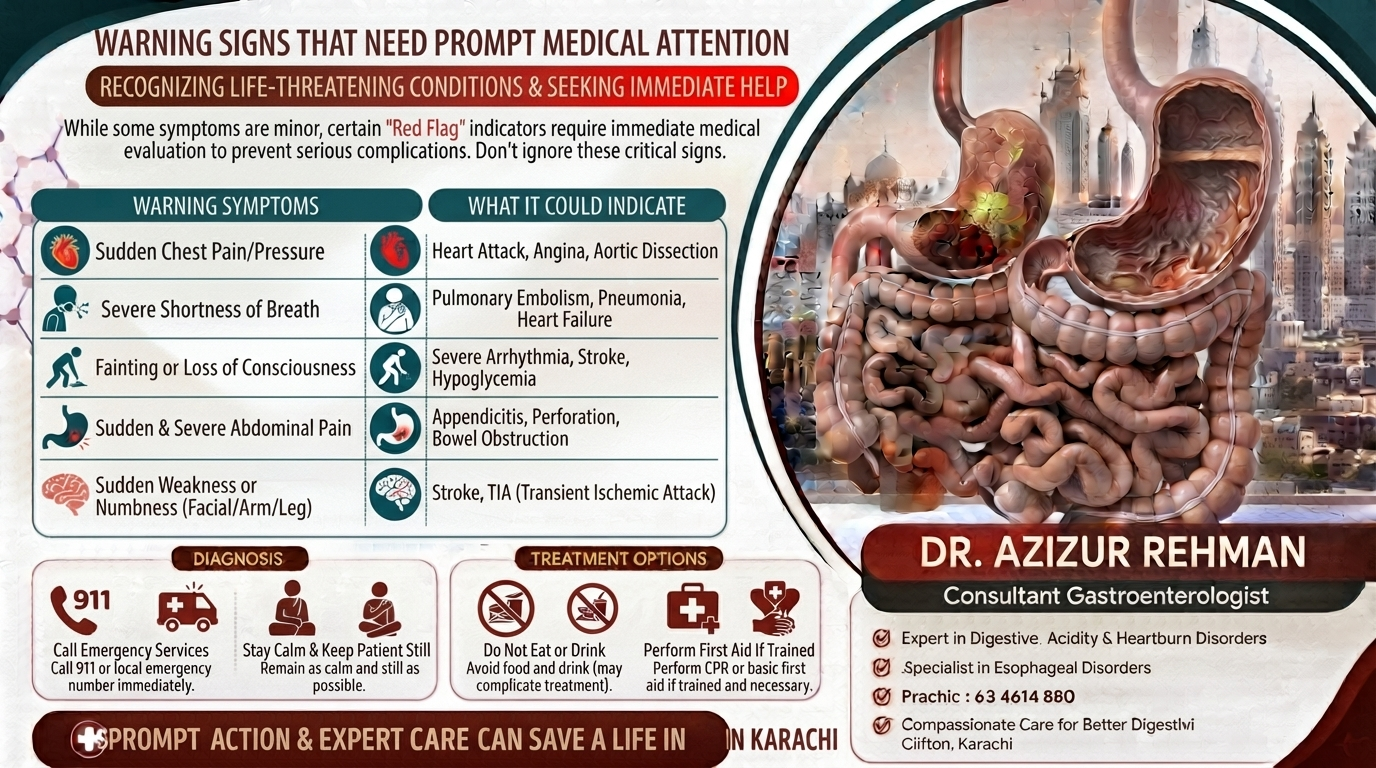
Persistent acidity should not be used to explain away symptoms that could indicate bleeding or another serious problem.
Seek prompt medical attention if you experience:
- Vomiting blood or material that looks like coffee grounds
- Black, tarry stools
- Difficulty or pain when swallowing
- Persistent vomiting
- Unexplained weight loss
- Severe or persistent abdominal pain
- Significant chest pain or shortness of breath
These symptoms can have causes other than reflux and should be evaluated rather than treated as routine acidity.
If chest pain is severe, sudden, or associated with breathing difficulty, sweating, weakness, or pain spreading to the arm, jaw, neck, or back, seek emergency medical care rather than assuming it is acid reflux.