
If you are looking for a bloating doctor in Karachi, persistent abdominal fullness, swelling, excessive gas, or discomfort may be a sign that you need more than temporary relief.
Bloating is common and can occur after eating, but recurring symptoms may be linked to constipation, food intolerance, irritable bowel syndrome (IBS), indigestion, or other digestive conditions.
A doctor can assess your symptoms, medical history, diet, medications, and bowel habits to determine what may be contributing to the problem.
Depending on the symptoms, further testing may sometimes be needed. This guide explains common causes of bloating, when to seek medical care, what diagnosis may involve, treatment approaches, and how to prepare for a consultation with Dr Azizurrehman or another appropriate healthcare professional in Karachi.
What Is Bloating?
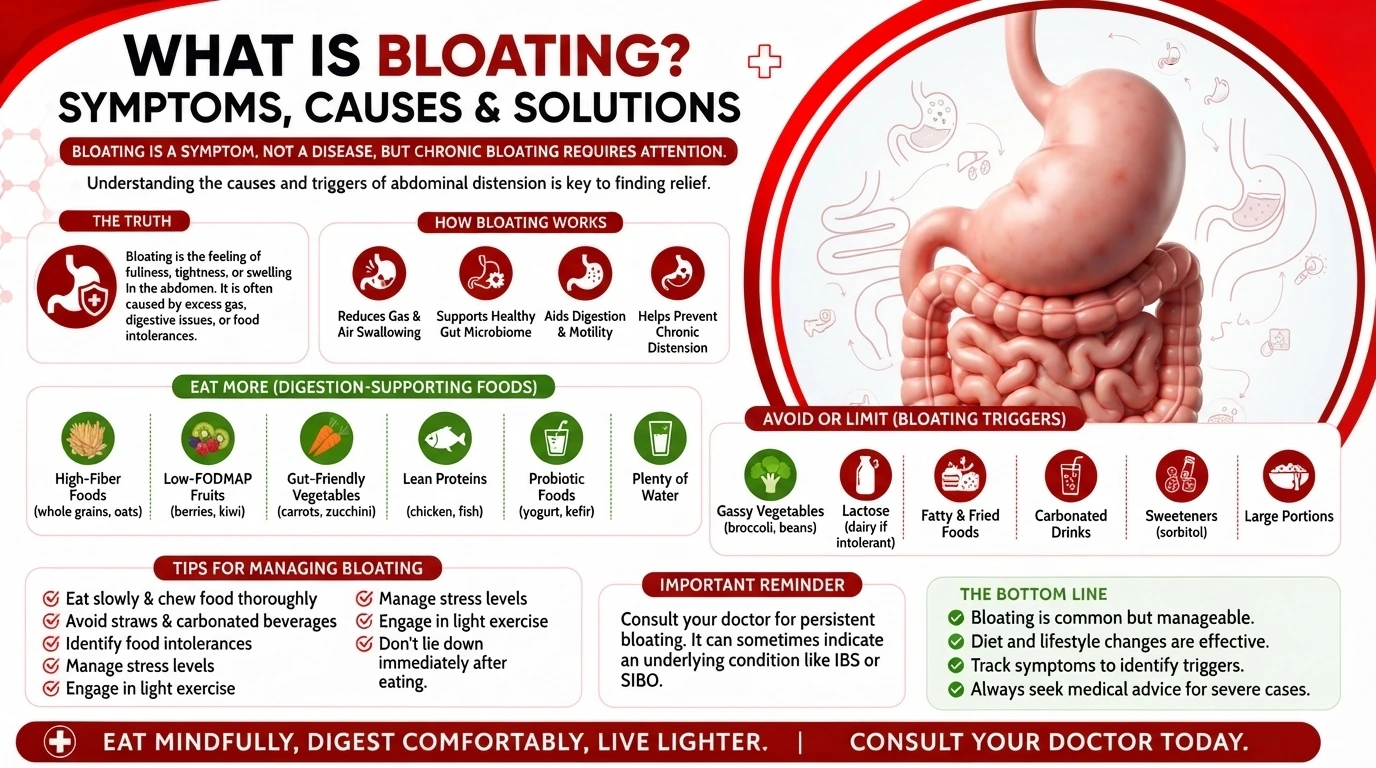
Bloating is a feeling of fullness, pressure, tightness, or swelling in the abdomen.
Some people notice that their stomach looks larger than usual, which is called abdominal distention.
Bloating and visible distention can occur together, but they are not the same thing.
Occasional bloating can happen because of swallowed air, certain foods, fizzy drinks, changes in bowel movements, or normal digestive processes.
The problem becomes more important when bloating happens frequently, lasts for a long time, changes suddenly, or interferes with everyday activities.
Common symptoms that can occur with bloating
Bloating may occur on its own or alongside:
- Abdominal fullness or pressure
- A visibly swollen abdomen
- Excessive burping or passing gas
- Abdominal discomfort or pain
- Constipation or diarrhea
- Feeling full quickly while eating
- Nausea or indigestion
The combination of symptoms can provide useful clues about the possible cause.
For example, bloating with abdominal pain and changes in bowel movements can occur with IBS, while bloating after dairy products may suggest lactose intolerance.
What Causes Frequent Bloating?
Frequent bloating does not have one single cause. It can result from eating habits, excess intestinal gas, constipation, food intolerance, or digestive disorders. In some cases, several factors can contribute at the same time.
Gas and swallowed air
Gas is a normal part of digestion. It enters the digestive tract when people swallow air and when bacteria in the large intestine break down carbohydrates that have not been completely digested in the upper digestive tract.
Eating quickly, chewing gum, drinking carbonated beverages, and smoking can increase swallowed air.
Some carbohydrates can also produce more gas when intestinal bacteria break them down.
Constipation
Constipation can make the abdomen feel full and uncomfortable.
When bowel movements become less frequent or difficult, stool can remain in the digestive tract and contribute to abdominal pressure and bloating.
If bloating repeatedly occurs together with constipation, a healthcare professional can assess whether bowel habits, diet, medications, or another digestive problem may be involved.
Food intolerance
Some people experience bloating after consuming particular foods. Lactose intolerance is one example. It can cause digestive symptoms after consuming foods or drinks containing lactose.
Other carbohydrate digestion problems can also cause bloating, abdominal discomfort, and diarrhea.
Keeping a food and symptom diary can sometimes help identify patterns that you can discuss with your doctor.
Irritable bowel syndrome
IBS is a common digestive disorder involving recurring abdominal pain together with changes in bowel movements, such as diarrhea, constipation, or both. Bloating is also a common symptom.
IBS symptoms can vary from person to person. Food, stress, infections, and other factors may influence symptoms, so treatment is generally individualized rather than based on one universal diet or medicine.
Indigestion
Indigestion, also called dyspepsia, can involve upper abdominal discomfort, early fullness, uncomfortable fullness after eating, bloating, nausea, or belching.
Persistent indigestion may have several possible causes, including functional dyspepsia, certain medicines, H. pylori infection, ulcers, or other digestive conditions.
A medical evaluation can help determine which possibilities need to be considered.
Other digestive conditions
Less common but important causes can include conditions affecting digestion, stomach emptying, the small intestine, or the intestinal tract.
NIDDK notes that conditions such as celiac disease, gastroparesis, gastroesophageal reflux disease, and small intestinal bacterial overgrowth can be associated with gas and bloating symptoms.
This is why persistent bloating should not automatically be assumed to be “just gas.”
When Should You See a Bloating Doctor in Karachi?
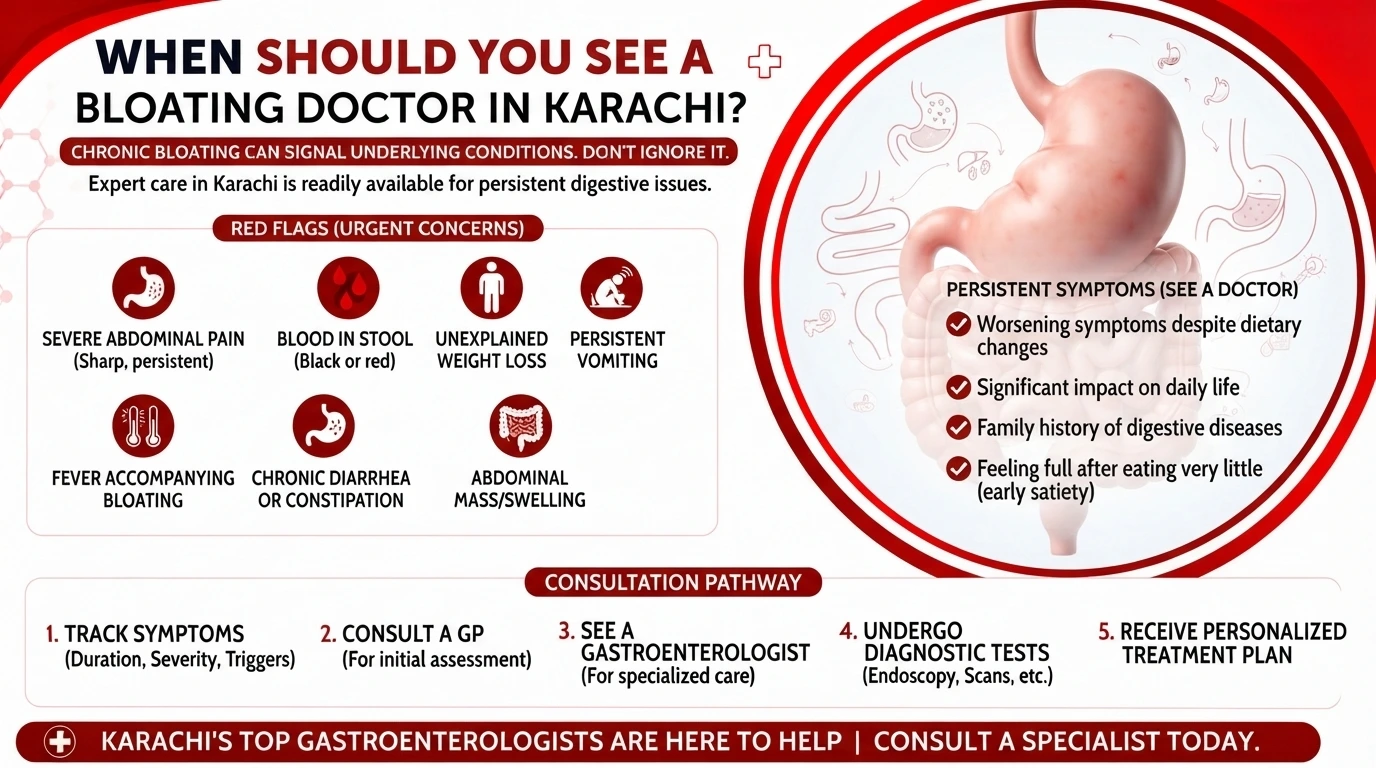
You should consider a medical appointment if bloating is frequent, persistent, worsening, or affecting your daily life.
Medical assessment is particularly useful when changing your eating habits has not resolved the problem.
A doctor may also recommend evaluation when bloating occurs with symptoms such as ongoing abdominal pain, constipation, diarrhea, unexplained weight loss, or blood in the stool.
Long-lasting abdominal swelling should not be ignored simply because bloating is common. The appropriate response depends on the pattern, severity, duration, and associated symptoms.
Warning signs that need prompt medical attention
Seek urgent medical evaluation if bloating occurs with serious symptoms such as:
- Severe or sudden abdominal pain
- Persistent vomiting or vomiting blood
- Black or bloody stools
- Unexplained weight loss
- A new abdominal lump or significant swelling
- Inability to pass stool or gas
- Severe difficulty breathing
- Fever with significant abdominal symptoms
These symptoms can sometimes indicate a condition requiring prompt assessment.
How Does a Doctor Diagnose the Cause of Bloating?
There is no single test that explains every case of bloating.
Diagnosis usually starts with a detailed discussion of symptoms, medical history, diet, bowel habits, medications, and physical examination.
Additional tests depend on what the doctor finds during the evaluation.
Medical history
Your doctor may ask:
- When did the bloating begin?
- How often does it occur?
- Does it happen after particular meals?
- Is it worse at a particular time of day?
- Do you have constipation or diarrhea?
- Do you experience abdominal pain?
- Have you recently changed your diet?
- What medicines or supplements do you take?
- Have you experienced weight loss or appetite changes?
- Does anyone in your family have digestive diseases?
These details can help identify patterns that might otherwise be missed.
Physical examination
A physical examination may include checking the abdomen for swelling, tenderness, pain, or other abnormalities.
A doctor may also listen to abdominal sounds and assess the abdomen by tapping or gently pressing it.
Possible tests
Testing depends on the individual situation. Depending on symptoms and medical history, a doctor may consider blood tests, stool tests, imaging, breath testing, endoscopy, or other investigations.
For example, hydrogen breath testing may be used in selected situations to investigate problems such as lactose intolerance or small intestinal bacterial overgrowth.
The goal is not to order every possible test. The appropriate investigation depends on the suspected cause and the patient’s symptoms.
Bloating Treatment Depends on the Cause
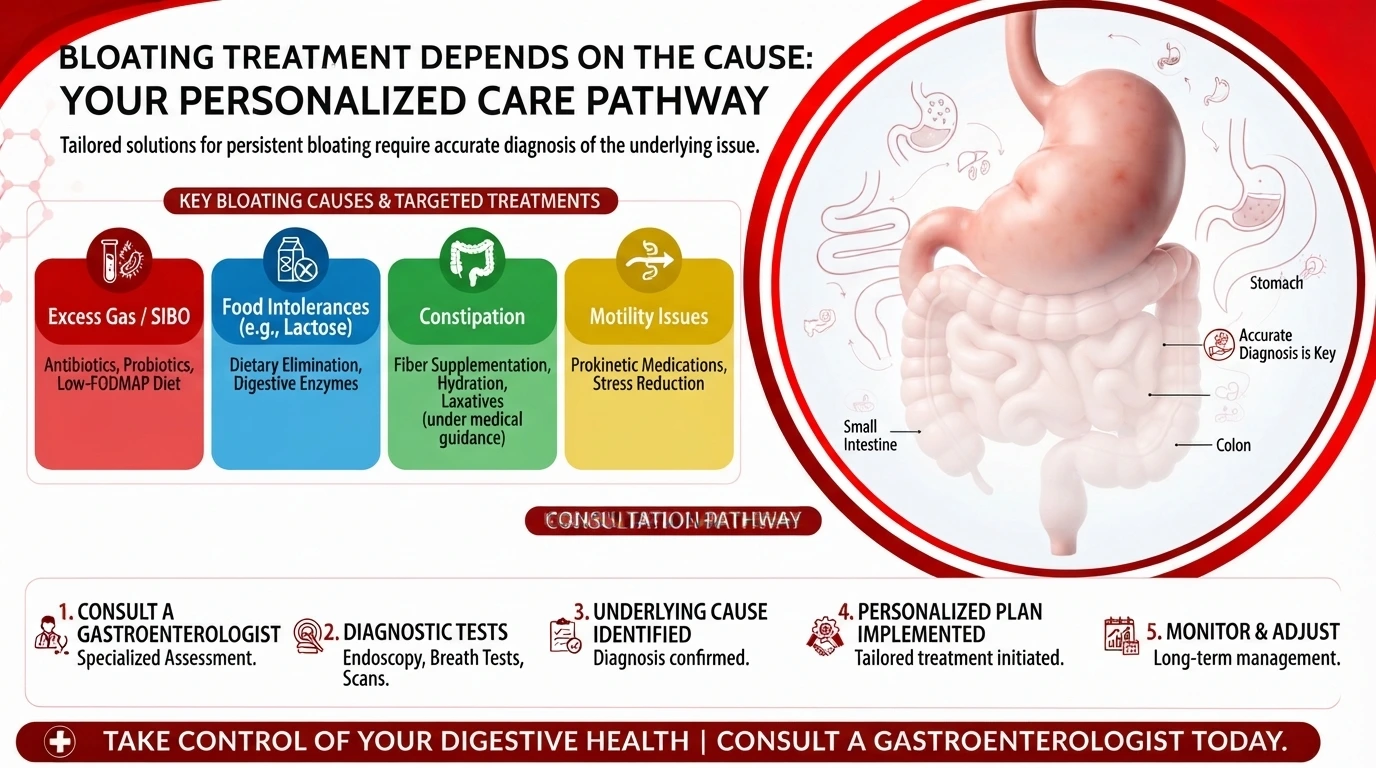
There is no single treatment that works for every person with bloating. Once the underlying cause is identified, a doctor can recommend an appropriate approach.
For gas-related symptoms, management may include changes to eating and drinking habits or dietary adjustments.
If constipation is contributing to bloating, treatment may focus on improving bowel regularity. If a food intolerance or digestive condition is involved, management will be tailored accordingly.
People with IBS may receive advice involving diet and lifestyle changes and, depending on their symptoms, medicines, probiotics, or other approaches.
It is better to identify the likely cause than to repeatedly take over-the-counter products without knowing why the bloating keeps returning.
What Can You Do Before Your Appointment?
A few simple steps can make your consultation more useful. Keep a short record of your meals, symptoms, bowel movements, and the timing of bloating.
For example, you may notice that bloating occurs after milk, large meals, carbonated drinks, or certain high-carbohydrate foods.
You can then share this pattern with your doctor rather than trying to remember everything during the appointment.
Also make a list of prescription medicines, over the counter medicines, and supplements you currently use.
A medical history can help the doctor decide whether further tests are appropriate.
Bloating vs Gas vs Indigestion vs IBS
These terms are sometimes used interchangeably, but they describe different things.
Bloating is mainly a sensation of fullness or swelling, while gas refers to air and other gases in the digestive tract.
Indigestion involves a broader group of upper abdominal symptoms, and IBS involves recurring abdominal pain with changes in bowel movements.
Condition | Common features | What may help identify it |
Bloating | Fullness, pressure, abdominal swelling | Timing, food triggers and associated symptoms |
Excess gas | Burping, passing gas, bloating | Eating habits and gas producing foods |
Indigestion | Upper abdominal discomfort, early fullness, nausea or belching | Relationship with meals and upper digestive symptoms |
IBS | Abdominal pain with constipation, diarrhea, or both | Long term symptom pattern and bowel changes |
Food intolerance | Bloating with digestive symptoms after certain foods | Consistent relationship with a specific food |
These symptoms can overlap, so the table should not be used for self-diagnosis. A healthcare professional can evaluate the overall pattern.
How to Choose a Doctor for Bloating in Karachi
When searching for a doctor for persistent bloating, focus on the doctor’s ability to evaluate digestive symptoms rather than choosing based only on a generic online label.
A suitable healthcare professional should be able to review your symptoms, identify possible causes, decide whether investigations are appropriate, and explain treatment options clearly.
If you are considering Dr Azizurrehman, confirm the current consultation location, appointment availability, professional credentials, and the type of digestive complaints addressed before booking.
This article does not make claims about rankings, success rates, or clinical outcomes that have not been independently verified.
For complex or persistent digestive symptoms, a gastroenterology evaluation may be appropriate depending on the clinical picture.
Common Mistakes People Make With Persistent Bloating
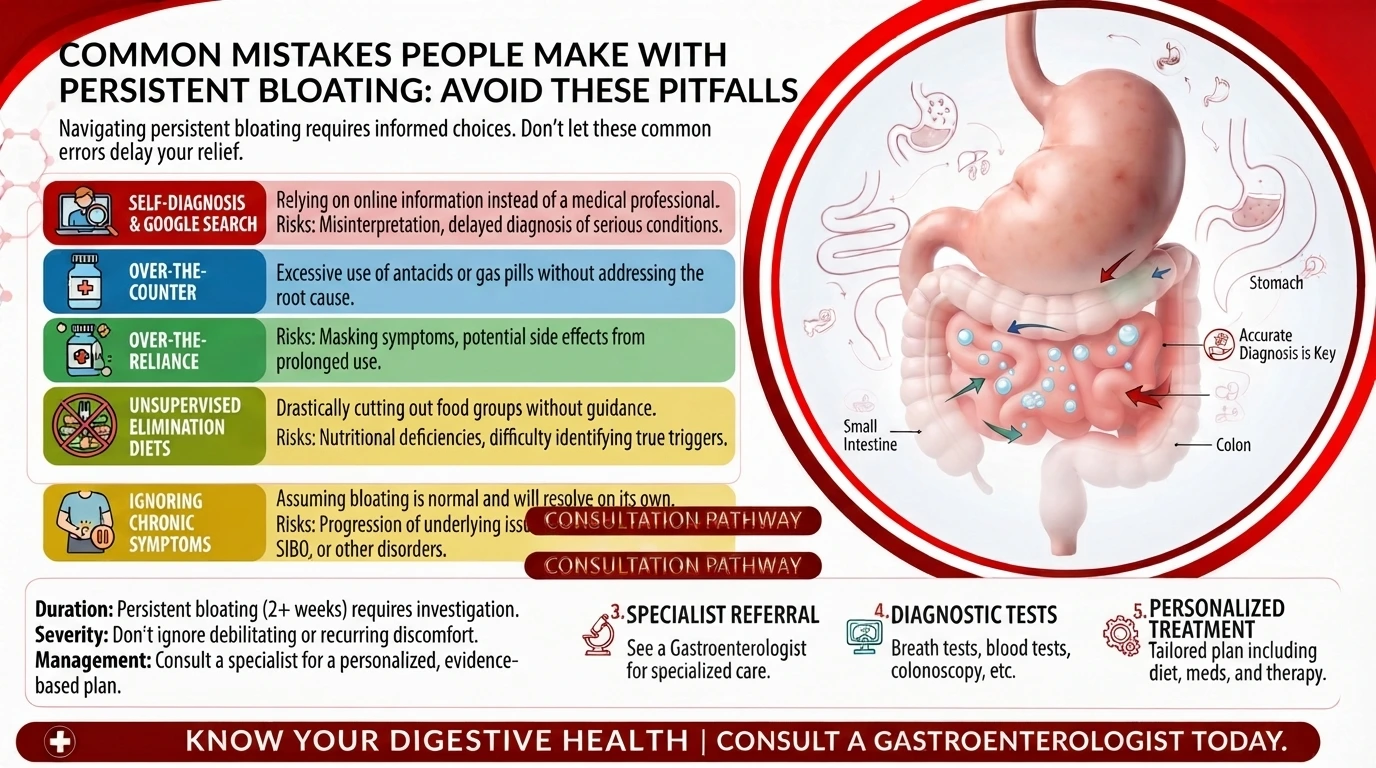
One common mistake is assuming that every episode of abdominal swelling is caused by gas.
Gas is a common contributor, but bloating can also occur with constipation, food intolerance, IBS, indigestion, and other digestive conditions.
Another mistake is eliminating large numbers of foods without professional guidance.
Restrictive diets can make it difficult to identify the actual trigger and may make eating unnecessarily complicated.
It is also easy to ignore symptoms simply because they have been present for months.
Persistent or changing symptoms deserve medical attention, particularly when accompanied by weight loss, bleeding, significant pain, vomiting, or other warning signs.
Practical Ways to Reduce Everyday Bloating
For mild, occasional bloating, practical habits may help. These should not replace medical evaluation when symptoms are persistent or concerning.
Try to eat meals at a comfortable pace and pay attention to foods or drinks that repeatedly trigger symptoms.
Reducing carbonated beverages and avoiding habits that cause you to swallow excess air may also help some people.
Useful points to discuss with your doctor
- Which foods appear to trigger your symptoms
- Whether constipation or diarrhea occurs with the bloating
- How long the problem has been present
- Whether symptoms are getting worse
- Any unexplained weight or appetite changes
- Medicines and supplements you currently take
- Any family history of digestive conditions
A symptom diary can be particularly useful because doctors may ask you to record what you eat and when gas or bloating occurs.
Why Professional Evaluation Matters
Bloating can be temporary and harmless, but recurrent symptoms can sometimes point to a digestive problem that needs attention.
A professional evaluation helps separate common dietary or functional causes from conditions that require specific investigation or treatment.
The most useful approach is to look at the whole symptom pattern rather than treating abdominal swelling as an isolated problem.
Your doctor can decide whether lifestyle changes are enough or whether further evaluation is appropriate.
FAQs
What type of doctor should I see for persistent bloating?
A primary care doctor can assess common causes of bloating and decide whether specialist care is needed.
A gastroenterologist may be appropriate when symptoms are persistent, complicated, or associated with other digestive problems.
Is frequent bloating always caused by gas?
No. Gas is a common cause, but bloating can also be associated with constipation, food intolerance, IBS, indigestion, and other digestive conditions.
Can IBS cause bloating?
Yes. Bloating is a common symptom of IBS, which also typically involves recurring abdominal pain and changes in bowel movements.
What tests might a doctor recommend for bloating?
Testing depends on your symptoms. A doctor may consider blood or stool tests, breath testing, imaging, endoscopy, or other investigations when clinically appropriate.
When is bloating a warning sign?
Bloating deserves prompt medical attention when it occurs with symptoms such as severe abdominal pain, vomiting blood, black or bloody stools, unexplained weight loss, a significant abdominal lump, or inability to pass stool or gas.
Can changing my diet reduce bloating?
Dietary changes can help some people, particularly when specific foods or eating habits trigger symptoms. However, the appropriate diet depends on the underlying cause, so repeatedly removing foods without identifying the reason may not be helpful.
Should I see a doctor if my bloating keeps returning?
Yes. If bloating is frequent, persistent, worsening, or interfering with daily activities, medical evaluation is reasonable.
Can I discuss my symptoms with Dr Azizurrehman?
If you are considering Dr Azizurrehman for digestive symptoms, confirm his current practice details, availability, credentials, and whether he evaluates your specific concern before scheduling an appointment.
Conclusion
Persistent bloating should not automatically be dismissed as ordinary gas. It can be associated with eating habits and excess gas, but recurring symptoms may also occur with constipation, food intolerance, IBS, indigestion, or other digestive conditions.
If you are searching for a bloating doctor in Karachi, keep track of your symptoms and discuss their duration, triggers, bowel changes, medications, and any warning signs with a healthcare professional
. Dr Azizurrehman may be considered as a local healthcare option, provided his current practice information and suitability for your symptoms are confirmed before booking.
Most importantly, seek prompt medical care when bloating is accompanied by severe pain, bleeding, unexplained weight loss, persistent vomiting, or inability to pass stool or gas.