
If you are looking for a GI doctor in Karachi, you are usually trying to find the right medical specialist for digestive problems such as stomach pain, acid reflux, bloating, constipation, diarrhea, ulcers, liver problems, or changes in bowel habits.
A GI doctor, also called a gastroenterologist, specializes in diseases affecting the digestive system, including the esophagus, stomach, small intestine, colon, rectum, liver, gallbladder, bile ducts, and pancreas.
Choosing the right specialist can make it easier to identify the cause of persistent digestive symptoms and determine whether you need laboratory tests, imaging, endoscopy, colonoscopy, lifestyle changes, medication, or another form of treatment.
This guide explains what a GI doctor does, which symptoms may require specialist evaluation, common conditions they manage, how diagnosis works, and what to consider when choosing gastrointestinal care in Karachi.
What Is a GI Doctor?
A GI doctor is a medical specialist known as a gastroenterologist. Gastroenterology focuses on the normal function and diseases of the digestive tract and related organs, including the esophagus, stomach, intestines, liver, gallbladder, bile ducts, and pancreas.
A gastroenterologist may evaluate both short-term digestive complaints and ongoing conditions.
Some problems are relatively common, such as indigestion and acid reflux, while others require long-term monitoring, including inflammatory bowel diseases and certain liver or pancreatic disorders.
The digestive system has many interconnected organs. For this reason, a symptom such as abdominal pain does not always point to a single condition.
A proper medical evaluation considers the symptoms, their duration, medical history, medications, family history, physical examination, and, when necessary, diagnostic tests.
What Conditions Does a Gastroenterologist Treat?

A gastroenterologist can manage a broad range of gastrointestinal and digestive conditions.
These may affect different parts of the digestive system and can have very different causes.
Common conditions include:
- Acid reflux and gastroesophageal reflux disease (GERD)
- Indigestion and dyspepsia
- Gastritis and peptic ulcers
- Irritable bowel syndrome (IBS)
- Constipation and chronic diarrhea
- Inflammatory bowel diseases such as Crohn’s disease and ulcerative colitis
- Colon polyps and other colon disorders
- Liver and gallbladder conditions
- Pancreatic disorders
- Digestive tract bleeding
- Some problems involving the esophagus and swallowing
The appropriate evaluation depends on the symptoms. For example, persistent indigestion may require a different approach from chronic diarrhea or suspected inflammatory bowel disease.
When Should You See a GI Doctor in Karachi?
You may benefit from seeing a gastroenterologist when digestive symptoms are persistent, recurring, severe, or difficult to explain.
Which symptoms may need specialist evaluation?
A GI specialist may be appropriate if you have ongoing abdominal discomfort, repeated heartburn, persistent bloating, unexplained changes in bowel habits, recurrent diarrhea or constipation, difficulty swallowing, or symptoms that keep returning despite initial treatment.
Indigestion can include upper abdominal pain or burning, early fullness, uncomfortable fullness after eating, bloating, nausea, and belching.
If these symptoms continue or interfere with daily life, medical evaluation can help identify possible causes.
Persistent symptoms should not automatically be assumed to be caused by acidity or gas. Several digestive conditions can produce similar symptoms, which is why evaluation may be necessary when symptoms do not settle.
Warning Signs That Need Prompt Medical Attention

Some digestive symptoms can indicate a potentially serious problem and should not be ignored.
Seek prompt medical care if digestive symptoms are accompanied by:
- Blood in vomit or stool, or black tarry stools
- Severe or persistent abdominal pain
- Unexplained weight loss or loss of appetite
- Difficulty or pain when swallowing
- Frequent vomiting
- Yellowing of the skin or eyes
- Significant or persistent abdominal swelling
- Chest pain or shortness of breath associated with digestive symptoms
These warning signs can occur with different conditions, so they do not by themselves establish a diagnosis.
NIDDK recommends medical evaluation for symptoms such as bloody vomiting, black stools, severe constant abdominal pain, unexplained weight loss, difficulty swallowing, and jaundice.
If symptoms are severe, sudden, or associated with significant bleeding, fainting, breathing difficulty, or severe chest pain, emergency medical care may be more appropriate than waiting for a routine specialist appointment.
Common Digestive Problems a GI Doctor Evaluates
Acid Reflux and GERD
Acid reflux occurs when stomach contents move back into the esophagus. When reflux becomes frequent or causes complications, it may be classified as gastroesophageal reflux disease.
Doctors can often evaluate GERD by reviewing symptoms and medical history. Additional testing may be considered when symptoms suggest complications, another condition may be responsible, or symptoms do not improve with initial management.
Upper GI endoscopy is one possible diagnostic test.People with repeated heartburn, regurgitation, swallowing difficulties, or persistent symptoms may need a professional assessment rather than repeatedly treating symptoms on their own.
Gastritis and Peptic Ulcers
Gastritis involves inflammation or irritation of the stomach lining, while peptic ulcers are sores that develop in the lining of the stomach or upper small intestine.
A doctor may review symptoms and medication use and may recommend tests such as blood tests, stool testing, an H. pylori test, or upper GI endoscopy depending on the situation.
During endoscopy, tissue samples may sometimes be collected for further examination.
This is particularly relevant when symptoms are persistent or accompanied by warning signs such as bleeding or unexplained weight loss.
Irritable Bowel Syndrome
IBS can involve abdominal pain along with changes in bowel movements, including diarrhea, constipation, or changes in stool appearance.
There is not one single test that confirms IBS in every patient. Doctors generally assess the symptom pattern and medical history and may perform tests when they need to rule out other conditions.
Symptoms such as rectal bleeding, anemia, black stools, or unexplained weight loss can point toward another condition and require further evaluation.
Chronic Diarrhea
Diarrhea that continues or repeatedly returns can have many possible causes, including infections, food intolerances, medication effects, inflammatory bowel disease, and other digestive conditions.
Depending on the patient’s symptoms, a doctor may use blood tests, stool tests, breath testing, dietary assessment, endoscopy, or other investigations.
The duration of diarrhea, stool characteristics, medications, diet, travel history, and associated symptoms can all be relevant.
Crohn’s Disease and Ulcerative Colitis
Crohn’s disease and ulcerative colitis are inflammatory bowel diseases that can cause ongoing digestive symptoms.
Crohn’s disease may cause diarrhea, abdominal cramping or pain, and weight loss. Diagnosis can involve medical and family history, physical examination, blood and stool tests, endoscopy, and imaging.
Ulcerative colitis can also require blood tests, stool testing, and endoscopic evaluation.
Because several digestive disorders can produce similar symptoms, specialist assessment is important when inflammatory bowel disease is suspected.
How Does a GI Doctor Diagnose Digestive Problems?
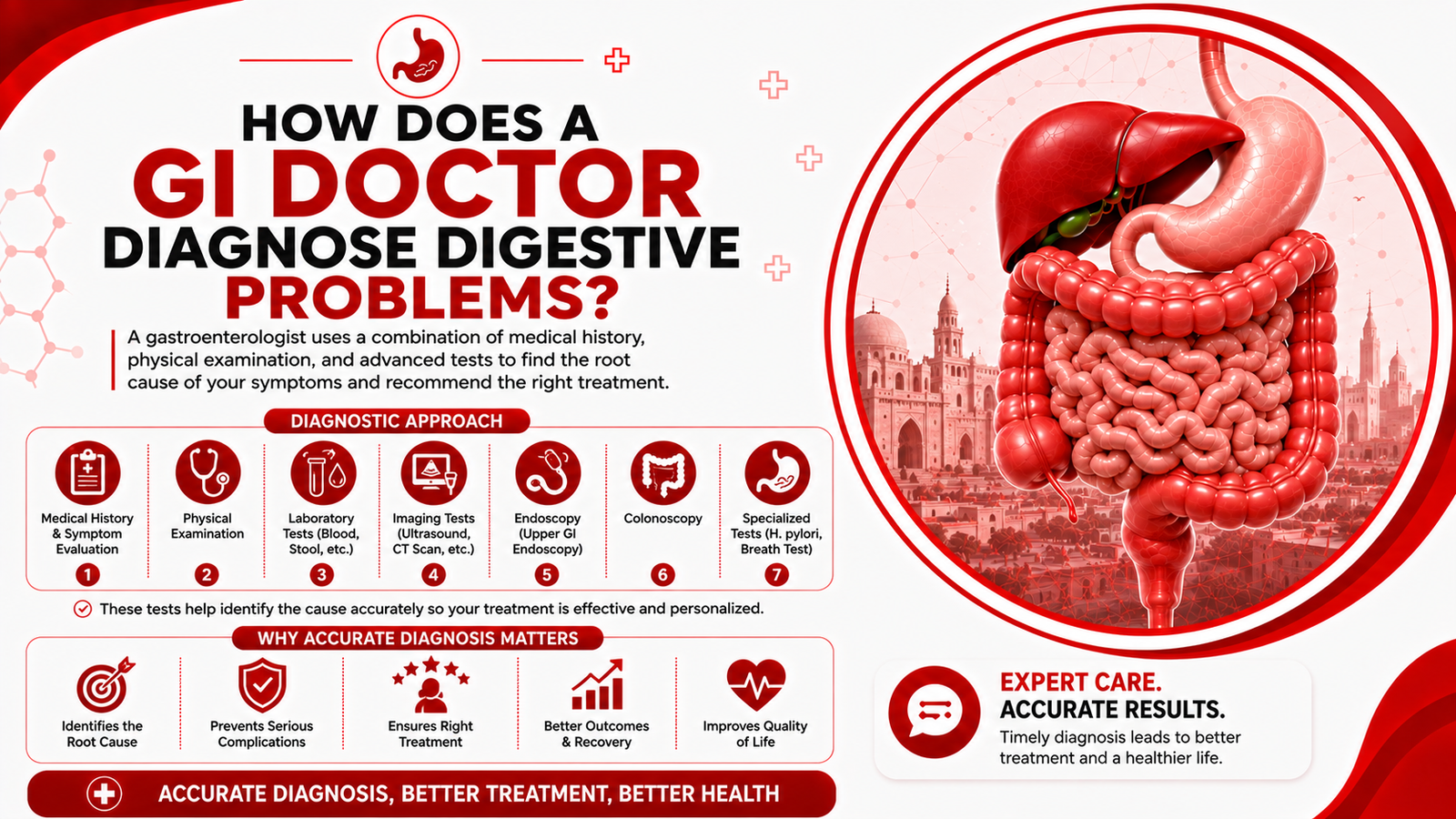
Diagnosis usually starts with a detailed discussion rather than immediately performing an invasive procedure.
A gastroenterologist may ask about:
- The location and type of pain
- How long symptoms have been present
- Whether symptoms occur after meals
- Changes in bowel movements
- Nausea, vomiting, bloating, or heartburn
- Weight changes
- Current and previous medications
- Previous medical conditions
- Family history of digestive diseases
A physical examination may also be performed. Depending on the symptoms, the doctor may recommend blood tests, stool tests, ultrasound, CT or other imaging, breath tests, upper GI endoscopy, colonoscopy, or other investigations.
Not every patient needs every test. The appropriate investigation depends on the symptoms and suspected cause.
What Is an Endoscopy?
An upper GI endoscopy allows a trained doctor to examine the lining of the upper digestive tract using a flexible instrument with a camera. It can help evaluate areas such as the esophagus, stomach, and duodenum.
An endoscopy may be considered for certain persistent digestive symptoms or when doctors need to investigate problems such as gastritis, ulcers, bleeding, or other abnormalities.
Biopsies can sometimes be taken during the procedure when medically appropriate.
A colonoscopy is a different procedure used to examine the colon and can be important when investigating certain bowel symptoms, bleeding, inflammatory bowel disease, or colorectal conditions.
GI Doctor vs General Physician: Which One Should You See?
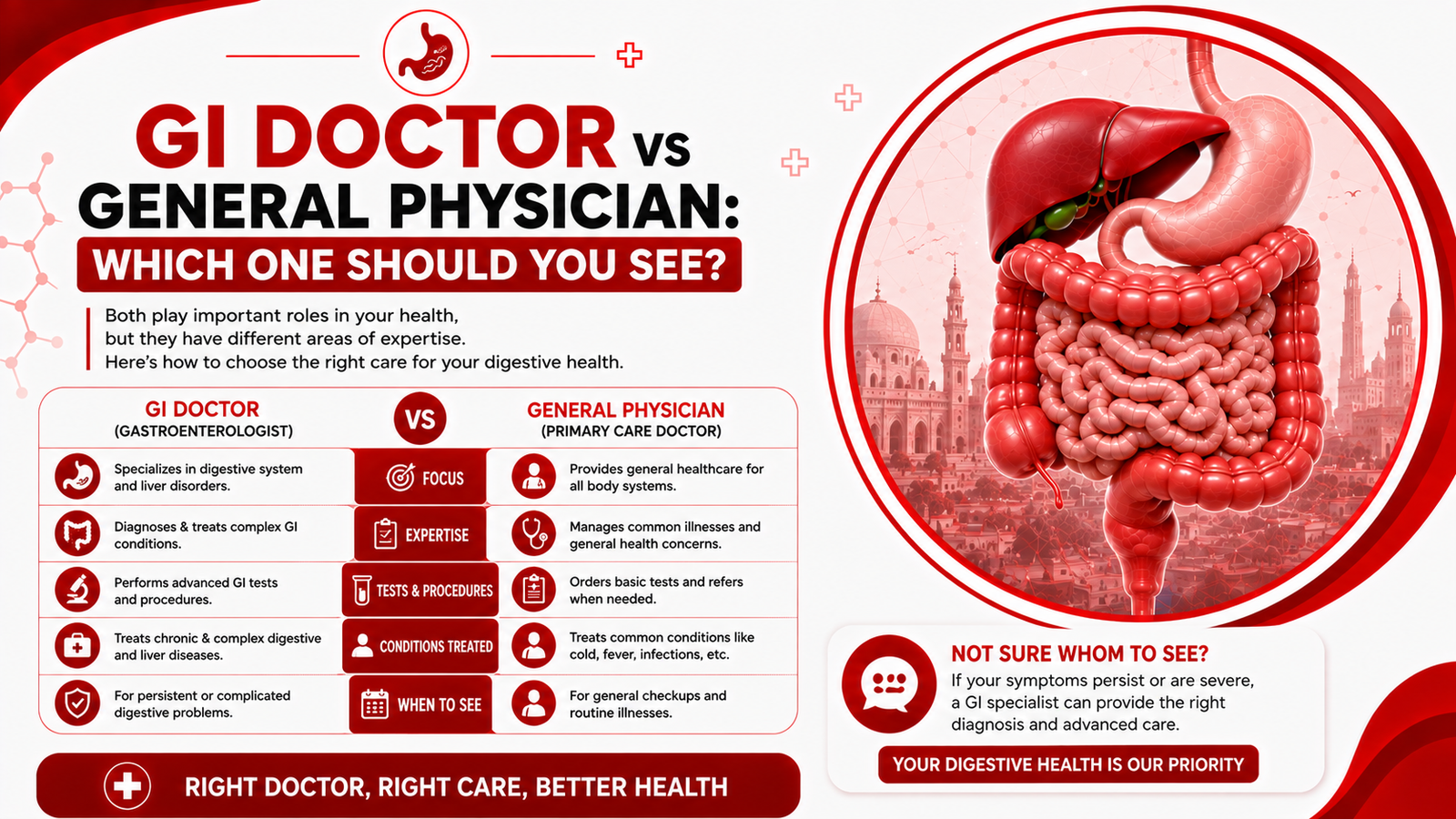
Both general physicians and gastroenterologists can play an important role in digestive healthcare, but their roles differ.
Factor | General Physician | Gastroenterologist |
Main role | General medical assessment | Specialized digestive system care |
Common digestive symptoms | Can assess many routine complaints | Evaluates complex, persistent, or recurrent digestive problems |
Initial evaluation | Often appropriate | Also appropriate when symptoms clearly involve the digestive system |
Digestive testing | May request basic tests | Can assess need for specialized GI investigations |
Endoscopy/colonoscopy | Usually refers when appropriate | Gastroenterology specialists may perform or coordinate these procedures |
Complex digestive conditions | May coordinate care | Provides specialist evaluation and management |
The right choice depends on the symptoms. A general physician can be a useful starting point for many complaints, while a gastroenterologist may be more appropriate for persistent, recurrent, complex, or specialist digestive problems.
How to Choose a GI Doctor in Karachi
Finding a suitable specialist involves more than searching for a doctor’s name.
Consider whether the doctor provides care relevant to your symptoms and whether the consultation process is practical for you.
Before booking an appointment, consider:
- The type and duration of your symptoms
- The doctor’s relevant medical specialty
- Whether the clinic location is convenient
- Whether required diagnostic services are available or accessible
- Whether you need routine consultation or specialist follow-up
- Whether previous reports can be reviewed during the appointment
- Whether the doctor explains diagnostic and treatment options clearly
If you are considering Dr. Azizurrehman for digestive health care in Karachi, verify the doctor’s current qualifications, practice location, appointment availability, and services directly with the relevant clinic or healthcare provider before booking.
What Should You Take to Your GI Appointment?
A little preparation can make a medical consultation more productive.
Bring previous laboratory reports, imaging reports, endoscopy or colonoscopy reports, and a list of medications or supplements you currently use.
It can also help to write down when symptoms started, what makes them better or worse, and whether your bowel habits or weight have changed.
If you have already tried medicines or dietary changes, tell the doctor what you used and whether it helped.
Do not stop prescribed medication solely because of information found online unless a healthcare professional advises you to do so.
What Treatment Can a Gastroenterologist Provide?
Treatment depends on the underlying cause. There is no single treatment that is suitable for every digestive complaint.
Depending on the diagnosis, management may involve lifestyle or dietary changes, medication, treatment of an infection, monitoring of a chronic condition, endoscopic procedures, or referral to another specialist when appropriate.
For example, management of GERD can involve medicines and lifestyle measures, while inflammatory bowel diseases may require longer-term medical management.
The treatment plan should be based on the individual’s symptoms, diagnosis, medical history, and response to treatment.
Avoid choosing medication solely because a friend, social media post, or online article recommends it.
Abdominal symptoms can have different causes, and treating the wrong cause may delay appropriate care.
Why Local Access Matters in Karachi
Karachi is a large city, so practical factors can influence your choice of specialist.
A conveniently located clinic may make follow-up easier, particularly for conditions that require several appointments or repeated investigations.
Patients may also want to consider whether the healthcare facility has access to relevant laboratory testing, imaging, endoscopy, colonoscopy, or hospital referral when needed.
For chronic digestive conditions, continuity of care can be especially useful because treatment may require monitoring rather than a single consultation.
Questions to Ask Before Choosing a GI Specialist
Before your appointment, consider asking:
- What could be causing my symptoms?
- Do I need any diagnostic tests?
- Which symptoms would require urgent medical attention?
- Are my current medicines relevant to my symptoms?
- Should I make any temporary dietary or lifestyle changes?
- Do I need follow-up, and when should it occur?
These questions can help you have a clearer conversation with your doctor and understand the next steps.
Frequently Asked Questions
What does a GI doctor treat?
A GI doctor, or gastroenterologist, specializes in diseases of the digestive system. This includes conditions involving the esophagus, stomach, intestines, liver, gallbladder, bile ducts, and pancreas.
Common problems include GERD, indigestion, gastritis, ulcers, IBS, diarrhea, inflammatory bowel disease, and some liver and pancreatic disorders.
When should I see a gastroenterologist for stomach pain?
Consider specialist evaluation when stomach or abdominal pain is persistent, recurrent, severe, or associated with symptoms such as vomiting, bleeding, unexplained weight loss, difficulty swallowing, jaundice, or significant changes in bowel habits.
Severe or sudden symptoms may require urgent medical attention.
Can a GI doctor treat acidity and acid reflux?
Yes. Gastroenterologists evaluate conditions involving acid reflux and GERD. Diagnosis is often based on symptoms and medical history, while additional testing may be considered when symptoms persist, complications are suspected, or another condition needs to be ruled out.
Does every digestive problem require an endoscopy?
No. An endoscopy is not automatically required for every digestive complaint.
The need for testing depends on symptoms, medical history, physical findings, and the suspected cause. A doctor decides whether endoscopy or another diagnostic test is appropriate.
What is the difference between a GI doctor and a gastroenterologist?
They generally refer to the same type of specialist. “GI doctor” is a common patient-friendly term for a gastroenterologist, a physician who specializes in diseases of the gastrointestinal tract and related digestive organs.
Can a gastroenterologist treat diarrhea and constipation?
Yes. Gastroenterologists evaluate persistent or recurrent bowel problems such as diarrhea and constipation.
The appropriate treatment depends on the underlying cause, which may require medical history, physical examination, laboratory testing, stool testing, or other investigations.
How do I find a GI doctor in Karachi?
Start by identifying the type of digestive problem you need evaluated and then check the specialist’s relevant qualifications, clinic location, available services, appointment process, and follow up options.
If considering Dr. Azizurrehman, verify current practice and professional information directly with the relevant healthcare facility.
Conclusion
Digestive symptoms can range from temporary indigestion to conditions that need specialist investigation.
A GI doctor in Karachi, also known as a gastroenterologist, specializes in the digestive tract and related organs and can evaluate problems such as acid reflux, gastritis, ulcers, IBS, chronic diarrhea, inflammatory bowel disease, and other gastrointestinal conditions.
If symptoms are persistent, recurring, worsening, or accompanied by warning signs such as bleeding, unexplained weight loss, severe abdominal pain, difficulty swallowing, or jaundice, professional medical evaluation should not be delayed.
For patients considering Dr. Azizurrehman, confirm current clinic details, qualifications, appointment availability, and relevant services before scheduling a consultation.
The right specialist should be selected based on your symptoms and individual healthcare needs rather than a generic ranking or unsupported claim.